

The Secret Agent is an elegiac, surreal, brutal yet hopeful, study of Brazil’s collective memory of life under the military dictatorship in the 1970s. The dreamlike fluidity of writer/director Kleber Mendonça’s third feature written under the far-right coercion of Jair Bolsonaro’s corrupt and fraudulent four-year presidency connects the joint trauma of a nation across the decades and generations.
Cinematographer Evgenia Alexandrova’s hazy, organic, 70s cinematography, recreated with anamorphic lenses, allows the astral projection of imperfect recollection to drift effortlessly through time and space.
We are simultaneously in the past and present, the colour graded to stay faithful to Kleber’s own memories of Recife where the action is set, and despite the recollection of dread, still nostalgic in pastoral yellows, blues and greens.
For the rest of us The Secret Agent assembles a deep-seated feeling of anemoia for a beautiful yet wicked past. The sense of place is uncanny, uplifted by Wagner Moura’s transcendent depiction of Armando, a university researcher seeking refuge with his son from the military regime.
Moura is the very essence of The Dictionary of Obscure Sorrows distilled into human form, the landscape of his face enthused with emotions not yet described in language.
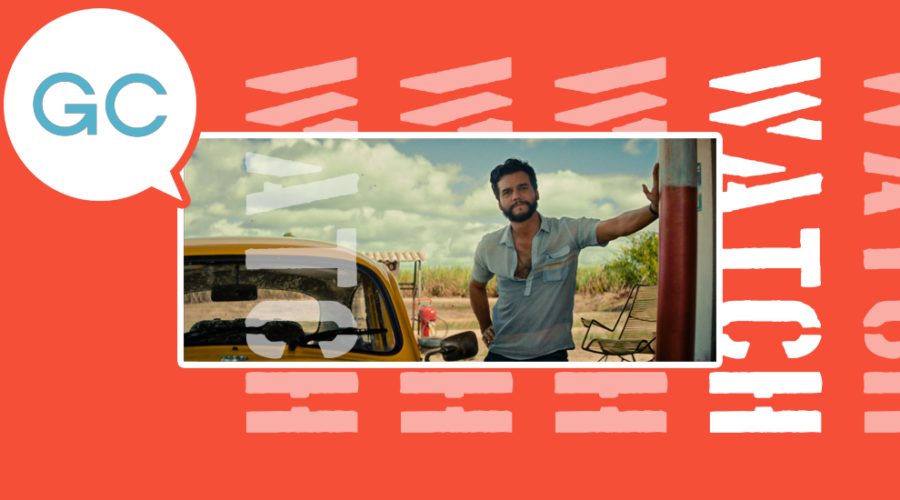
When Amando pulls into a gas station in his sunbeam yellow Beatle during The Secret Agent’s opening scene, the bleached hues transport us to existential trials of The Passenger or The Hit. The screen has the same Latin melancholy, heat and dust masquerading between the vivid colours of summer, a dead body covered by cardboard lays quietly bizarre in the foreground.
The Secret Agent is a beguiling, sprawling film
Armando’s face calculates the risk, something as mundane as an empty gas tank heralds him to confront the detritus of the regime washed ashore. We’re in 1977, three years before a certain coin completed its destiny in another dust bowl gas station in No Country for Old Men.
If Anton Chigurgh represents the unstoppable force of evil conjured into being by American capitalism, then the policemen who would rather rob the living than investigate the dead are the aftershocks of America’s nefarious intervention into South American politics.
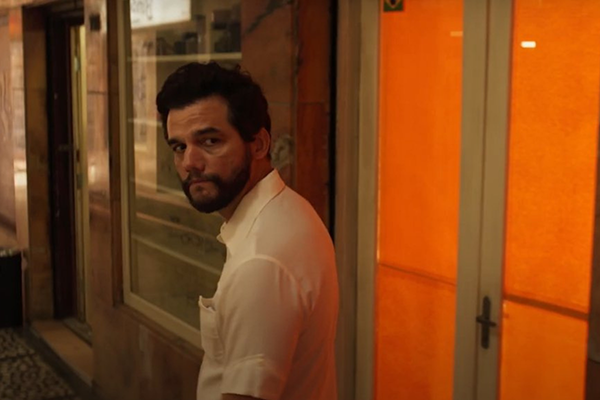
Whilst America basks in the popcorn terror of Jaws or the serial style thrills of Star Wars, Amando navigates the treacherous waters of informants and humdrum police officers moonlighting as vigilante death squads. His countenance lingers somewhere between the Stoic and Epicurean, the love for his son and the grief for his dead wife barely contained by his wiry frame.
The gaze of Alexandrova’s camerawork is not exclusively in love with Amando but his presence dissolves into every other scene. When we are in a police vehicle with six men quietly discussing how over 100 people have gone missing from the carnival, going for a ride, and whether the unseen people in the back of the vehicle knocking are being charged with 157 or 213 (rape or armed robbery with murder), we fear just as much for Armando as we do for those unsuspecting victims offscreen.
The Secret Agent is a beguiling, sprawling film, a mini epic that encompasses political thriller, magical realism, grindhouse horror, cinephilia, and family drama.
But where The Secret Agent truly excels is when it ruminates on the meaning of masculinity when it is exposed to decades of institutional toxicity. Are you going to raise your orphaned grandson like he was your own son or lead your stepson to a grubby death in the corner of a barber shop?
Wagna Moura’s incredibly nuanced performance as Amando is one of the seven wonders of modern cinema. The Dictionary of Obscure Sorrows would describe it as monachopsis – and when you reach The Secret Agent’s beautifully poignant coda you will understand why.