

While the attention of the world has been drawn by recent shocking revelations in the ongoing abuse scandal in the Catholic Church, the Northern California town of Fort Bragg has been riveted by an abuse and molestation scandal of its very own. Both scandals raise uncomfortable questions about how abuse reporting is handled and how communities become complicit in the tolerance of abuse.
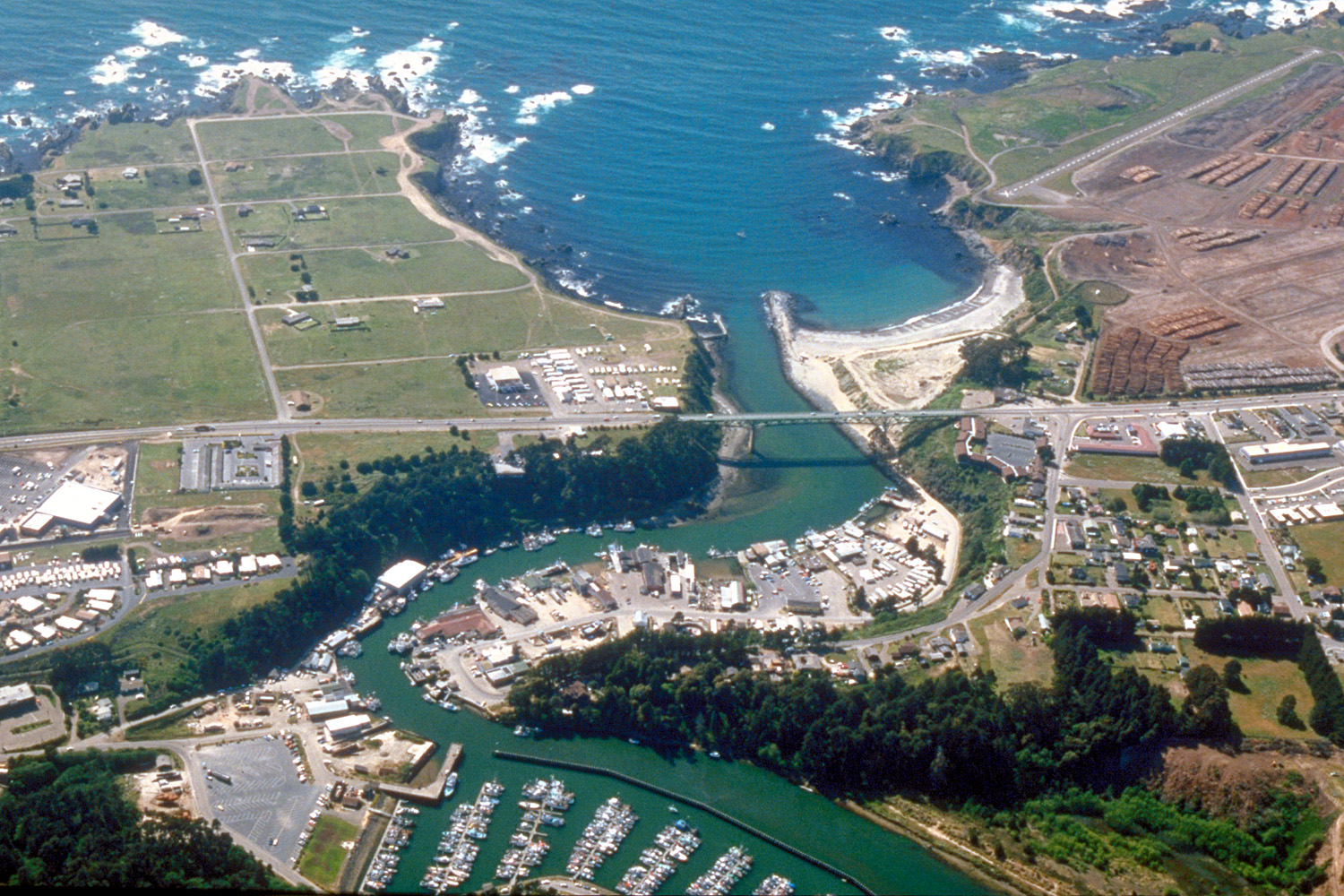
Fort Bragg is a former logging town of 7,000 people which clings to the Pacific coast. A stroll downtown on a sunny weekend day will reveal throngs of tourists mixing with locals in Fort Bragg’s small shops and freshly repaved streets. The tensions in the town between locals and outsiders lie buried well beneath the surface.
Over a year ago, Aaron Vargas, 32, drove to the trailer of Darrell McNeill, the man who had molested Vargas since he was 11, with an antique revolver in hand. The words exchanged between the two men are not known; Liz McNeill, McNeill’s wife, reported hearing the two men arguing before Vargas shot McNeill once, telling him that he would ‘never hurt anyone again.’ Liz McNeill and Vargas watched Darell McNeill die before Vargas disassembled the revolver, left the pieces on the counter, and drove to his parents’ house to tell them what he’d done and why.
Aaron Vargas’ trial for murder is scheduled to begin on 12 April. The uproar in Fort Bragg centers around the question of how Aaron Vargas should be punished for the crime he indisputably committed. The District Attorney is pushing for 50 years to life.
A number of citizens including Liz McNeill and Darrell McNeill’s son Michael have lobbied in support of Aaron, arguing that he should receive a brief sentence and counseling. ‘Save Aaron’ bumperstickers are dotted across local vehicles and a ‘Save Aaron’ float decorated with signs reading ‘end the silence’ was entered in the local Fourth of July Parade.
Few people ask what drove Aaron to the point of believing that driving to his rapist’s house with a gun was the only option left, and this is a rather critical question.
Before Aaron Vargas shot him in the chest on the cold evening of 8 February, 2009, Darrell McNeill, in his 60s, was a well-liked member of the community. He was a volunteer for the Boy Scouts and Big Brothers, Big Sisters and was known for doing odd jobs and minor construction work.
However, there were rumors, including a report filed by McNeill’s ex-wife accusing him of child molestation which was never followed up. In the wake of the shooting, 12 additional victims have come forward with reports of their own.
Some people indisputably knew that McNeill was a danger to children and, what’s more, took action to report it. This would seem at odds with the claims made by many residents of Fort Bragg that child molesters are not tolerated here. In fact, just the contrary seems to be true; abuse and molestation are ongoing problems in Fort Bragg which are largely left alone until something dramatic occurs to force the issue into the public eye.
Like the Catholic Church, Fort Bragg protects its own, and issues such as abuse are largely regarded as internal affairs. People in positions of authority deliberately ignore reports of abuse while members of the community tolerate it or remain unaware of it because abuse is never discussed. There may be reluctance to investigate and pursue reports of abuse because people fear that this may make a community look bad, but allowing abuse to continue for decades is even worse.
When complicit communities start to crack open at the seams and the magnitude of the abuse is revealed, the result is often defensive. These communities argue that they should be allowed to deal with the problem on their own when in fact just the opposite is the case; it’s clear that such communities did not handle the problem well to begin with and that intervention from outsiders is sorely needed.
There are laws in place to protect people like Aaron Vargas and the thousands of people abused by Catholic priests. Mandated reporting laws, for example, oblige people in positions of authority to report suspected abuse. Likewise, law enforcement are expected to follow up on abuse reports.
These laws are clearly failing. One way to address this may be to crack open the insular culture of institutions such as the Church and small communities like Fort Bragg.
In Fort Bragg, for example, hiring police officers from out of the area and rotating them frequently to avoid conflicts of interest might lead to more aggressive policing. Bringing outsiders to the community into positions such as teachers, emergency medical technicians, and fire personnel would disrupt the locals-only culture and setting up reliable methods for anonymous reporting would allow people to file reports which could be investigated without attracting attention.
Finally, reminding people that their duty to abused children is not just legal, but ethical, is crucial.
Excellent column.
The penultimate paragraph’s recommendation to hire law enforcement personnel from outside the community and to rotate their assignments, accurately identifies what’s needed to prevent professional conflicts of interest, and likewise the hiring of teachers, medical personnel and others from outside the community. An exurb of Atlanta in which I used to live routinely hired law enforcement and other personnel from outside the community precisely in order to prevent collusion and conflicts of interest.
It’s surprising that Fort Bragg, California, which is such a small community that there would inevitably be conflicts of interest with locally-hired personnel, hadn’t already been hiring officers from outside. Perhaps now they will.
Tragic. Vargas’ childhood has already been taken away and now the courts want to imprison him for the rest of his life. Was this killing his only crime? Many victims of molestation grow up to be molestors, themselves. It appears that Vargas was NOT one of them. Rather than perpetuating the cycle, as some victims do, it appears that Vargas went straight for the aggressor who had caused the most suffering in the community. McNeill was trusted with boyscouts and little brothers!
McNeill’s own family members, including his son, are asking the DA to be lenient with Vargas. I have to agree. Vargas’ act was not an act of murder, but an act that protected children when the legal mechanisms designed to do so failed.
I heard this story on the news this morning and it both angered me and saddened me. My daughter was raped and because the perpetrators were juveniles, nothing was done. I had lived in a small town like Fort Bragg and came upon the same problems with the police…sweep it under the rug, it will eventually get better. It doesn’t get better!! The people in Sacramento, need to enforce the laws against these rapists, whether they are a juvenile or an adult offender. The victims and their families have to suffer everyday for the rest of their lives while the perpetrators get away to destroy another life. Why. I pray that they are lenient in Mr. Vargas’ sentence. He suffered for so long, he has been punished. Don’t punish him any more!!
WOW – what a FANTASTIC article and how terribly sad for Aaron and the other 12 who were abused by McNeill. Whoever came up with that rotation idea to avoid conflict of interests – BRILLIANT!!! Affordable, do-able and total common sense! It’s ideas like that one that will bring abuse to an end – when we collectively link together to say “NO MORE”. Wishing to avoid unpleasantries and ignoring the signs and reports of abuse in lieu of “but he’s such a nice guy…” have brought us to this point. Aaron is certainly not the first, and if we don’t DO something about actively stopping abuse, nor will he be the last to seek justice and accountability in this manner. ALL of this trauma and tragedy is preventable folks – it truly IS up to YOU.
I wonder, though, if the commonplace alienation and lack of community in urban or suburban areas is actually leads to better protection of children than the insularity of small towns such as this? It seems unlikely to me that in abuse is consistently reported or even noticed in cities where some neighbors don’t even know each other’s names. Of course it’s horrible to deliberately cover up abuse, but indifference and obliviousness don’t serve children any better.
It seems to me that rather relying on outsiders, it might make more sense to turn the interconnectedness and communal identity in towns like Fort Bragg into a strength rather than a weakness; instead of covering up abuse to preserve their self-image, members of the community could use their knowledge of and strong ties to one another to protect the most vulnerable among themselves.
The article did not mention that Aaron had recently become a father and McNeil called him many times asking to babysit his child. Aaron has now plead no contest to manslaughter. There will be sentencing heearings on June 14 – 15. Hopefully the judge will give him counseling, not prison. There also needs to be help for the 12 who have come forward as well as others who have not had the courage to tell what happened to them.
I think that after the sentencing is over there should be a Grand Jury investigation of this entire matter.
You can learn more at http://www.saveaaron.com