

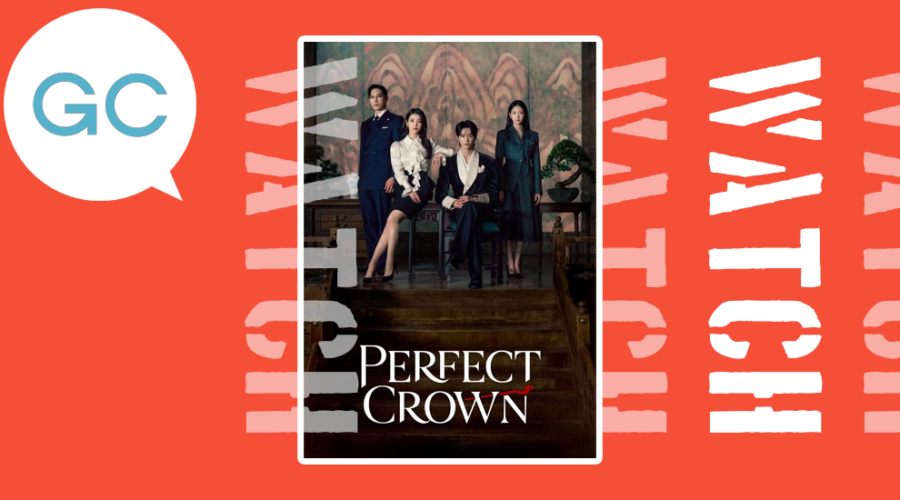
The romantic comedy genre is once again demonstrating its global appeal with Perfect Crown. After dominating the global top 10 on Disney+, this charming production has been recognized as the most successful South Korean series in the platform’s history.
With over 40 million hours watched in its first 28 days, it is the K-drama in the catalog that has crossed the most borders, simultaneously reaching number one in the United States, Canada, Europe, much of the Asia-Pacific region, and Latin America (where it has been a smash hit in Brazil and Mexico).
But what is behind this global viewing phenomenon?
Directed by Park Joon-hwa (Alchemy of Souls) and written by Yu Ain, this twelve-episode series transports us to a contemporary, fictional Korea that still retains its royal crown. The plot revolves around a cold marriage of convenience between a prince trapped by politics and an ambitious heiress facing a family succession crisis.
The real conflict erupts when this pact for corporate survival inevitably collides with genuine feelings.
Regarding the concept behind this story, director Park Joon-hwa explained in an exclusive interview with ChosunBiz that, “the origin of this drama was that the writer has a lot of affection for the Joseon era. And within that, they tried to write the royal romance they wanted to write.
“When we look at our history, if the painful memories and moments under Japanese colonial rule had not existed and the Joseon dynasty had continued to the present, if Joseon had been maintained within 600 years of history, what would it have been like? That was how this drama began.”
A game of ambitions
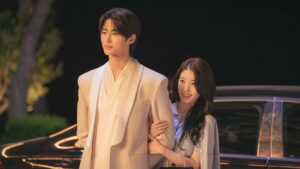
The protagonist, Seong Hui-ju (IU), is a sharp-minded woman with unyielding determination. Condemned to rejection as the illegitimate daughter of a business tycoon, she has survived the contempt of her own family and is determined to conquer the pinnacle of the business world at any cost.
At the opposite extreme is Crown Prince I-an (Byeon Woo-seok), a man caught between duty and ennui. As he grapples with existential emptiness and the suffocating weight of royal expectations, he is drawn into a fierce struggle for the throne.
Based on the popular “enemies-to-lovers” trope, the plot shows how these two wounded souls decide to enter into a marriage of convenience.
The arrangement is purely strategic: she seeks the crown’s backing to secure her position within the family conglomerate, while he needs an influential financial ally to defend his legitimate claim to the throne against palace intrigues.
As you can imagine, over the course of the show, both will transform their initial mistrust into the most dangerous and passionate alliance of their lives.
The fiction stands out in the saturated television landscape thanks to its ambitious fusion of genres. By skillfully interweaving romantic fantasy, corporate melodrama, and subtle historical undertones, Perfect Crown offers a highly refreshing take. Its great conceptual appeal lies in the contrast of its universe: a constitutional monarchy in the 21st century where the sovereign acts as a ceremonial head of state and symbol of unity, while an elected prime minister handles day-to-day political administration.
In this setting, the series juxtaposes the rigid ceremonialism of the Joseon dynasty with the immediacy of the digital age; thus, it is common to see members of the royal family wearing majestic silk hanboks while managing media crises from state-of-the-art smartphones.
Perfect Crown has all the tropes you’d expect from a South Korean smash hit. A marriage of convenience driven by ambition? Yes. Court intrigues that threaten the stability of the royal household? Yes. A cold-hearted queen mother who serves as the main villain? Yes. A slow-burning romance that starts as enemies and turns into lovers? Definitely yes! To top it all off, there’s no shortage of unexpected twists, majestic Seoul backdrops, and a generous dose of humor.
The faces of the Crown
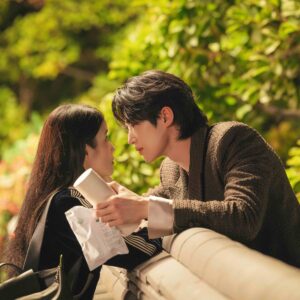 One of the greatest strengths of this K-drama lies in the power of its cast. The lead couple is coming off a string of recent successes: IU, one of the biggest stars in Korean entertainment, arrives following her acclaimed role in Netflix’s When Life Gives You Tangerines (2025). Byeon Woo-seok became one of the country’s most sought-after leading men practically overnight following the phenomenon that was Lovely Runner (2024). A fascinating tidbit for fans is that the two had already shared the screen a decade ago in Moon Lovers: Scarlet Heart Ryeo (2016), when Byeon was still an up-and-coming supporting actor.
The talented IU imbues Hui-ju with such natural magnetism that it’s impossible to take your eyes off her when she’s on screen. In the hands of an actress of lesser caliber, an heiress with her “peculiar” nuances might have come across as unlikable or arrogant; however, IU brings subtle layers of pride and vulnerability that provide the necessary depth. At her side, Lee Yeon shines as Do Hye-jeong, her right-hand woman and most loyal companion in the story.
Byeon Woo-seok delivers a restrained and sober performance as Grand Prince I-an. His ability to convey the nostalgia and suffocation of a man bound to the crown stands out, shining particularly in moments of introspection and silence. Similarly, the prince’s surroundings feel vivid and intimate thanks to the solid support provided by Yoo Su-bin as Choi Hyeon.
The vibrant connection between the lead couple is undeniable: both manage to forge a genuine and utterly captivating bond. Their on-screen partnership not only feels real but serves as the perfect counterbalance to the ruthless political intrigues surrounding them.
On the antagonist side, Gong Seung-yeon has earned her place as the standout revelation of the cast. Her portrayal of the dowager queen Yoon Yi-rang is flawless, establishing her as one of the most lethal pieces on the royal chessboard. The actress sends chills down the audience’s spine through her icy calm and calculated malice.
Impressive production values
From a technical standpoint, Perfect Crown is a true visual delight. Each shot stands out for its meticulous composition, which enhances the narrative.
The direction masterfully captures both the majesty of ancient architecture and the opulence of palatial halls, as well as the charm of contemporary spaces and their urban aesthetic. This contrast between tradition and modernity gives the series a unique and refined identity. Park Joon-hwa’s direction is wise to avoid rushing: the camera sweeps through the surroundings and the grand halls, lingers on architectural details, and relies entirely on the visual eloquence of each location.
Perfect Crown is a true visual delight
Overall, the production stands out for its sumptuous aesthetic that prioritizes vibrant fantasy over historical realism, resembling some Western period dramas.
Likewise, the costume design takes center stage. Hui-ju’s sophisticated gowns, Prince I-an’s impeccable wardrobe, and the Queen Dowager’s solemn traditional hanboks are not mere adornments; each garment visually reflects the status, ambitions, and emotional armor of its characters.
Our verdict
From the very first moment, Perfect Crown clearly establishes the pillars of its success: a heartwarming love story, a meticulously crafted aesthetic, and the undeniable chemistry between its lead actors.
It is these elements, executed with masterful skill, that capture the purest and most appealing essence of traditional K-dramas.
Under the guise of this fantasy, the production offers us a comforting experience that feels as gentle as the whisper of a spring breeze and as sweet as a cup of hot chocolate. Perfect Crown bids us farewell by reminding us that, beyond ambitions of status or power, ordinary daily life is perhaps the greatest joy.
We are presented with a modern fairy tale where true victory lies not in retaining the throne and its privileges, but in the courage to step down from it to claim the right to a common, free, and authentic life.