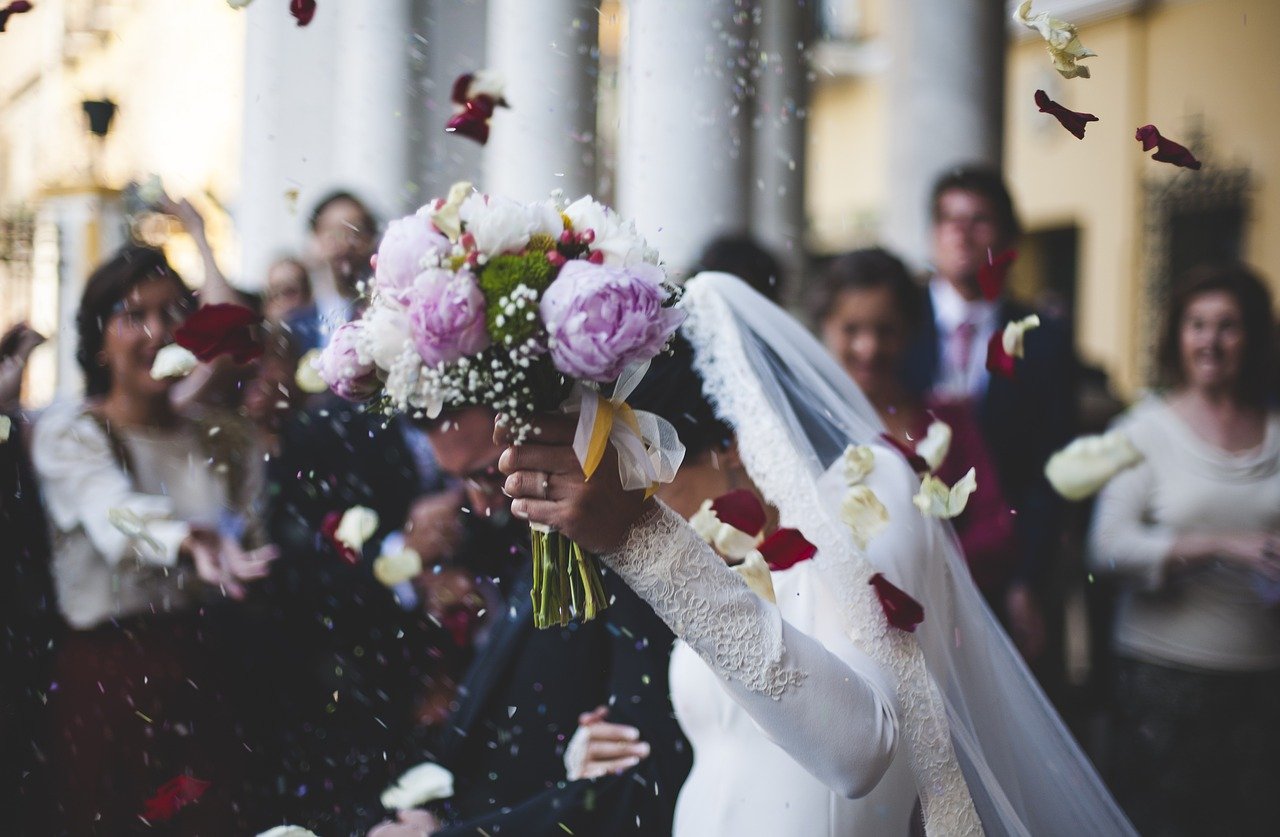
Who likes to show Valentine’s Day a bit of love? Show of hands. I, for one, never have, because it has seemed to me that squishing expressions of love into one day of socially-approved heteronormative fluff is pretty empty. Apparently, however, you were in want of some musings on this holiday, readers, and in my journalistic strivings to bring it to you, I have, can we say, thought about it a little harder? This year, I’m going to overcome my dyed-in-the-wool side-eyeing cynicism and give Valentine’s another chance. That’s because what I resent is not actually the day itself, but what it represents about how culturally stagnant ideas of love are.
Tag Archives: love
Editor’s Diary: Missed Connections and Magic
Hey girl in the strobing light
What your mama never told ya
Love hurts when you do it right
You can cry when you get older – Robyn
Last weekend, an old friend of mine was in town. I jokingly introduced him to people by saying “I broke his heart in high school,” but that’s not exactly true even in the metaphorical territory of broken hearts.
He walked me home from the subway after drinks with a crew of other friends old and new and we talked about all the times we’d really had our hearts broken in the intervening years and at one point I shrugged something off and he told me I sounded like I’d lost the idea of magic. Continue reading
Let’s face it, Valentine’s Day is a tad weird
“If you really love her, send her roses,” the advertisements proclaim. “Diamonds are forever.” “Say it with flowers.” Woman waits to receive, whereas man hunts an appropriate gift to present. The entire posits woman as object and man as subject. Worldly retailers may supply cards for those who do not identify within the heterosexist paradigm and those in unconventional relationships, but the current Valentine’s Day mostly celebrates the rigidly traditional relationship.
Valentine’s Day is an odd day to celebrate in general, though. Continue reading
Gods and Nymphs: the myths and realities of modern life and love
A few months ago, I read that Russian women have lost the war against sexism, and that one of the symptoms of said defeat is the dominance of the Nymph – “a professional beauty,” the ideal partner for the modern man.
The author of the essay I’m quoting is Evgenia Pischikova, a funny, clever woman. While I found her perceptions of American feminism to be somewhat idealized, and some of her statements regarding modern Russian woman downright exaggerated, I nevertheless believe in the Nymph. I’ve seen far too many beautiful women, Russian, Ukrainian, and Belorussian, affect a soulless gaze in the presence of eligible bachelors to deny the Nymph’s existence.
Yet I do not think the story of the Nymph to be simple. Neither do I think that her tale is complete without a thorough discussion of her male counterpart – the God.
Now, the modern God, for the sake of Pischikova’s analogy, is pretty much any man who is, for some reason, desirable to the Nymph, usually marked by a paternalistic (or, as some people are fond of saying, “protective” attitude). We’re accustomed to believe that the God is wealthy, or well-off, and he generally is.
Modern Gods demand sacrifices as readily as the ancient ones. Continue reading
Amusement from Insipid Places
When I was younger I would ask people the following question: If you could be immortal and all you had to do was chop off the head of the person you most love, would you do it?
Most people would look aghast look and scream: No!
I, however, would laugh at them and tell them that I would happily take off my beloved’s head in exchange for immortality. My reasoning would be that my beloved would love me so much that she’d want me to live forever and give myself to every generation after hers.
I stopped asking this question when I grew older. I realized that no one would love me that much.
I’m kidding. That’s not why.
I stopped asking this question because as each day I grew closer to death, I was less inclined to desire immortality.
This can only mean that while I fear death, I fear life more.
*
When I say to the world that men and women are the same, I do not understand why everyone points to their private parts.
*
Around the time that Muhammad was singing the praises of Allah, there was Muzahim al-Uqaili, singing lamentations to Allah. He wrote about love. Says the poet: Continue reading
Looking Back At Us
For Kaouther
Arms brighter than the light of a long summer day,
breasts and hair to the taste of Hannibal,
ginger, hale, and supple.
“Has she no part in you, your mother?” I used to wonder aloud.
“Only where you cannot see it,” she would reply dryly while adding: “I do not wear her on the outside.”*
We would then kiss. Or rather Kaouther would kiss me. I, turning deftly, would offer the other cheek to suffer osculation.
Then she would sit and wait in silence. “O, Fool, enough! She is waiting. But what for?” I used to ask myself.
Until one day, Kaouther decided to love me while whispering in my left ear: “You must honor my offer, otherwise. . . .” A gesture, intimate and unthinking, that sealed our fate for the summer. I savored her offer then and there, but only for a brief moment, for I desperately wanted to prolong the pleasure of her visits to my house. Then, on a breezy summer afternoon when everyone was having a siesta, I sensed her arriving. Sweet and wholesome as a carrot, Kaouther bloomed out of a crowd, her nearness, like a miner’s light, going before her. Precocious mistress of the idiom of the Berber language. Virgil thought love a native of the rocks. Or did he? I, however, speak of love, not Eros, born in innocence among the tiny pearls of couscous Kaouther’s mother and the other women made for my family each summer in the High Atlas, while Kaouther and I, even we, shared events, confidences, and embraces, half-undoing months of absence. And from that day we grew up. Continue reading