White Supremacy and the Spokane Bomb

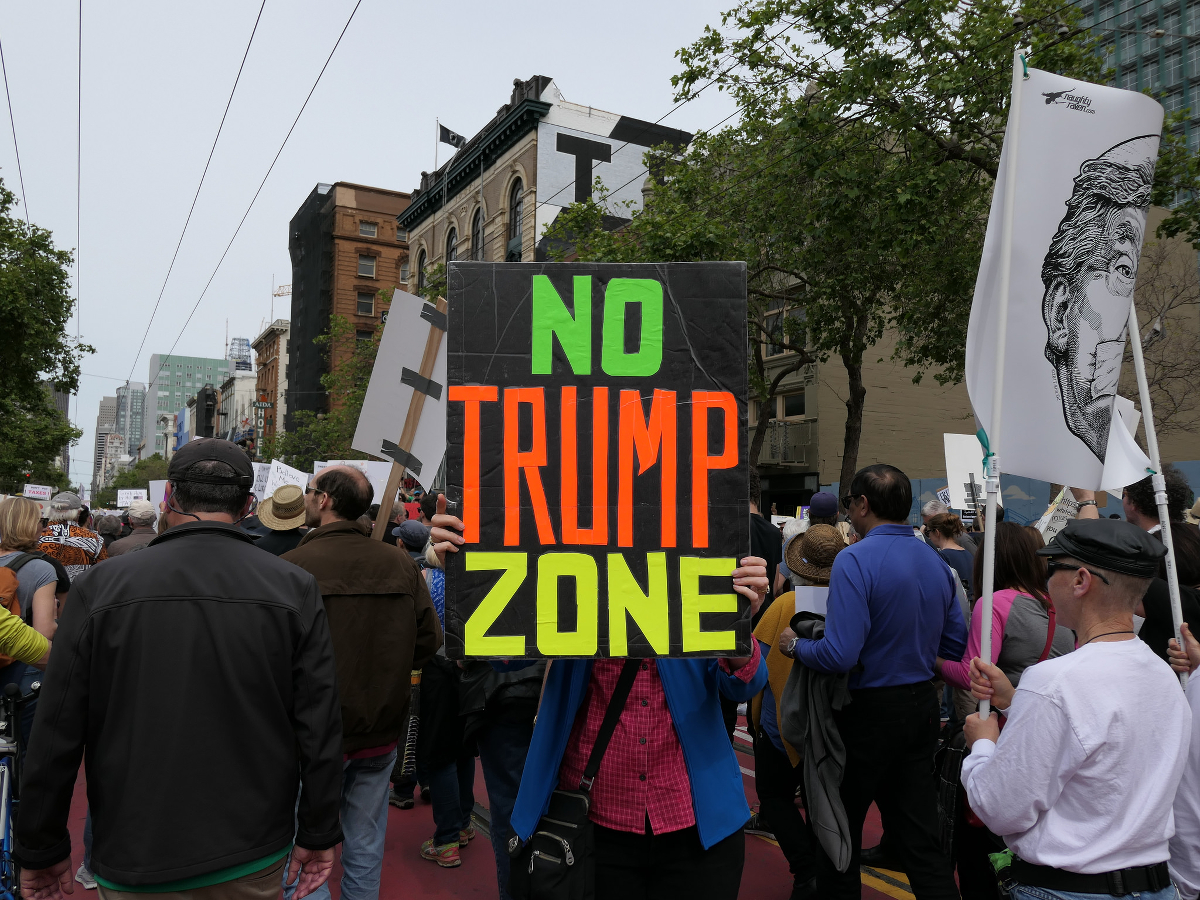
While most of the United States celebrated Dr Martin Luther King’s birthday on Monday, a reminder came from Spokane about the violence that still simmers in the nation. City workers preparing for a parade in honor of MLK discovered a backpack with what looked like several wires sticking out from it. After the police were called in, it was discovered that the backpack was indeed a bomb. Police officials described the bomb as a legitimate threat, intended create mass casualties. As of yet, there is no conclusive evidence as to what the motivation was behind the bomb, but the FBI is now running the investigation and have stated that they are not ruling out involvement by local white supremacist organizations.

It should be no surprise to anybody that white supremacist organizations may have been involved in the most recent scare. Within the last year, another bomb has been left next to a court house, and there were at least two protests staged by white supremacists within the weeks leading up to the the MLK parade. But even as it should be no surprise, the reaction to these frightening events have been somewhat muted.

Continue reading

Laughing Racism: Beyond the #browntwitterbird

Last week, an article in Slate entitled “How Black People Use Twitter: The latest research on race and microblogging” caused a bit of a stir and some moments of sheer hilarity on Twitter and in the Black blogosphere. The piece’s incomplete research and (unintentionally) racist and insulting tone was noted and brought to the attention of the author himself both on Twitter and on personal blogs. Author Farhad Manjoo’s 6-month surveillance of the Twitter habits of young Black people smacked of virtual cultural tourism. (By the way, Manjoo defended his article, stood by his theory and flawed research, and as of this write-up, hasn’t changed his tune one whit. )

Adding insult to injury, Manjoo’s piece featured a brown redux of the classic blue (but possibly racially White, apparently) Twitter bird as a brown, oversized-cap wearing bird holding a mobile device. Continue reading

Dr. Laura, interracial love and confronting White supremacy

The internet recently went into an all-out furor over a segment of Dr. Laura Schlessinger’s radio program, in which she used the N word repeatedly, while telling a Black woman who had called for advice about her interracial relationship that she was “hyper-sensitive.” I could probably spend 10,000 words talking about why what Dr. Laura said is wrong, but since the media has spent so much time dissecting her use of the N word, I believe that perhaps someone should address the purpose of the call. The caller originally reached out to Dr. Laura because she felt that her White husband ignored the racist comments their so-called friends made.

Anyone who has ever been in an interracial relationship will tell you that they are very difficult to negotiate — whether it is two people of colour, or a person of a colour and someone who is White. Though segregation is no longer the law of the land, many people still lead very segregated lives and this means interactions are often fraught with difficulties. Though we are supposedly post-racial, each day people of colour are assaulted by racism — even from those who we may call friends, because they have not learned to challenge their undeserved privilege. Continue reading

Grizzlies, Ducks and Waterfowl – Palin & feminist gatekeeping

When is a duck not a duck? Seemingly if it’s a grizzly.

If you paid attention to United States “feminist” writing in May and June you may have noticed a wee bit of activity over the use of the F word. Sarah Palin repeated her election campaign refrain of being a “feminist” at the Susan B. Anthony List gathering, inciting them to form an “emerging conservative ‘feminist’ identity” around opposing abortion rights. “Feminist” editorial writing exploded. Jessica Valenti, Kate Harding, and Rebecca Traister passionately wrote what dire straits this signaled for the future of ”feminism”. Palin claiming “feminism” is presented as dangerous and ridiculous; yet if you are familiar with what “feminists” claim to desire – the right to be as powerful, as compensated as men, with no limitations on gender – it is technically appropriate. Continue reading

Big Government, Nixonland, and the Tea Parties

This is part two of two parts from historian and Global Comment regular contributor Erik Loomis on the history behind the U.S.’s current “Tea Party” movement. Part one is here. Enjoy!

Big Government

I addressed the race issue in such detail because the nation has had a confused discussion on race and the Tea Party. But the Tea Parties disdain for a powerful federal government has received the bulk of the media’s attention. In this, they fit well into the history of American political thought. The American Revolution certainly contained no small hint of anti-government fervor; after all, the British only asked the colonists to pay their fair share of taxes within the British system of government commonly recognized by nearly everyone in the empire at the time.

Fears of big government continued to dominate the pre-Civil War period. Thomas Jefferson fretted about the powers given to the federal government in the Constitution.  Andrew Jackson and Martin Van Buren sent the nation spiraling into economic collapse rather than cede control of the economy to the Bank of the United States. The South rallied around big government’s suppression of their rights as slaveholders in the years leading up to the Civil War. Continue reading

The New Racism: History and the Tea Party, Part 1

The rise of the Tea Party has shocked the political establishment. Seemingly out of nowhere, the emergence of a grassroots far-right movement overwhelmed the Democratic landslide victory in 2008. The Tea Parties rejected the legitimacy of President Obama’s right to hold the office and called the entire Democratic agenda socialist and un-American.

In order to understand the Tea Party, we need to examine it in context with other reactionary trends in American history. The Tea Party has roots deep within the nation’s past. Its use of coded (and sometimes not coded) racial language and images go straight to the heart of the nation’s most divisive issue. Its anti-government message has roots extending back to the American Revolution and weaving throughout the past two centuries. Continue reading

To Malcolm X, on his 84th birthday

“Before our eyes our father was taken. Before the eyes of his beloved, he was robbed of his life, and we were robbed of not just the man you think you know, but real simple, Daddy. And she of her man. All too soon”. Attallah Shabazz

Born Malcolm Little, May 19, 1925 in his life he would come to be known as El-Hajj Malik El-Shabazz or more commonly, Malcolm X. In his eulogy, Ossie Davis referred to Malcolm X as our shining Black prince and the truth of this statement has only become more apparent to those who live in the shadow of his legacy.

In his time, Malcolm X was many things and those that would have us turn our back on his greatness, do so from a sense of desire to reject a history that convicts Whiteness of some of the world’s greatest atrocities. Extremist and racist are often labels associated with him because in his time he advocated something revolutionary – the humanity of African American people. Continue reading

Michelle Obama & Princeton: do the hard work yourself

Michelle Obama is everywhere these days, but one place you won’t find her is the Class of 1985 – 25th Reunion celebration at Princeton University. Obama, who graduated cum laude from Princeton in 1985 with a Bachelor of Arts in Sociology and a minor in African-American Studies, sent a formal letter of regret through the White House Office of Scheduling which declined her invitation to attend the May festivities. Understandably, the First Lady of the United States has prioritized time with her family and her ongoing political actions – fighting childhood obesity, supporting pay equality, and advocating on behalf of U.S. military families – over a class dinner and cocktail hour with the university president.

Yet it seems that some at Princeton feel Obama has a special obligation to the current student body and her fellow alumni. Continue reading

Shades of Oklahoma: people are still angry

April 19th marked the 15th anniversary of the Oklahoma City bombing.  Timothy McVeigh was spurred to destroy the Alfred P. Murrah Federal Building by what he deemed to be the mishandling of Waco and the Ruby Ridge incident.  Initially, after the bombing, the American media was quick to suggest that this was the work of Middle East Jihadists; however, it would ultimately prove to be an act of domestic terrorism.  Since this bombing, the U.S has engaged in two wars in the Middle East.  Yet the threat of domestic terrorism has steadily increased to the point where it is reasonable to wonder whether or not another domestic incident is perhaps more imminent than an outside threat.

In February of this year, Joseph Andrew Stack set fire to his home and then flew a Dakota-236, 235-horsepower single-engine Piper PA-28 Cherokee aircraft into an IRS office in Austin Texas, killing two and severely injuring 13 people.  Stack left a rage filled suicide note on the internet.  According to the Vancouver Sun, Stack wrote:

“I choose to not keep looking over my shoulder at ‘big brother’ while he strips my carcass, I choose not to ignore what is going on all around me, I choose not to pretend that business as usual won’t continue; I have just had enough.”

Continue reading

Tavis Smiley’s Black Agenda: outdated, not inclusive

Saturday, March 20th, Tavis Smiley convened a panel to discuss the Black Agenda in the age of Obama. The panellists included such people as Dr Michael Eric Dyson, Angela Glover, Reverend Jessie L. Jackson Sr., Dr. Cornel West, Louis Farrakhan and Dorothy Wright Tillman. The We Count panel replaced Smiley’s annual State of the Black Union conference, but the format remained similar. All participants were members of the Black intelligentsia, with no representation from poor Blacks that the panellists’ expressed such concern for. Continue reading