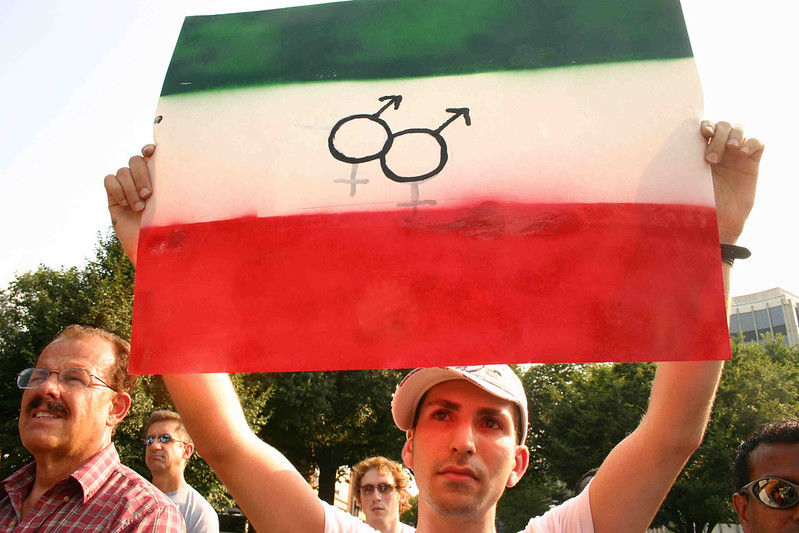
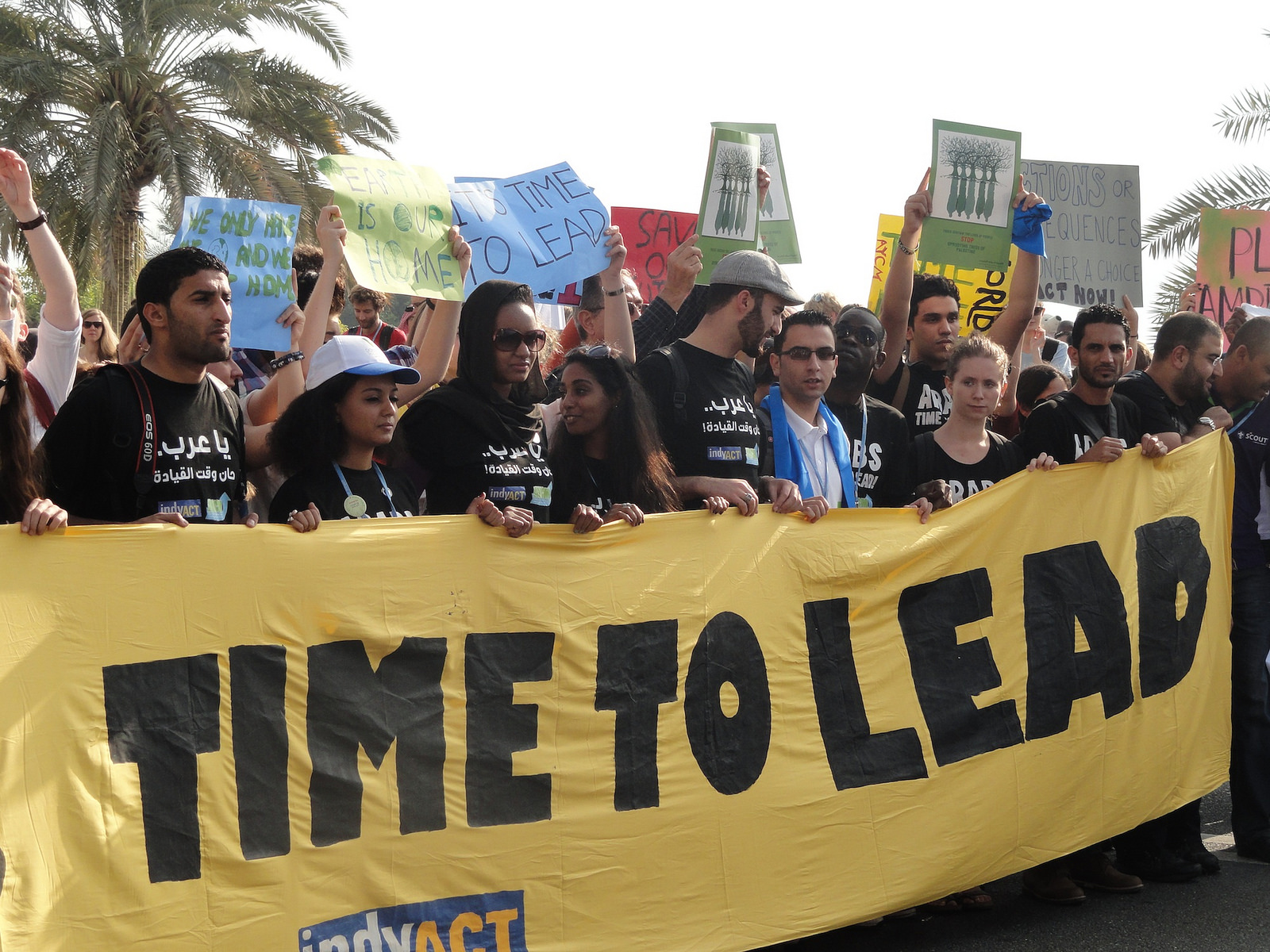
We hear the above term a lot, and some suspect that it is derives from the Hadith of the Prophet of Islam (Peace Be Upon Him). However, most are confused as to its origins, given that it appears in a broad mixture of Islamic and Christian teachings. For those of you who cannot read the Arabic الدين معاملة, it roughly means “religion is in the treatment of others”.
Tag Archives: Religion
Blessed Are Those Who Mourn: Reflections In the Aftermath of the Connecticut School Shooting
“In the beginning was the Word, and the Word was with God, and the Word was God. He was in the beginning with God. All things came into being through him, and without him not one thing came into being. What has come into being in him was life, and the life was the light of all people. The light shines in the darkness, and the darkness did not overcome it.”
John 1: 1-5, New Revised Standard Version
Review: Dancing Theology in Fetish Boots: Essays on Marcella Althaus-Reid
Lisa Isherwood and Mark Jordan, Dancing Theology in Fetish Boots: Essays in Honour of Marcella Althaus-Reid, SCM Press, 2010.
Argentinian theologian Marcella Althaus-Reid was a pioneer in the field of queer theology. In her books Indecent Theology and The Queer God (both on Routledge), she insistently queried the sexual and gender suppositions of Christianity and theology. In particular, she relentlessly pushed the liberation theology of Latin America, demanding that its vision of social justice for the poor expand to include–even centre–women and GLBT people and the multiplicity of desires and practices involved in sexual subcultures. In the striking introduction to Indecent Theology, she asked if theology had space for female vendors on the streets of Buenos Aires, who sell lemons without wearing underwear. Theologians, she suggests, must remember their own bodies, their own desires: “The Argentinian theologian would then like to take off her underwear to write theology with feminist honestly, not forgetting what it is to be a woman when dealing with theological and political categories.”
Sadly, Althaus-Reid died of breast cancer in 2009, leaving behind not only those two important books, but writing and editing numerous innovative books on feminist, body, liberation, queer and transgender theologies in partnership with Lisa Isherwood on SCM. Fittingly then, Isherwood has, with Harvard theologian Mark Jordan, assembled a collection entitled Dancing Theology in Fetish Boots on that press that not only pays homage to Althaus-Reid’s legacy, but extends it.
Why do we care about the Rapture? Living with the fear of the end
For those who have been living under a rock (or worse, been offline), the world is supposed to end today. More accurately, a group of fringe evangelical Christians in California led by Harold Camping have taken to the airwaves on their Family Radio Network to proclaim the imminent arrival of the Rapture on May 21st–the removal of faithful believers of Christ from the earth and the cataclysmic beginning of the destruction of the Earth.
As Christian beliefs go, the Rapture’s a pretty marginal doctrine restricted to evangelicals, accepted neither by the Catholic, Orthodox or mainline Protestant groups. Even for those evangelicals that do believe in the Rapture, the vast majority will think of Thessalonian 5:1-2 – “Now, brothers and sisters, about times and dates we do not need to write to you, for you know very well that the day of the Lord will come like a thief in the night.” Most Christians know better to set dates for the return of Christ, though many have tried before. The failure of Jesus to show up for one such date set by the Millerite movement in the United States in 1844 was called “the Great Disappointment” for good reason. As the great holy text Battlestar Galactica once put it, “all of this has happened before, and will happen again.”
So this is not a widely accepted or particularly credible form of religious belief, it’s pretty safe to say most people do not believe the world is ending at 6pm tonight. What is more astonishing is the degree with which this apocalyptic story has been taken up by atheists, dominating the news for the past few weeks. Mother Jones reports that Channing’s PR person has fielded 400 interview requests in the past few weeks; bucket lists and music playlists to soundtrack the apocalypse have been posted, and as I write now, the trending topics on Twitter include #rapture #iftheworldendsonSaturday #Harold Camping and a nostalgic apocalyptic throwback in the form of #Y2K. Most of it is mocking, with a sense of incredulity that someone could honestly believe in the end of the world. So why all the fuss?
Denison Witmer on the edge of secular and religious music
Denison Witmer’s music is thoughtful and understated and lends itself to rainy days and quiet contemplation. A multi-instrumentalist whose folk music sounds more otherworldly—and less roots-based—than what you’ve heard in the past, Witmer writes songs at once approachable and elusive. His lyrics can be deceptively straightforward at times, only developing more complex layers several listens in.
Witmer’s new album, The Ones Who Wait, to be released on April 26, is no exception. Witmer says that the new album came together somewhat more organically than those past, as he grieved his father’s death and adjusted to collaborator Devin Greenwood’s move to New York City. Though he told me he normally draws themes out of songs he’s created over a period of time, this album came to revolve thematically around the loss of his father without advanced planning. “In some ways,” Witmer says, “this was better for the album because it gave me a sense of pause. I let it show me the direction it was taking rather than the other way around.”
Witmer says that this affected his musical decisions as well. Though he usually writes careful first drafts with a clear sense of which instruments should be used and how the recording should sound, he chose to “[do] a lot of different things with these songs.” The aim was surrender to the creative process without being “too hung up on what we would do with the songs.” Instead, he says, “we worried about that later.” This allowed for a more thoughtful process in which ideas could be tried and tested, and creative possibilities explored more fully.
The Flawed Religion of Anti-Choice and Anti-Contraception Politics
Every sperm is sacred, goes the old Monty Python song, but it might well be the new motto of the Republican Party in 2011. Since their victory in 2010 midterms, Republican politicians (with a few Democratic collaborators) have launched a dizzying array of ever-more retrogressive attacks on reproductive rights – 351 bills at State and Federal level already this year reports Time. While religiously inflected anti-abortion “pro-life” politics have long been a feature of American politics, what has marked the more recent movements is an intensified push towards defining personhood right from the moment of conception, and an explicit attack on the right to contraception as well as abortion. Ironically given the Christian roots of this movement, the theological implications of these twin moves can themselves be considered irreligious.
In Ohio, there is a new bill attempting to re-define life as the moment in which the fetus has a heartbeat–as early as 18 days. As Mother Jones reports, “attacking first-trimester pregnancies is important for anti-abortion activists because 88% of all abortions occur before 12 weeks gestation.” Hammering the point home, a pro-life stunt saw a fetus “testify” as a legislative witness before the House Health Committee (though amusingly, the heartbeat was difficult to find–the fetus, it seems, took the fifth). Still, the message is coming through loud and clear–from conception, a fetus is a person.
Continue reading
Victoria Clark talks Yemen and the West
Born in Yemen, Victoria Clark was an Observer journalist in post-Communist Romania and in ex-Yugoslavia during Croat and Bosnian wars. From 1990-1996, Clark was stationed in Moscow. Her latest book is Yemen: Dancing on the Heads of Snakes by Yale University Press in 2010 . Her previous books include Why Angels Fall: A Portrait of Eastern Orthodox Europe, The Far-Farers: A Journey form Viking Iceland to Crusader Jerusalem, Holy Fire: The Battle for Christ’s Tomb, and Allies for Armageddon: The Rise of Christian Zionism. Her personal website is http://www.victoriaclark.co.uk/.
She spoke with Jonathan Mok about her writing, the situation in Yemen, and why the rest of the world ought to pay it more attention.
Jonathan Mok: First of all, before talking your book about Yemen, I noticed that until the last book about Christian Zionism, you wrote about Christ’s tomb, the Crusade and Eastern Orthodox Church. Why did ancient history interest you? Also, including the last book, why was Christianity the main theme of your book?
Victoria Clark: What interests me is not so much ancient history as the profound connections between two of those taboo dinner-party subjects: religion and politics. Exploring those links in the Balkans and the Middle East, where they have been particularly important in the last 20 years, sent me searching as far back as the first millennium for clues about and explanations for the present.

Victoria Clark
JM: This time, your book focuses on Yemen. Why did you write the book entirely on the history and politics of Yemen?
VC: For two main reasons. First, it was not until 2004 that I noticed bin Laden’s ‘ancestral homeland’ was Yemen, not Saudi Arabia, and a part of the country that was ruled by the British for around a century until 1967. That set me thinking; clearly, there was a time when scores of officials in the British colonial and foreign services knew a great deal about that land and its people. I was amazed to discover how little interest there seemed to be in the country only half a century later and how little had been written about it since the unification of the northern Yemeni Arab Republic with the People’s Democratic Republic of Yemen in the south in 1990, despite the role it seemed to play in the early life of al-Qaeda.
The fact that I happen to have been born in the British Crown Colony of Aden in 1961 – my father was the BBC’s correspondent for South Arabia – also had a good deal to do with my undertaking the project.
JM: You spent a considerable part of the first section on the history of South and North Yemen. They became unified in 1990. Ironically, the unification has not brought peace and prosperity. What do you think about factors contributing to the instability of the country and the failure of the economic and social development of the country?
VC: The unification of the two Yemens was a rushed and badly handled affair. There was undeniably a great deal of popular support for the project founded on an optimistic belief that since they were all Yemenis they must be able to live together in happiness and for ever after with their recently discovered oil wealth. However, little consideration was given to the fact that their histories had made them feel culturally very different. The relative good order of British rule for 128 years followed by a quarter of a century of a home-grown Communist regime has left the southern Yemenis swamped by and unable to compete in the cut-throat market-driven and unregulated world governed by patronage networks that the northern Yemenis inhabit and have lost no time in imposing on the south.
Even more worrying is the fact Yemen may have become a new breeding ground for next generation terrorists and suicide bombers. Why has the country provided a valuable opportunity to Al-Qaeda to nurture young people to be future terrorists?
The simple answer to that question is that al-Qaeda’s recruitment drive and activities have been overlooked because they are only third on the list of the president’s pressing priorities. While Ali Abdullah Salih’s security services and army have been largely engaged with the opaque but costly al-Huthi rebellion in the north-west corner of the country since 2004, southern Yemenis’ struggle to regain their independence has been growing in size and importance since 2006. The latter is the more worrying both to the president and the outside world.
JM: In your book, you described Ali Abdullah Salih, the president of Yemen as a dictator, a corrupt leader. You also depicted him as a leader trying to be a “good boy” in front of the United States in the War on terror. What suggestions would you propose if the United States, the United Kingdom and other countries would like to stop Yemen becoming a terror heaven? What has gone wrong with the current strategy pursued by Washington D.C and Downing Street?
VC: Yemen – poor, corruptly ruled, over-populated, under-resourced, over-armed, traumatised by its recent history – clearly illustrates the role economic and instability factors have to play in explaining youths’ attraction to jihadist ideology. My experience of the country and its people, however, has convinced me that because the West is either losing or has already lost the ideological war, it is time to acknowledge the loss of moral high ground and set about the very, very hard job of regaining it. This will not be achieved by supplying the increasingly unpopular Yemeni regime with more weapons or aid money that can go astray. Real evidence of progress on Israel/Palestine would be a good start.
JM: Ali Abdullah Salih has ruled Yemen for more than 3 decades. What has kept him in power for such a long time?
VC: First, being a tribesman himself, he has (at least until recently) sensibly avoided confrontation and heavy-handedness, and opted instead for compromise, flattery, bribery, divide and rule, cooperation in his dealings with the powerful and armed tribes of the country and other interest groups. Second, he was luckily boosted by the discovery of oil in Yemen in the mid-1980s. Oil revenues are what have given him the wherewithal to rule in the manner of a kind and generous sheikh rather than as a military dictator. The fact that the oil is running out and therefore the regime’s leverage diminishing, accounts in large part for the increased instability in the country.

Yemen: Dancing on the Heads of Snakes
JM: I would like to turn to Jewish minorities. What would be possible reasons for the increasing intolerances toward Jewish minorities as many of them have fled to Israel?
VC: Very sadly, the tiny remnant of Yemen’s Jewish community, which was mostly located in the northwest of the country, has suffered by most of the Arab’s world’s deep sense of outrage at the manner in which Israel has treated the Palestinians and the US has continued to bankroll and support Israel. Yemen’s Jews are as tangibly absent as they are in parts of eastern Europe; older Yemenis I have spoken with in both south and north Yemen speak very kindly of them.
JM: Equally disturbing me is the women issue. I was shocked to read stories of divorces by a seven or eight- year old girls. I am wondering why child marriage has only become an issue drawing international attention in recent years.
VC: The child bride issue is a shocking one as is the situation of most women of all ages in Yemen. It is complicated however. I met a schoolteacher who had been miserably married off to a hated cousin at the age of 9 and had three children by him by the age of 14, before managing to separate from him. To my amazement she told me she had married off her eldest daughter at the age of 11. When I asked her why, she explained that it was for the best; since the girl had lived with her father since the divorce she had been exploited as an unpaid nanny, tending the half-siblings her father’s re-marriage had brought instead of going to school. Married, she was proud of her own establishment and happy with her husband and she could go to school.
I also ended up feeling sorry for men. The same woman told me that she had found a bride for her son; although he had rejected her on sight, she had forced him to accept her.
JM: Finally, what new experiences did you have when writing a book differing from what you previously published?
VC: The challenge of trying to immerse myself in Yemen and its culture was gigantic and it almost defeated me, I have to say. My main experience of Yemen was an exciting but worrying sense that there was so much more to the place than met my ear or ear. My only hope that in trying to construct a narrative of the country that makes sense to a western audience I have not been too unfaithful to Yemen’s truths and realities.