Review: The Year of Dreaming Dangerously

Slavoj Zizek, The Year of Dreaming Dangerously, Verso, 2012.

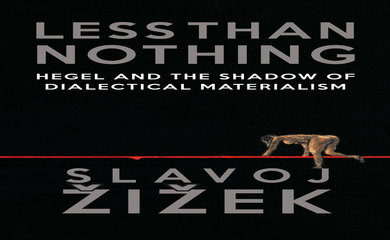
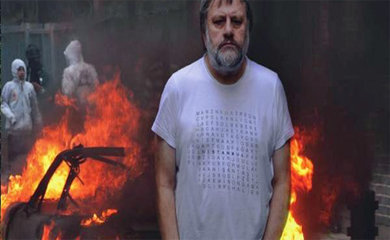
The work of Slavoj Zizek is by now a genre of critical theory in itself, complete with its own distinctive characteristics. These include: discussions of Hegel, Marx and Lacan; analysis of recent political events interspersed with sections on recent popular culture; David Lynch and Hitchcock; counter-intuitive reversals of liberal, leftist and feminist prevailing wisdom; and large segments copy and pasted from previous books. All of these, with the exception of Lynch and Hitchcock, feature in the slightly uncharacteristic new book from Zizek.

The subject, as the title suggests, is the recent post-recession social movements across North America and Europe – Occupy Wall Street, the Arab Spring, and the right-wing fascist movements that have also emerged in Europe. Topic is always a little blurry with Zizek – one cannot always say a book is “about” any one thing in particularly – but The Year of Dreaming Dangerously sees Zizek strangely energised and focussed.

Some of the chapter on Occupy was initially delivered at Liberty Plaza/Zuccotti Park using the “human microphone,” repeated one phrase at a time. The systemic crisis in capitalism world-wide, from the North American stock market crisis to the Eurodebt debacle, gives new urgency to the Marxist Zizek’s political writing: this is a man whose time has come. “The true dreamers are those who think things can go on indefinitely the way they are,” he points out.

In an excellent chapter, Zizek argues that the television series The Wire shows the systemic failure of the Baltimore micro-economy – a failure at every level from police to courts to schools to politics. In The Wire’s Baltimore, politics proper cannot take place. Zizek quotes Wire creator David Simon, who says that “I accept that [capitalism] is the only viable way to generate wealth on a wide scale.” Zizek rejects this pessimistic diagnosis, in contrast arguing that the dreams of the Occupy movements et al chart a different way out of the current predicament.

Yet these are not altogether safe times. Zizek has longed noted the increasing authoritarian nature of liberal democracies – what he sees as the becoming-Chinese of capitalism in squishing dissent, “capitalism with Asian values.” In another chapter, he delves into the emergence of right-wing movements in Europe. The Norwegian mass killer Anders Behring Breivek proves a useful barometer for nationalist sentiment – a xenophobic murderer who aimed not at the racial Others he abhorred, but his liberal mutlticulturalist political opponents. Zizek points out that Breivek’s politics are embedded in state violence against Others, as well as the odd combination of Zionist anti-Semitism of the extreme right-wing that comes in the support of Israel’s apartheid policies against the feared Muslim Others (Breivek, of course, thought that there are too many Jews in the United States). The danger, Zizek points out, is that Europe could fall into fascism again – a not unwarranted warning given the situation in Greece with the neo-nazi party Golden Dawn, for example.

The Year of Dreaming Dangerously is not Zizek’s most theoretically audacious work – for that you must turn elsewhere, particularly to his work on MIT Press. However, it is the most focussed popular writing that Zizek has written for years. Highly recommended.

Review: Slavoj Žižek, Living in the End Times (updated paperback edition)

Slavoj Žižek, Living in the End Times, updated paperback ed. (New York and London: Verso, 2011).

The philosopher and cultural critic Slavoj Žižek has put reviewers of his latest book, Living in the End Times, in an awkward position. In a profile in the Guardian shortly after the release of the original (significantly shorter) hardback edition, he expressed deep misgivings about the more popular political and cultural commentary that has done so much to make him an academic celebrity. In particular, he singled out Living in the End Times for critique, dismissing huge chunks of it as “bullshit.”

I did not find Living in the End Times to be “bullshit.” As a long-time reader of Žižek’s work, however, I think I have some idea of why he might think it was. A huge part of Žižek’s appeal, it seems to me, is not simply the jokes and pop culture references that he sprinkles throughout his work. Rather, it is the great enjoyment and satisfaction that he clearly derives from his theoretical work. For him, working through the complexities of Hegel is not a boring task that he artificially spices up with off-color stories or movie references. It’s fun, and the other fun stuff naturally grows out of it.

From this perspective, making a joke isn’t merely a way to relieve the tedium of philosophy, but an integral part of the theoretical task—in fact, one could even say that for Žižek, the most radical and insightful philosophy is always structured as a joke. The philosophers he favors traffic in paradoxes, unexpected connections, and stunning reversals, constantly remaking their thought and challenging their readers to do the same.

Continue reading

Editor’s Diary: Whither Socialism?

Just a note before I start: this is the 1000th post on Global Comment! To celebrate, why not become a subscriber and help us keep bringing you thought-provoking content?

The real objective of Socialism is human brotherhood…Men use up their lives in heart-breaking political struggles, or get themselves killed in civil wars, or tortured in the secret prisons of the Gestapo, not in order to establish some central-heated, air-conditioned, strip-lighted Paradise, but because they want a world in which human beings love one another instead of swindling and murdering one another.

-George Orwell, “Can Socialists Be Happy?”  1943

I start with Orwell because people often forget that he remained a socialist even as he mounted critique after critique of the U.S.S.R. and other totalitarian-Communist states. Because the first argument one often faces in the U.S. when one suggests socialism as an alternative to the current political-economic structure is that Communism failed.  But reading Orwell’s essays from the 40s, from an England struggling against Nazism on one side and yet learning of the brutality of Stalinism, is to remember that it is possible to have an intellectually honest critique of the states that called themselves socialist and to still advocate for socialism. Continue reading