

I can’t say I’ve ever been a big fan of Westeros. A fan of the stories set in it, sure (in spite of the final season of Game of Thrones being suuuuuuch a mixed bag), but overall, I find it to be a sorry place.
George R. R. Martin is a wonderful writer, and the television his work has inspired has always been entertaining – to this day I remember exactly where I was when I watched the infamous “Red Wedding,” for example – but besides being brutal, Westeros is just full of petty rivalries and self-important idiots.
You don’t really picture yourself there, the way you might picture yourself in, say, Rivendell. And Essos seems far more entertaining by comparison.
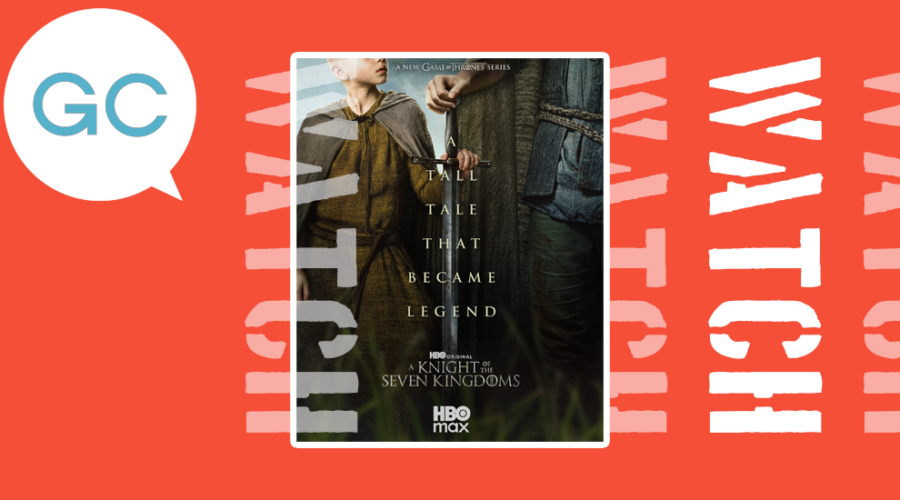
HBO’s A Knight of the Seven Kingdoms (sorry, ser, Nine Kingdoms), adapted from Martin’s A Hedge Knight, shines a different light on Westeros, however.
It can, it’s been discovered, be a place of quiet beauty and wonder. This isn’t to say that this knight’s tale isn’t brutally violent – if you haven’t seen it yet, it is – it’s just that the fairy-tale aspect of this fictional land has suddenly become obvious.
Stars shoot across the sky, portending omens. Horses snort in a milky fog. Men in horns throw epic parties. Hookers stage parodies of death rituals like girls at a sleepover. The way a particular place is brought to life on screen is important, and for the first time since encountering the Game of Thrones franchise, I’ve found myself warming up to it from a purely aesthetic point of view.
It helps that our heroes, wandering hedge knight Dunc and smartass runaway boy Egg, are not antiheroes this time.
At least, not in season one.
They hearken back to the heroic ideal of Jon Snow, minus all of the brooding. These heroes are funny, and fun to watch. They are pleasure without the requisite guilt, that which seems to characterize so many other prominent characters in Martin’s universe.
There is quite a lot of commentary on parenthood happening on this show, how it’s both terrifying and hilarious. Dunc was brought up by Ser Arlan of Pennytree, who’s kind of an asshole, and also kind of a profound and decent man who’s wearied and disgusted by war.
As it is told in flashbacks, he can be an embarrassing and disappointing parent, but he has a spine and a sense of right and wrong, and it’s up to Dunc to live up to his ghost now.
Egg is meanwhile in search of a role model he can actually respect, and maybe Dunc is that role model, or maybe he isn’t. The tension in this relationship is some of the best stuff we’ve seen on HBO.
Dunc spends a lot of time figuring himself out, and the pressure to also figure things out for Egg is immense, and that’s honestly what being a parent is about. You’re supposed to have all of the answers, and yet you do not. Sometimes, seeing the world, or a world, through a child’s eyes is your only hope for greater enlightenment. Either that, or getting knocked off your horse.
Now that the first season has wrapped up, we also got our first trailer for the next season of House of the Dragon, another spinoff series, and I have to say, as visually arresting as it is, the contrast with A Knight of the Seven (or Nine or Whatever) Kingdoms is very palpable.
It’s fine for House of the Dragon to be a serious fantasy show. It has fantastic characters. Rhaenyra is arresting. Her uncle-husband too. There are dragons, obviously. There is incest and battles. The showrunners have given us immensely watchable storylines here, even when they are at their most blood-spattered, or especially when they are at their most blood-spattered (it can be hard to tell).
It’s just that the simplicity and humor of A Knight of Seven (And Counting) Kingdoms cuts closer to the bone. There is a sense of magic to this new show, and not just because it doesn’t take itself so seriously. It’s intimate the way sleeping under a tree outside is intimate (and awkward).
Putting it simply, Game of Thrones and House of the Dragon are shows I have liked. A Knight of Seven Kingdoms is a show I love.