

Around 25 miles from the city of Leicester, in the English Midlands, is a 1000-acre (approx. 4 square kilometre) nature reserve that did wonders for my soul.
Managed by Leicestershire and Rutland Wildlife Trust, in partnership with Anglian Water, Rutland Water Nature Reserve is particularly focused on birds and offers visitors a peaceful retreat with a rich variety of plants, animals, mosses and lichens.
At this reserve, water meets woodland meets meadow in an expanse that feels a long, long way from real life. This nature reserve felt remarkably peaceful, even on one of the first Saturdays of the year with good enough weather to venture into the countryside with any confidence in the British skies keeping us dry.
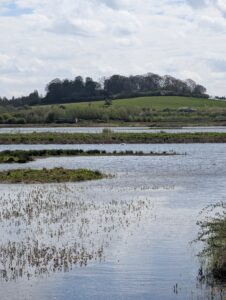 As a Site of Special Scientific interest, this reserve is considered one of “the finest sites for wildlife and natural features in England, supporting many characteristic, rare and endangered species, habitats and natural features”, and Rutland Water Nature Reserve’s support of not just birds but also beetles, bees and butterflies was evident in the abundance and variety of wildlife.
In the Redshank hide, I looked out onto a lagoon and saw oystercatchers, teal, coots and greylag and Canada geese, as black-headed gulls noisily challenged each other. In a more wooded area, I saw blackcaps and chiffchaffs and, thanks to Merlin, I know I also heard birds as varied as greenfinch, treecreepers, linnets and sand martins.
Other visitors – or, as I have started to call them having visited a number of bird reserves now, Men With Gear – were excited to see ospreys (this reserve is also home to the Rutland Osprey Project) and peregrine falcons.
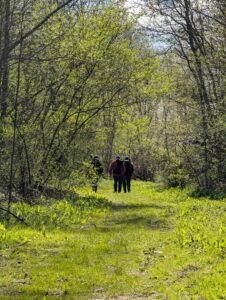
Whereas sometimes Men With Gear can feel a little intimidating and unwelcoming, I did not get this impression at Rutland Water Nature Reserve; visitors were friendly and helpful and as interested in their surroundings, and sharing knowledge about them, as I was.
Having explored a couple of hides, I sat on a log in a wooded area and spent some time communing with the orange-tip butterflies and various bumblebees that were happily bobbling around the nearby flowers (keep an eye out for a video on Global Comment’s social media about these soon). I wondered if, by not pushing forward and visiting every one of the 31 hides and every nature trail, I was wasting my visit.
But I realised that feeling serene, on a log, surrounded by butterflies and bees, could never be considered a waste of a visit. It was delightful.
Plus, as I will get into in the disabled access section later, the surfacing of the paths was quite inconsistent, so I was also wary of venturing too much further.
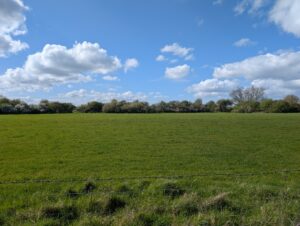
The two hides I spent time in, plus the fields and paths and woodland, provided me with serenity and abundant natural beauty, and it is clear that efforts to provide a really good environment for the wildlife of the area had been well thought through and considered.
The wide variety of birds, and the plethora of insects and wildflowers, demonstrated nature that was thriving.
Disabled access at Rutland Water Nature Reserve
The member of staff who greeted me was keen to help and knowledgeable, suggesting routes that might be the most suitable for me with limited mobility. The Anglian Water Birdwatching Centre is the point of entry to Rutland Water Nature Reserve and has a viewing gallery and shop, and there was an accessible toilet in the Centre.
Within the nature reserve, the routes I took were all level access and often had wide paths, but the surfacing varied greatly as to how easy it was to navigate with wheels. Both of the hides I went into had step-free access too, though not all of the hides on the reserve do.
One really odd thing was the ramp into the Anglian Water Birdwatching Centre – it was by the noisiest, bounciest ramp I have ever gone up or down (as you can see and hear in the video above!). It was passable for me but I did feel a bit like I could attract negative attention because of the din! For people whose pain is worsened with jolts, the ramp could be an impediment rather than a help.
Images: Philippa Willitts