

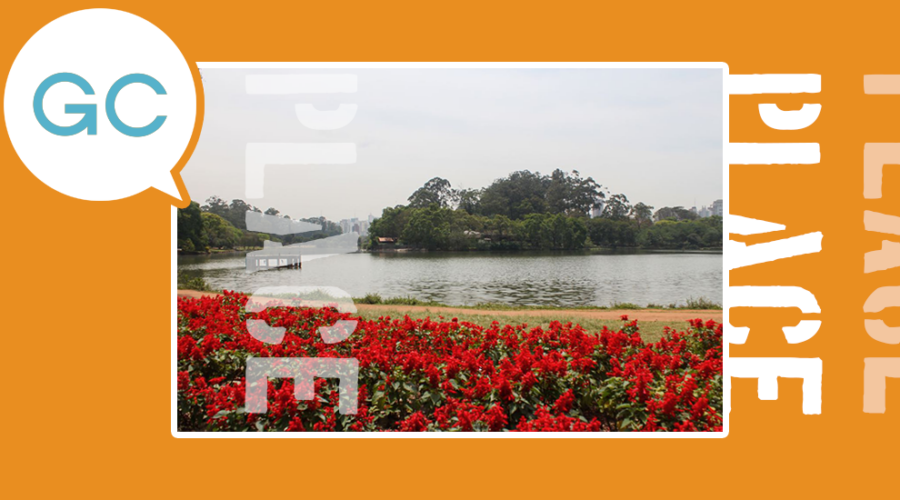
There are cities that are best understood when you leave the main avenues behind and look for a place where the pace changes completely.
São Paulo is one of them.
After exploring one of the largest metropolitan areas on the planet, with its constant traffic, towering skyscrapers, and an energy that never seems to slow down, Ibirapuera Park feels like a welcome pause.
It is where the city breathes, where thousands of people come together every day regardless of their age, profession, or background, and where it becomes easy to understand why this park is one of Brazil’s most iconic landmarks.
The park was inaugurated in 1954 to mark the 400th anniversary of the founding of São Paulo, and it has witnessed the city’s transformation ever since. Its approximately 158 hectares (390 acres) offer a rare balance of nature, architecture, culture, and recreation.
Nothing feels forced. Everything seems to have found its place over time, as happens with those places that gradually become part of everyday life for generations.
The first impression usually comes on foot. Wide walking paths, towering trees, lakes that soften the landscape, and a remarkable number of people enjoying the park in completely different ways. Some are out for a run before starting their workday, while others take leisurely walks, ride bicycles, practice yoga, read beneath the trees, or simply sit and watch life go by.
What stands out most is that the park never feels overcrowded, even when it is filled with visitors.
Few cities have managed to make a large urban park such a natural part of their identity. In São Paulo, Ibirapuera is a place used every day by the people who live there. That authenticity is immediately apparent because there is no need to search for the perfect postcard view. Simply sitting down for a few minutes is enough to discover everyday moments that reflect the city’s diversity.
Architecture is also an essential part of the experience. The collection of buildings designed by Oscar Niemeyer made the park one of the great landmarks of Brazilian modernism. His signature sweeping curves complement the landscape without competing with it. Among the highlights are the Oca, the Ibirapuera Auditorium, and the Biennial Pavilion, all regular venues for exhibitions, concerts, and some of Brazil’s most important cultural events. The park proves that a green space can also serve as a major center for the arts without losing its original character.
For many years, the park’s landscape design was credited to Roberto Burle Marx, an idea that became widespread even outside Brazil. The story, however, is more complex. Burle Marx submitted proposals for the park and collaborated with Niemeyer during its initial conception, but the landscape design that was ultimately carried out was developed by agronomist Otávio Augusto Teixeira Mendes.
That historical distinction has been the subject of numerous studies and is now part of the park’s own story.
One of Ibirapuera’s greatest strengths is that it never forces visitors to follow a predetermined route. Every visit feels different. One day might be spent exploring museums and enjoying an international exhibition. Another might simply mean strolling along the lakeside paths while families gather for an impromptu picnic or groups of friends lose track of time over conversation.
The way nature and the city coexist is equally striking. Although São Paulo’s tallest buildings never disappear from the skyline, the park somehow makes them fade into the background. Traffic noise softens, birds find refuge among the trees, and the atmosphere feels completely different from the urban landscape surrounding it.
Photography enthusiasts will find one of São Paulo’s most rewarding locations here. The light constantly changes across the lakes, reflections reshape Niemeyer’s architecture, and runners, cyclists, and walkers bring movement to every scene. There is no need to wait for a particular time of day because the park remains lively from early morning until dusk.
 Comparisons with other great parks around the world are inevitable. Central Park in New York is monumental in scale and iconic in popular culture. Hyde Park is an essential part of London’s history, while El Retiro captures much of Madrid’s character.
Ibirapuera shares with all of them the ability to serve as its city’s great public gathering place, yet it adds something distinctly Brazilian.
Here, culture takes center stage thanks to its museums, auditoriums, and exhibition pavilions, while modern architecture becomes part of the landscape itself. That combination makes it much more than a place for a walk. It is a place where art, nature, and everyday life exist together in remarkable harmony.
When it is finally time to leave the park and return to the avenues that surround it, there is a lingering sense of having discovered an essential part of the city. Not only because it is one of São Paulo’s most important green spaces, but because it captures the city’s personality better than many of its monuments. Dynamic, diverse, creative, and always in motion, yet still capable of slowing down for a few hours among trees, lakes, and buildings that have become part of the history of Brazilian architecture.
Few places can explain a city without saying a word. Ibirapuera is one of them.
Images: Edgary Rodriguez R.