

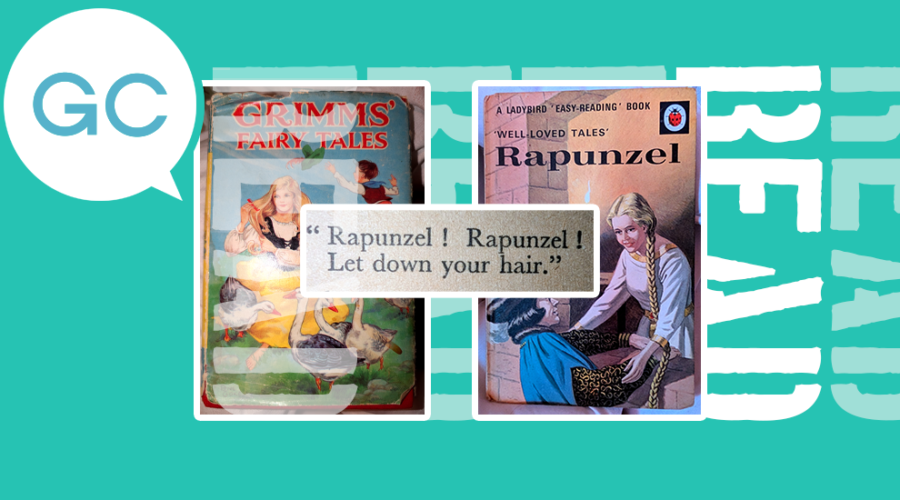
The first in a new Global Comment series, in which Global Comment editor Philippa Willitts re-reads childhood tales with a more sceptical, adult brain.
I’ve got very into folk tales the last few years, starting with Angela Carter’s fairy tales and, currently, revisiting a lot of the stories of my childhood.
Sometimes, this involves finding a familiar old edition of a story in a charity shop. I recognise the pictures instantly, and know without doubt that that was the book my dad would read to me and, later, that I would read to myself.
It’s a fascinating process, because while I remember these moments of comfy bonding very fondly, when I re-read a story that I knew word for word as a small child, I am often quite horrified by the kinds of themes, messages and storylines were thought to be a suitable way to ease a child to sleep.
I do remember, as a teen, regularly babysitting for a small girl who would always request a bedtime story that was “a fairy tale without a baddie”.
It turns out they are in short supply; the poor kid got the Princess and the Pea every time.
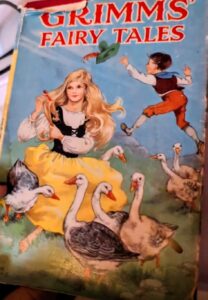
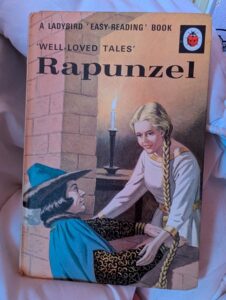 But recently I re-read Rapunzel. I started with the Ladybird picture book version I remembered well, then a version of the same story in a 1966 The Children’s Press book of Grimms’ Fairy Tales for children.
If you’d asked me what I thought the story of Rapunzel was about a few months ago, I’d have remembered a girl was locked in a tower, and she threw her hair down for someone to climb up.
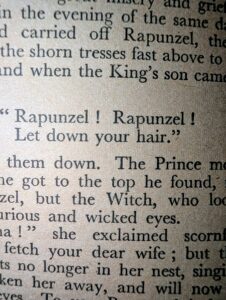
I’d have remembered “Rapunzel, Rapunzel, let down your hair”.
And that would have been about it.
If that is what you, too, think the gist of the story is, then I have news for you: the story of Rapunzel is bonkers.
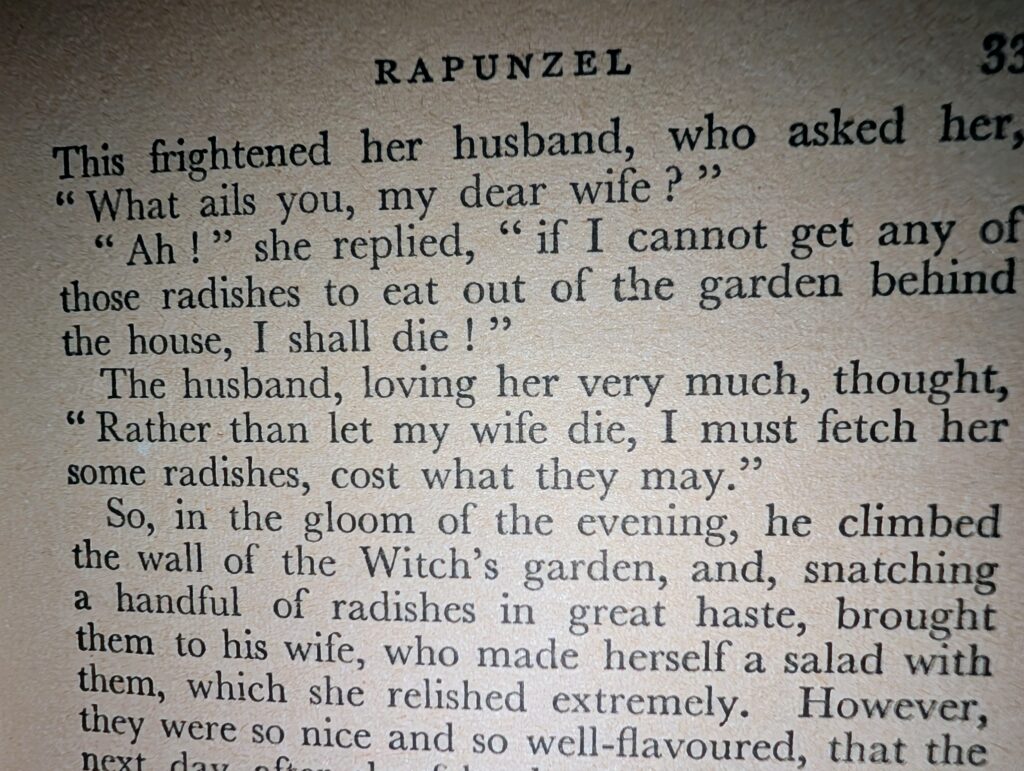
Rapunzel opens with a couple who long to have a child. Their house overlooks the garden of a witch, and this garden contains salad (in the picture book) or radishes (in the 1960s book) that the woman of the couple craves so intensely that she declares she will die if she cannot eat them.
Rather than even gently question this salad fixation, her husband breaks into the witch’s garden to get some salad / radish for her. She eats it, loves it, and then refuses to eat anything else.
Yer man breaks back into the witch’s garden for more, and is caught by the witch.
For a wicked, terrifying, formidable woman, the witch is surprisingly understanding about the couple’s dilemma. She says he can take as much salad / radish as he wants, as long as when their first child is born, they give it to the witch.
Inexplicably, he agrees. Then a baby is born, and the witch takes her, names her Rapunzel, and raises her. We never hear of this couple again.
The witch brings up Rapunzel until she is 12. Then, the witch locks the girl in a tower. In the picture book version of the story I read, there is zero explanation for this. It’s just stated as if that’s a completely normal thing to do to a child.
In the 1960s version there is a slight hint later in the story as to why the witch did this; when the witch ultimately feels betrayed by Rapunzel, she declares, “I thought I had separated you from all the world, and yet you have deceived me”. Was this a misguided protective move from the witch?
But let’s not get ahead of ourselves. The girl – who is, inevitably, the most beautiful girl in the world – is locked in a tower, being visited by the witch, who climbs up Rapunzel’s hair into the tower.
 There are a number of logical problems by this point that bothered me even as a small child. Rapunzel can’t get out of the tower because there is no door or stairs – so how did she get in? How on earth can someone climb up your hair without that being agonising?
But none of this is explained. You have to get used to big plot holes never being explained in these tales.
As is par for the course, there has to be heterosexual romance somewhere, so a passing prince hears Rapunzel singing and is intrigued, but can’t work out how to get into the tower to meet her. He eventually overhears the witch doing her “Rapunzel, Rapunzel, let down your hair” routine and later mimics her, climbing into the tower, first alarming Rapunzel, then charming her.
In the Ladybird book version of my childhood, it is slightly unusual for a fairy tale in that the prince visits Rapunzel many times and they fall in love. This does contrast with the common trope where a woman is married off to a prince without even a question of whether she wants this, or whether they even like each other. That was refreshing.
In the ’60s book of Grimms’ Tales, there is no such romance. He visits a few times, and they plan their escape. He starts to bring silk when he visits, and she starts to weave a ladder. One striking fact in the 1960s book is that the prince is the first man Rapunzel has ever seen. Even knowing that she did not have an ideal start in life, what with her parents swapping her for some salad, and that she was then brought up by someone who saw fit to lock her in a tower when she turned 12, it was jarring to think of the degree of isolation from the world this child had experienced to have never before seen a man.
In this version, she figures the prince would be better than the witch, so he’ll do.
When Rapunzel gives away her secret to the witch, she is furious. In quite the disproportionate reaction, the witch sends Rapunzel into the desert to die, but not before cutting off her hair, which she then plaits and gets ready for the prince’s next visit. He comes, the witch taunts him, he throws himself from the tower and blinds himself by landing in some thorns.
 It’s all very odd, but some time later, he’s wandering sightless in the desert and he hears a familiar singing voice.
He’s refound Rapunzel! (And, in the 1960s Grimms’ version, her TWINS, a boy and a girl, who get no other mention, but I guess we at least know how the pair had kept themselves entertained in the tower.)
Rapunzel cries when she sees him, her tears curing his blindness, and they go back to his kingdom and all is well.
There is a lot to say about fairy tales and the ways they have evolved, and the ways the versions reflect the politics of the time they were recorded and such. I find it endlessly fascinating that there are so many versions of each story, and that we all remember key points of a story (tower, long hair) while forgetting the whole giving-the-baby-away-for-radishes side of things.
But why my dad, along with billions of other parents, found this the most effective way to get his child to sleep, is perhaps the biggest mystery of all. But he did, as parents have done for centuries.
Rapunzel, compared to some of the other fairy tales I have revisited, is not wildly traumatic (just wait til I tell you about Pinocchio).
It is, however, indisputably and profoundly odd.