

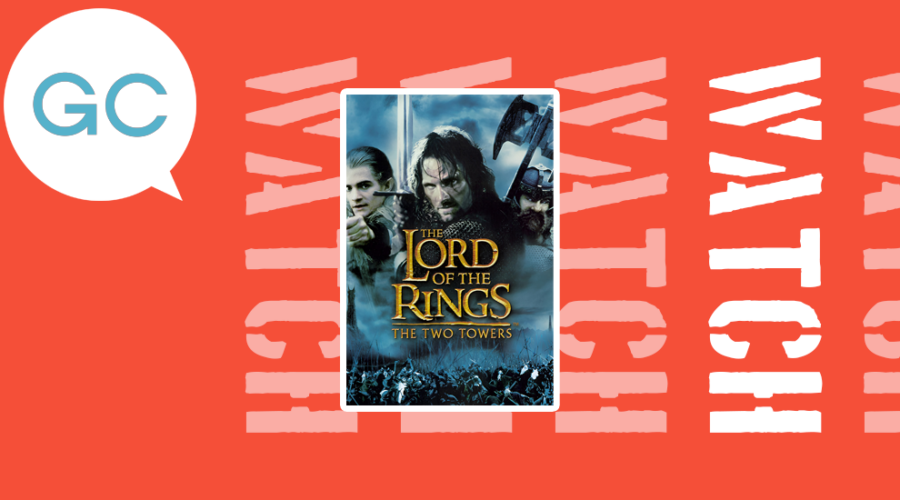
With the anniversary theater run of the original Lord of the Rings trilogy being complete, I have found myself in conversation about The Two Towers again. In the year 2026, the second installment of Peter Jackson’s epic Tolkien adaptation is more relevant than ever.
Originally my second favorite in the trilogy, I now find that The Two Towers is neck and neck with The Fellowship of the Ring for me – and not just because seeing the Battle of Helm’s Deep on the big screen again made me realize how much intricate work went into its production, the way it oscillates between great, terrifying scale and zeroing in on the emotional states of the key characters.
The Two Towers, I realized, is a great anti-blackpill movie, a sincere and powerful antidote to the forces of bitter cynicism that drive our algorithm-obsessed culture today.
When I first saw The Two Towers, in its limited form (the extended editions of all the three Lord of the Rings movies is the only way to experience them, I fully believe that), I had already read Tolkien’s book in full. Many of the liberties taken with the plot of the movie grated on me initially. What was the point of having some kind of weird “breakup” between Aragorn and Arwen, whose enduring love and hope is the constant backdrop of the developments in the book?
Why was Elrond withholding the full truth about the family Arwen will create with Aragorn from his daughter? Why do the Ents decide that they won’t get involved in the war against the dark powers only to have Pippin steer Treebeard toward witnessing the devastation laid by Saruman and explode in righteous rage? Why is Faramir seemingly an idiot who’s willing to grab the One Ring, at least at first?
These alterations felt annoying to me at the time, and many of my fellow book fans agreed (I still remember the angry threads in our nerdy little forums, back when independent forums were a bigger thing and you didn’t need to mix with the riffraff of Reddit to converse with your fellow dorks).
The Two Towers is a great anti-blackpill movie, a sincere and powerful antidote to the forces of bitter cynicism that drive our algorithm-obsessed culture today
Lately, I found myself feeling more charitable toward these plot-driven decisions. There is always going to be differences between how dramatic moments are portrayed on the page versus how they are portrayed on the big screen.
You need tension and action for an epic like this to work visually, and liberties are going to have to be taken, otherwise, your audience is going to fall asleep.
I have also warmed to Peter Jackson’s version of The Two Towers because they kept with the spirit of the narrative, if not some of the individual characters involved.
What I realized in seeing it on the big screen again was this – the plot deviations were steeped in the overarching emotion of Tolkien’s work, that feeling you get in the pit of your stomach when hope is hanging by a thread. It’s the kind of feeling that is easy to evoke over the course of many pages, and hard to capture on film.
In the sweeping universe that Tolkien created, it is likely that Elrond did occasionally feel anger and resentment toward his daughter’s noble-but-difficult choice to sacrifice her own immortality, and kept it to himself. It is likely that some of the Ents initially doubted their decision to go to war. It is likely that a shadow of temptation did stir in Faramir, even if he outwardly rejected the One Ring’s evil.
Jackson’s portrayals are not true to the individual storylines, but they are true to the feeling of terror that certain death and Sauron’s twisted war invoke.
Taken as a whole, The Two Towers is also simply bigger than some plot deviations. It’s a movie about how important it is to not lose hope, even when everything inside you is screaming that hope is a goner. It’s a movie about the importance of alliances, and that the bedrock of an alliance is bravery and honor. It’s a movie about wanting to save a world that may appear, on the surface, to be too doomed and fractured to save.
It’s a movie about how important it is to not lose hope, even when everything inside you is screaming that hope is a goner
As a native of Ukraine, I’m often asked why today Ukrainians call Russians “orcs.” Isn’t it just a denial of the fact that Russians are human beings who have chosen to invade and kill their fellow human beings?
Helm’s Deep is a good answer to that question. Thousands of orcs are sacrificed for a purpose that is essentially genocidal. The orcs may be ugly on the outside, but they don’t want to die. They scream in agony just like the men and elves.
The Russian invasion is essentially orcish in its nature, in the purpose that drives it. You don’t need to look like a storybook monster to act like an orc. Epic fantasies are not real life, but they do remind you of what’s important in life – in this case, it’s defending your home, defending what you love, and giving a damn about your friends.
We need more and not less of this sentiment today. Irony-pilled internet culture can’t stand it, but all irony-pilled internet culture does is contribute to our suffering and spite.
Not only has The Two Towers stood the test of time, but it is a story that needs to be told and re-told by the hopeful to the hopeless. Don’t give up. Don’t give in. Reject the poison being dripped into your ears by doomers and blackpillers.
Learn to breathe the free air again. Your individual acts are still important.