

There’s something irresistibly satisfying about a gentleman thief. The perfect crime, executed with grace and wit, has an elegance that brute force just can’t match. Arsène Lupin, Maurice LeBlanc’s master criminal, was introduced to French readers in 1905. Lupin is very different to that other fictional arch-criminal of his time, Moriarty of the Sherlock Holmes stories. He’s not evil, but instead full of charm, intelligence and rebellion.
This month over at Five Books For, we’ve been looking at detective stories in translation and this is surely one of the best.
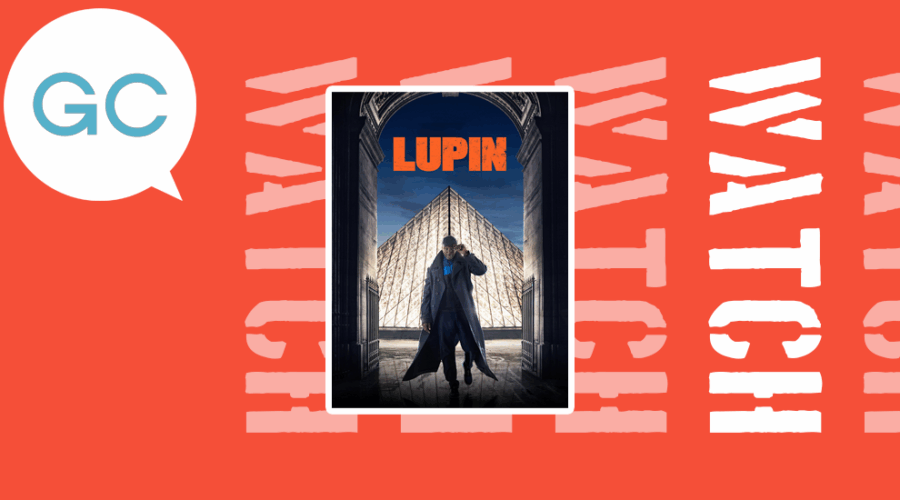
More than a century after the first Lupin stories caught the public imagination, Netflix’s adaptation Lupin reimagines the iconic burglar for the modern age, swapping top hat and monocle for hoodie and smartphone, but keeping the same mischievous glint in the eye.
At its heart, Lupin in both its written and TV forms is about cleverness: how to outthink those with more power, more resources and fewer scruples.
It’s about style as substance, intellect as mischief, and the enduring thrill of seeing justice served, however unconventionally.
It’s also tremendous fun.
What is it about?
Our hero (or perhaps more accurately our anti-hero) is a man who steals from the rich, sometimes to correct a wrong, sometimes simply for the joy of it.
Forever reinventing himself through disguise and deception, Lupin is the anti-Holmes – irreverent, romantic and gleefully subversive. While the Holmes stories – some of my all-time favourite writing – take the intellectual side of things seriously, LeBlanc keeps his tongue firmly in cheek throughout. LeBlanc was writing contemporaneously with Conan Doyle and even introduced the two characters in one of his stories, but was forced by Conan Doyle’s lawyers to change the name. He renamed his character Herlock Sholmes, which I think just about sums up his sense of fun. I suspect he would have been great dinner party company.
Netflix’s Lupin takes all the panache and joie de vivre of the stories and transposes it to contemporary Paris. Assane Diop, played with effortless charisma by Omar Sy, is inspired by LeBlanc’s hero and models his life on the character’s code: wit over violence, guile over greed.
Using disguise, nerve and flair, he sets out to right old wrongs and expose corruption among the powerful. The series isn’t a direct adaptation but rather a lively homage – Lupin reborn for the age of smartphones and surveillance, where brains and charm can still win out over brute strength.
What’s great about the book
 LeBlanc’s original stories, collected in The Extraordinary Adventures of Arsène Lupin, Gentleman Burglar, are quick-witted adventures which have a wry sense of humour.
LeBlanc’s tales are a joy because they never take themselves too seriously. The prose crackles with irony, as if the author himself is winking at you over the page. His Paris is a world of glittering salons, grand estates and secret passageways – an early twentieth-century fantasy already nostalgic for its own elegance.
Yet Lupin himself feels remarkably modern. His independence, humour and moral ambiguity would fit comfortably in any contemporary mystery. Beneath the playfulness lies a thread of social commentary: Lupin exposes the self-satisfied elite, outwitting them with brains and bravado. He’s a lovable rogue, a trickster who turns intellect into art.
The stories combine the pace of a caper, the charm of a comedy of manners and the satisfaction of a moral fable.
Reading them today, they still feel fresh, despite the very different norms of the time they were written. I also love the reference to Sherlock Holmes, and the way that Holmes must have inspired LeBlanc.
What’s great about the series
The Netflix version takes Lupin’s essence – his intelligence, style and sense of play – and weaves it into a brisk, contemporary heist thriller. In the opening of the series (and in an impressive example of life imitating art), Assane steals the Empress Josephine’s priceless necklace from the Louvre just as it’s about to be auctioned.
Half the fun of watching the series is seeing unbelievably clever heists unfold and then learning how it was done.
While Assane’s world may be full of modern technology, his methods and motives have a classic spirit. He’s clever, full of heart, and impossible not to root for. Each episode delivers the delicious satisfaction of a puzzle solved, a plan revealed, a smug adversary undone.
Omar Sy anchors the series beautifully. His performance gives the show its heart: calm, magnetic, a touch mischievous. The writing balances intrigue with emotional weight, and while the heists are grand and ingenious, the story also pauses for moments of reflection and tenderness, especially in the flashbacks to Assane’s childhood.
Assane knows that intelligence isn’t just about clever plotting – it’s about observation, empathy, and the ability to read people as deftly as he can pick a lock.
Visually, the series is a treat to watch. Paris gleams here – not with postcard prettiness, but as a city alive with texture and movement. The show plays with illusion and perspective, constantly reminding us that what we see is rarely the full picture.
Like LeBlanc’s stories, it’s a performance: one big, stylish game of hide-and-seek, where the pleasure lies in being tricked and enjoying it.
Where to start
If you’re new to the world of Arsène Lupin, the Netflix series is the perfect place to start. It’s clever, fast-moving and full of charm – ideal for anyone who enjoys a good heist, a smart hero and the feeling of being delightfully outsmarted. It’s also refreshingly light in tone: suspenseful without being dark, clever without being cynical, even when it covers deeper themes. The relationship between Assane and Yousef Guedira, a fellow fan of the books and the only detective who seems able to understand him is a highlight, as is the clever plotting and of course Omar Sy’s performance itself.
If you love clever writing, mystery stories with satisfying solutions and wry humour, turn to the written stories. They are witty, brisk and endlessly inventive.
Together, the book and series form a playful conversation across time. LeBlanc’s Lupin thrived in an age of elegance and intrigue; the modern Lupin strolls through a world of CCTV and social media, using the same quick wit and nerve to stay one step ahead. Both share a belief that cleverness, handled well, is its own form of justice.
If you’ve ever secretly rooted for the brilliant trickster, Lupin – on page or screen – will charm you completely.
After all, the greatest pleasure isn’t simply getting away with it, but getting away with it beautifully.