

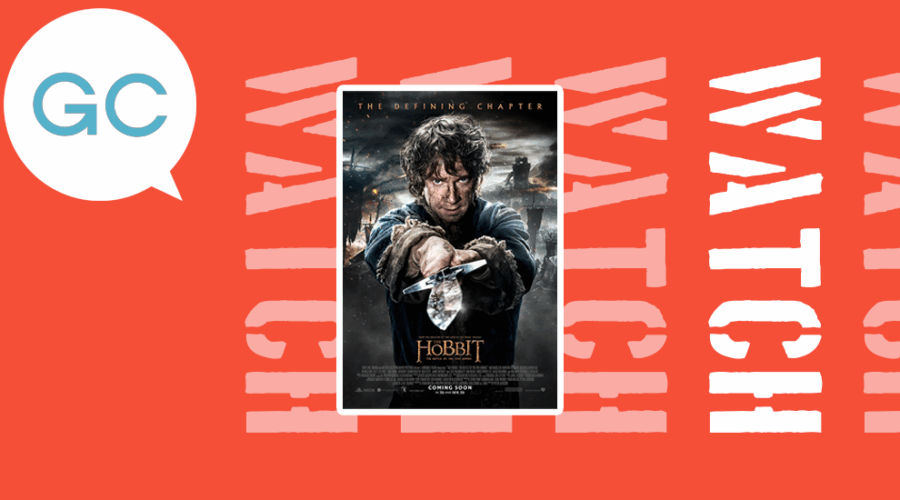
Over at Five Books For this month, we’ve been talking about 20th century classics that are truly enjoyable to read – not necessarily fun exactly, but each of this month’s books have something that makes them a compelling and deeply enjoyable read.
There is something deeply reassuring about returning to a 20th-century classic that wears its intelligence lightly. Written before irony became compulsory, or authors felt the need to apologise for being sincere, The Hobbit has been beloved for so long now that we all know at least a bit about it.
First published in 1937, The Hobbit began life as a children’s story, told (and retold) by JRR Tolkien to his own children before being written down almost as an afterthought.
It went on to become one of the most beloved books of the last hundred years, the foundation stone for The Lord of the Rings, and the unlikely seed of an entire genre as we now understand it. Few books have had such a wide cultural reach while remaining, at heart, so personal and so humane.
I grew up close to where Tolkien lived, in Birmingham, near the Lickey Hills. The Lickeys were a place where Tolkien spent a lot of time and are said to be one of his main sources of inspiration for The Shire. There is certainly something magical about them – to this day they are one of my favourite places in the world.
A cultural colossus in a hairy-footed package
It is hard to overstate the cultural impact of The Hobbit and its longer, weightier sibling The Lord of the Rings. Together, they didn’t just popularise fantasy – they defined it. Elves, dwarves, dragons, quests, maps at the front of books, invented languages, and the idea that the fate of the world might hinge on the moral choices of the small and overlooked all owe an enormous debt to Tolkien.
The books have never gone out of print. They were devoured by soldiers during the Second World War, adopted by the counterculture of the 1960s, endlessly reinterpreted by gamers, musicians, artists, and filmmakers, and passed down through families like heirlooms. Even people who have never read a page know the shape of Tolkien’s world: hobbits are now a shorthand for comfort-loving provincialism; the idea of “second breakfast” is cultural currency. Gandalf’s beard alone probably deserves its own footnote in modern mythology.
The film adaptations, beginning with Peter Jackson’s The Lord of the Rings trilogy in the early 2000s and followed a decade later by The Hobbit films, brought Middle-earth into the visual imagination of a new generation. Whatever one thinks of adaptation choices or running times, that achievement is undeniable.
These were not niche fantasy films – they were global cultural events, sweeping awards ceremonies, filling cinemas, and proving that epic storytelling could still be earnest, emotional, and commercially successful without a wink to the audience.
A quiet academic with a very loud imagination
John Ronald Reuel Tolkien was, on paper, an unlikely architect of modern myth. A professor of Anglo-Saxon at Oxford, a philologist by training, and a man deeply immersed in ancient languages and medieval literature, he was far more interested in words than worlds. Middle-earth grew less from a desire to invent a fantasy setting than from Tolkien’s love of language – names, sounds, etymologies, and the way stories accrete over time.
Tolkien fought in the First World War, an experience that shaped his understanding of courage, loss, and fellowship, though he always resisted simplistic readings of his work as allegory. He disliked heavy-handed symbolism and insisted that stories should be allowed to breathe on their own terms.
The Hobbit, in particular, is lighter, funnier, and more openly playful than The Lord of the Rings, written in a voice that often feels as though the author is leaning in to share a secret.
The book: an unexpected hero’s journey
At its heart, The Hobbit is the story of Bilbo Baggins, a comfort-loving, well-fed, deeply respectable hobbit who would very much prefer to be left alone. When a wizard and a band of dwarves turn up at his door and invite him on an adventure, Bilbo’s initial response is one of polite horror. He is not brave, not particularly strong, and not at all convinced that adventures are a good idea.
What follows is a classic quest narrative – a journey through wild landscapes, encounters with trolls, elves, goblins, and a dragon, and the slow, believable transformation of Bilbo from reluctant bystander to quietly capable hero. Crucially, this transformation does not rely on sudden prowess or secret greatness. Bilbo succeeds through observation, empathy, cleverness, and an ability to see situations from unexpected angles.
The book’s greatness lies in its balance. It is genuinely funny, with a narrator who is not above gently teasing both characters and readers. It is suspenseful without being grim, moral without being preachy, and imaginative without ever losing its emotional grounding.
Tolkien’s world feels vast, but The Hobbit remains intimate. The stakes matter because the people matter.
The film: spectacle with a beating heart
Adapting The Hobbit for the screen was always going to be a challenge. It’s a shorter, more episodic book than The Lord of the Rings, and its tone is deliberately lighter.
Peter Jackson’s decision to expand the story into a trilogy was controversial, and not without reason. The films add material, amplify conflicts, and lean harder into epic spectacle.
And yet – they are also, undeniably, a joy. Martin Freeman’s Bilbo is near-perfect: anxious, wry, decent, and quietly brave. The world of Middle-earth is realised with extraordinary care, from the warmth of the Shire to the menace of the Lonely Mountain. The cast commits fully, the music soars, and the sense of affection for Tolkien’s world is evident in every frame.
The films succeed best when they honour the spirit of the book – the humour, the wonder, and the idea that heroism often looks small and feels uncomfortable.
At their strongest, they remind us why this story has endured: not because of battles or dragons, but because of a hobbit who learns that he is more than he thought he was.
Book or film?
For me, the book wins. It always will. There is something irreplaceable about Tolkien’s voice on the page, about the way the story unfolds at its own pace, guided by language rather than spectacle.
The Hobbit as a novel feels like a story told by the fire, generous and knowing, trusting the reader to come along for the ride. I think a big part of that is because of the fact it was a story he created for his children – it wasn’t written with commercial success in mind, or with any great notion of publication, but instead to entertain, to thrill, to create a bond with the people Tolkien loved most in the world.
That said, the films are an excellent adaptation in the truest sense – not a replacement, but a companion. They open the door to Middle-earth for new readers and offer a different way of loving the same story.
And perhaps that is the real mark of a great adaptation. Not that it settles the argument, but that it keeps the conversation alive.