

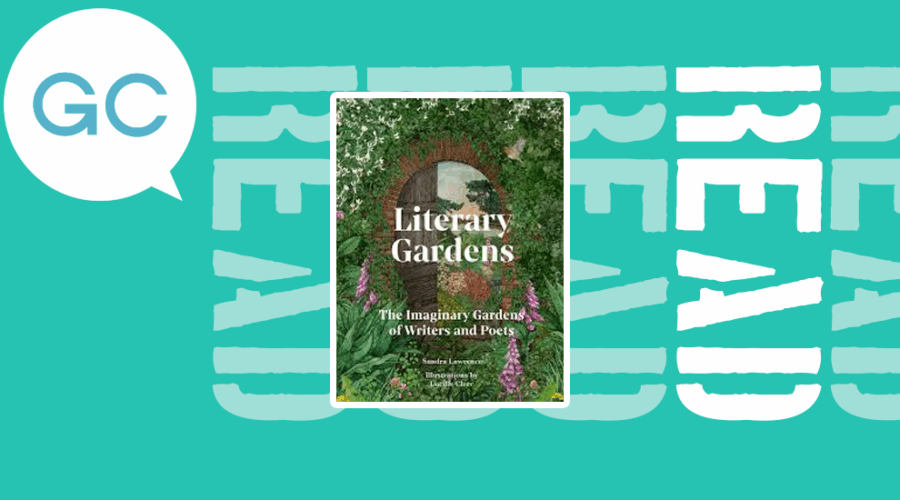
From the moment you pick up Literary Gardens by Sandra Lawrence, it becomes clear that the book offers an immersion into a realm where literature and imagination engage in constant dialogue. It is a work designed for attentive readers, especially those who find, in books, spaces that linger in the memory.
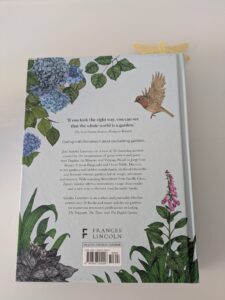
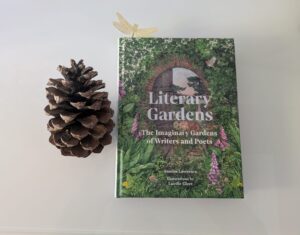 Literary Gardens. The Imaginary Gardens of Writers and Poets, published by Frances Lincoln, is one of those works that combines conceptual depth with careful design.
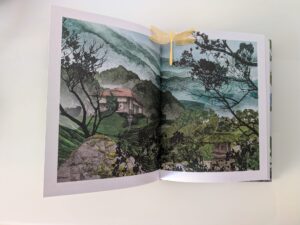
Lucille Clerc’s illustrations accompany the text with intelligence and sensitivity, evoking the gardens that many readers have already visited in their imagination through literature.
Each page offers visual details that enrich the reading experience without distracting from it. Text and image move forward together in a sustained balance, creating a book in which form reinforces content.
This is an illustrated literary tribute that moves comfortably between literary criticism, cultural history, and close readings of major works from different periods. Lawrence offers a rigorous exploration of the place gardens have occupied in literature as spaces of meaning, memory, and transformation.
What emerges is not a catalogue of settings, but a careful analysis of how these spaces function within literary texts.
The author examines how different writers have used the garden as a narrative and emotional device. Throughout the book, these spaces, whether imaginary or inspired by real places, are charged with experiences connected to desire, loss, the passage of time, and processes of personal change.
The garden is understood as a symbolic place that concentrates tensions and emotions, rather than as a simple physical environment.
Many of these literary gardens look back toward the past and are tied to nostalgia or to what can no longer return.
From the opening pages, Lawrence makes her central premise clear: in literature, the garden rarely serves as a neutral backdrop. It is a meaningful space where internal conflicts, deep emotions, and decisive moments in the lives of characters intersect.
As the book progresses, she insists that these gardens are rarely just about plants or scenery. They can be places of refuge and threat, memory and promise, and they are often associated with what has been lost or cannot be recovered. Many of these literary gardens look back toward the past and are tied to nostalgia or to what can no longer return.
The book is organized around broad thematic groupings rather than a strict chronology. This approach allows works from different centuries, genres, and literary traditions to coexist, connected by their use of the garden as a narrative tool.
Classics of children’s literature appear alongside modern novels, fantastical stories, and texts of strong conceptual density. Among them are The Secret Garden, Rebecca, Alice’s Adventures in Wonderland, Tom’s Midnight Garden, The Garden of Forking Paths, and The Garden of the Finzi-Continis.
The result is a dynamic reading experience that maintains the interest of even non-specialist readers. Lawrence weaves together fairy tales, coming-of-age narratives, unsettling worlds, imagined gardens, and complex mental constructions. Each chapter focuses on a specific work, examining it through its literary context, relevant biographical elements of its author, and the symbolic role the garden plays within the text.
 One of the most notable chapters is devoted to The Secret Garden by Frances Hodgson Burnett. Lawrence offers a more nuanced interpretation of the novel. The garden appears as a space of personal transformation, but also as a site shaped by power relations, social hierarchies, and historical conditions.
The analysis brings together the emotional development of the characters and key aspects of Burnett’s biography with precision.
A similar approach is taken in the chapter on Rebecca by Daphne du Maurier. The garden at Manderley takes on a narrative weight comparable to that of the characters themselves.
Lawrence shows how the exterior spaces reflect the narrator’s psychological tension and the persistence of the past, turning the landscape into an active element of the story.
The book also lingers on shorter but conceptually complex texts, such as The Garden of Forking Paths by Jorge Luis Borges. In this case, the garden is not a traditional physical space, but an intellectual construction that allows for reflection on time, choice, and the multiple possibilities of human experience. The analysis is clear and direct, avoiding an academic tone and making the text accessible without sacrificing depth.
Another of the book’s strengths lies in the way it integrates authors’ biographies when relevant. Personal experiences such as loss, displacement, or ties to specific places appear as context that helps explain the function of gardens in the works.
The book situates itself within a broad tradition of texts in which the garden marks a turning point in the lives of characters and stands as a solid and accessible work
Lucille Clerc’s illustrations reinforce this approach. Rather than reproducing specific scenes from the texts, the illustrations offer visual interpretations that engage with the book’s ideas. They add an aesthetic dimension that accompanies and extends the reading experience.
Because of its clarity and focus, Literary Gardens can be read both by specialists in literature and by readers interested in the relationship between space, fiction, and culture. The book situates itself within a broad tradition of texts in which the garden marks a turning point in the lives of characters and stands as a solid and accessible work.
Overall, Sandra Lawrence’s book is a valuable contribution for those interested in literary criticism. It is an essay that reads with ease and invites readers to return to familiar texts from a renewed perspective, paying close attention to those green spaces that, in literature, are never just landscape.
Images: Edgary Rodriguez R.