

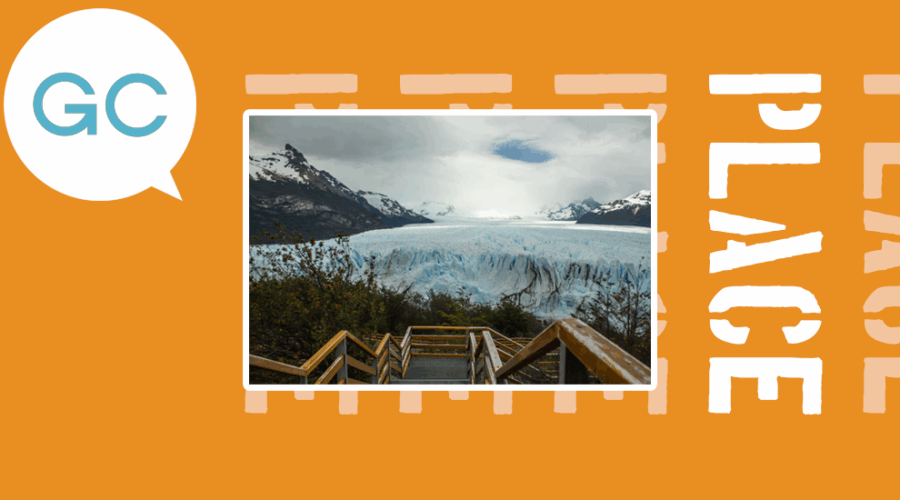
Traveling to the south of Argentina is a way of getting closer to the edge of what feels possible. There, where cold becomes a constant, lies Los Glaciares National Park, a territory that seems to have been designed to remind us of our smallness.
Created in 1937, this protected area preserves more than 700,000 hectares of landscapes where turquoise lakes, subantarctic forests and, of course, the imposing glaciers that give the park its name coexist. It is, quite literally, a living postcard of the Southern Andes.
Entering the park feels like crossing a threshold: humanity shrinks in front of the scale of ice. The air is sharp and clean, the light plays with tones that seem unreal. This is not a place for rushing; here every step insists you pause and observe.
The forest before the ice
Before the view floods with white, the path winds through the forests that cover the lower slopes. Lenga, ñire and guindo trees endure the harsh climate, forming green corridors that appear to guard the entrance to the glaciers.
These are quiet forests, interrupted now and then by the beating wings of a condor or the chatter of parakeets swirling above. Hidden in the branches live more elusive creatures: the wildcat, the red fox and, the stealthy silhouette of a puma.
The ecosystem changes with altitude, and that diversity makes every stretch of the journey feel like a new scene. In some places you hear birdsong, in others silence dominates.
Here, nature does not feel domesticated; everything remains in a delicate balance the park seeks to preserve.
The frozen heart: 360 glaciers
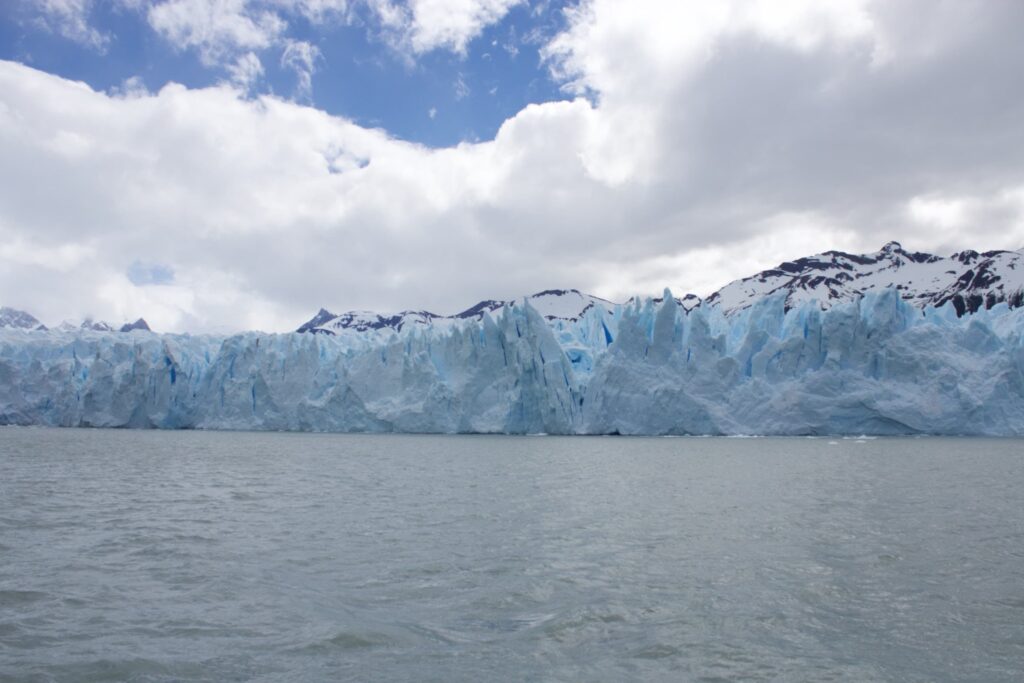
What has drawn thousands of travelers to this corner of the world is not only its forests or its wildlife, but the majesty of its 360 glaciers. Thirteen of them are massive, true ice giants that seem motionless, though in reality they are always moving. Among the most famous are Viedma, Upsala and, of course, the celebrated Perito Moreno.
Walking up to a viewpoint and watching the ice descend from the mountains, like a river frozen in time, is a spectacle that goes beyond sight.
It’s a physical impact: the cold emanating from the glacier presses against your skin, and the deep cracking sound of the ice feels as though it comes from the center of the earth.
Perito Moreno: a breathing giant
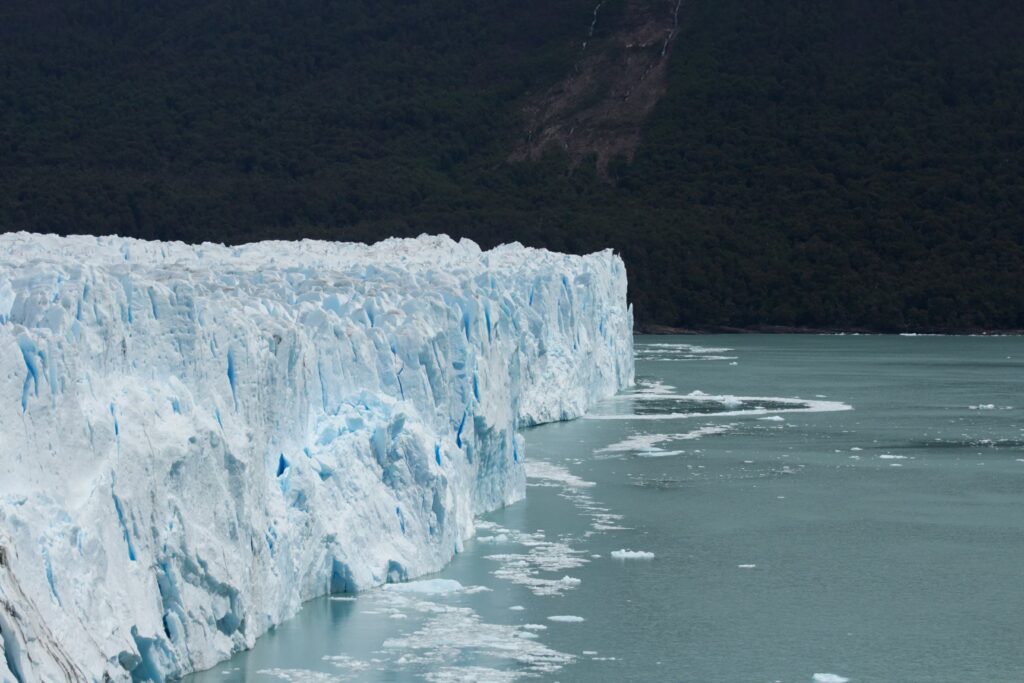
The Perito Moreno Glacier occupies a central place in this geography of wonders. With its 265 square kilometers of surface, it is one of the most accessible glaciers in the world and, at the same time, one of the most active. It was named in honor of Francisco Moreno, tireless explorer and pioneer in the study of Patagonia.
What makes it unique is the natural spectacle that occurs every three or four years: the rupture.
The glacier advances over Lake Argentino, forming an ice dam that blocks the water. Pressure builds, the water pushes for escape and eventually the glacier breaks with a deafening roar.
Those who want a closer experience can choose from boat trips along the glacier’s north and south faces, or even trekking across the massive ice itself. I chose the boat —a chance to see the glacier from different angles. Up close, there is only white immensity. From afar, standing on the walkways, the glacier becomes just a small shimmering point above the lake’s waters.
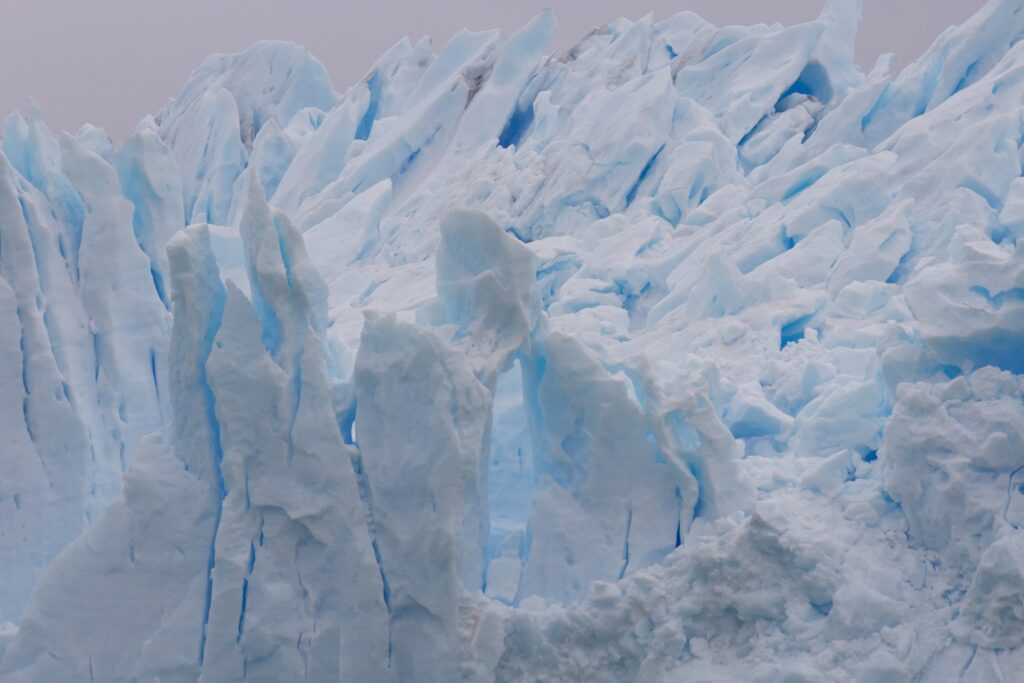
The Upsala Glacier, much less famous but equally overwhelming, astonishes with its vastness.
It stretches out like a frozen sea, and from the boats that cross the lake you can watch drifting icebergs floating like wandering islands. The Viedma Glacier, on the other hand, is distinguished by the colors its ice takes on: deep blues, grays, blinding whites.
Both are reminders that ice is not static, but alive, breathing through cycles of advance and retreat.
A journey to the essential
 The park, vast and diverse, has been subdivided into management zones designed to meet different objectives. This zoning is based on the ecological value of each sector: some are prioritized for strict conservation, others for research, and others for responsible tourism. It’s a way of balancing the human desire to explore with the need to protect such a fragile environment.
Being in Los Glaciares is about facing the essence of nature: cold, wind, water and time. Here, everything unfolds on a scale different from our own. The forests remind us of patience; the glaciers, of unstoppable force.
Los Glaciares National Park is not simply a tourist destination. It is a lesson in humility written in ice, a reminder that there are still places where nature dictates its own laws, and all we can do is admire, learn and respect. I truly hope future generations will be able to see this beauty.
Images: Edgary Rodriguez R.