


Opened in 1836, the Botanical Gardens in Sheffield in the north of England cover 19 acres and include 5,000 species of plants. In many ways, it’s very grand and reflective of the trends in Victorian open spaces, with a large glass pavilion and impressive fountains.
What was most interesting to me on a visit to the park this week, however, was the colour, the flowers, the wildlife and the birds – all of which were remarkably exuberant for early February.
In researching the history of the Botanical Gardens, though, I was reminded – once again – that everything is political. Everything!
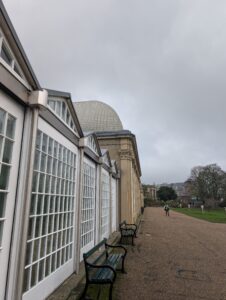 When the gardens opened in 1836, despite being created during a time when it was recognised that industrial towns needed open spaces for the health of the people and nature, this space in Sheffield – according to a 1986 booklet by Jan Carder – was exclusively for the use of paying subscribers.
The town council even voted in 1852 against allowing working-class people to enter the park, one day a week, at a reduced price.
It was only when ownership transferred to Sheffield Town Trust in 1898 that the non-paying public were allowed in – and even then there were conditions of entry:
“No person of notoriously bad character shall enter… nor any person in a state of intoxication, or suffering from any contagious infection or loathsome disease, or so dirty in clothes or person as to be an annoyance to the public.”
Having visited the Botanical Gardens many times over many years (and trying to avoid doing so in a state of intoxication or dirty in clothes – though I can’t necessarily deny having the odd loathsome disease), one spot that never fails to be fun to visit is the bear pit.
The information board in the park explains that when the gardens opened, there were zoological collections as well as an array of plants, including monkeys, parrots, eagles and a black bear. Later, in 1855, two brown bears were introduced to the park, which were sold in 1859.
This helps to explain why the bear pit exists at all, but potentially glosses over the reason they were sold; the Carder booklet explains that a letter to the press alleged that “a nurse held a child over the railings to see the bears and was either dropped by the nurse or clawed to death by the bears”.
Which, admittedly, makes the adorable statue a bit less charming (though does nothing to detract from the kindness of whichever thoughtful souls gave it a scarf and mittens in the bitter cold this week).
However, if the newspaper report from the time is true, we can’t blame the bears. It was bears doing what bears do, and is one – of many – arguments against putting them in a public park.
Like any open space in a temperate climate, Sheffield’s Botanical Gardens is a very different place depending on whether you go in January, June or October.
The pleasant surprise in this early February visit was how very alive it all felt.
While I may generally prefer wilder natural spaces, it is evident that many people work very hard at planning and planting and caring for this varied and vivid expanse. And, on a bitterly cold day, the pavilion did provide a nice space to defrost my poor fingers.
Disabled access at Sheffield Botanical Gardens is pretty good, with wide, well-surfaced paths (which can, at times, be steep) and alternatives to steps at most spots.
Images: Philippa Willitts