

As a writer, I’ll be the first to say it – writers are kind of boring. Especially when someone is trying to feature us on television.
What viewer really wants to see someone agonizing over their notes and staring forlornly at their laptop? Is typing relentlessly and sometimes despondently compelling? Is groaning and tugging at your hair as you wonder why you couldn’t have a normal and lucrative calling all that interesting?
I genuinely don’t think so, which is why I find many of the stories featuring writer protagonists to be unfilmable.
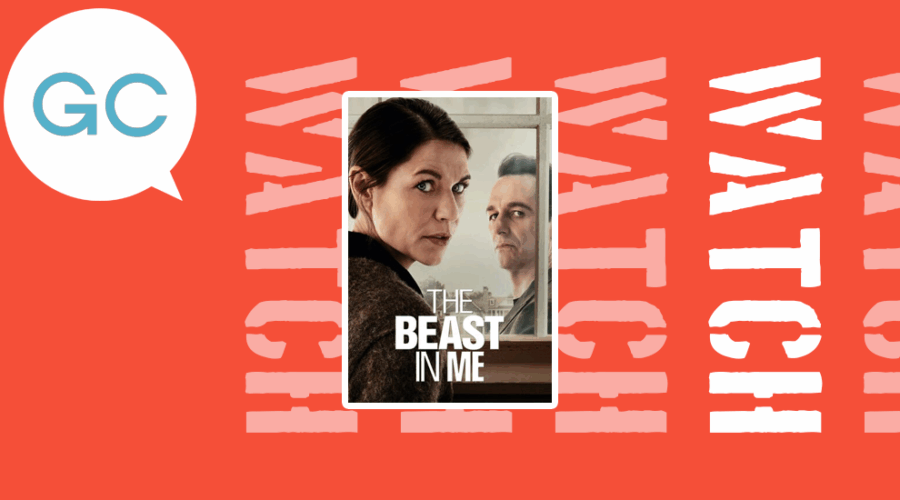
So it’s a testament to the talents of both Claire Danes and series creator Gabe Rotter that they could make Netflix’s The Beast in Me an exciting watch.
As Pulitzer Prize winner Agatha Wiggs, lately plagued by tragedy and grief and the bad decisions that come with them, Danes pulls off a complicated role through a delicate balancing act – her face a mask of ice-cold fury one minute, and full of vulnerable curiosity the next.
Vulnerable curiosity is one of the things that makes a writer good, in case you are wondering.
Of course, it also helps that Matthew Rhys is stalking around here too, as an evil, or perhaps misunderstood (or perhaps a bit of both) real-estate tycoon Nile Jarvis. Plagued by rumors that he murdered his first wife and accusations that his ambitious new building project is ruining New York City (which is always getting ruined by something, when you think about it), Nile is a bit like a cornered cat, spiky and unpredictable.
The tough but bruised businessman makes for a fantastic foil for Agatha. She’s used to reading other people, not being read herself – or, at the very least, she’s used to most people giving her some deference.
Nile has no patience for politeness. By the time he is straight up telling Agatha that he senses her professional “bloodlust,” you can see the gears turning in her head, the slow realization that she may have finally met a subject who will challenge her in the way she secretly wants to be challenged.
From property schemes to murder, from writer’s block to the questionable activities of emotionally unstable FBI agents, the plot of The Beast in Me crackles along, and at its heart is the idea that we never really know who we are until someone is there to push us to our limits.
Good television becomes awesome television when creators actually like their characters
Writers especially love the illusion of control. We have to love it, we’d never get anything done otherwise. But as Agatha’s character demonstrates, the most interesting and terrifying time in a writer’s life is when a narrative breaks out of its box and develops a life of its own.
Not that she planned on this when the magnate with the mysterious past moved in next door, caused a lot of ruckus, and then off-handedly suggested she write his biography after bullying her.
In fact, Agatha was content to wallow in her stalled manuscript and the pain of losing her family, even as her once-cozy house rots from the inside out (a good real-estate metaphor in a show that’s full of them).
Nile may be a scary guy, but he also becomes the thread that leads her through the labyrinth.
The dance of death that art and money perform together, the tribulations of leftist populism vs large-scale development, the pleasure and the trap of owning property, these are all great themes that The Beast in Me explores, but the unpredictable relationship between Agatha and Nile is what illuminates everything.
Yes, this is a thriller, and there are many creepy moments along the way, but the show also dares you to root for these two fascinating weirdos. It’s a dead horse I pummel quite a lot, but good television becomes awesome television when creators actually like their characters, and you can tell Gabe Rotter is deeply committed to his.
I also really like the tension between Agatha’s pursuit of her work and the pursuit of truth and justice. In an ideal world, these goals would align perfectly. In the world of prestige publishing and big business deals, they diverge all the time.
Some of the most tense and interesting moments occur when it is unclear on whose side Agatha is actually on. Does she involve herself with Nile because she needs to land another bestseller? Because she cares about what really happened to his first wife? Or is there a more primal obsession that’s lurking underneath her pedigreed surface?
In a pivotal moment, Nile tells Agatha about the French phrase for “the call of the void,” l’appel du vide, an irrational urge to jump off a tall building. It’s not actually suicidal, it’s just a strange tic of the brain, an impulse. It’s painfully obvious that before meeting Nile, Agatha has been skirting her own void for some time. The question is, will she splatter or land on her feet.
I highly recommend watching to find out.