

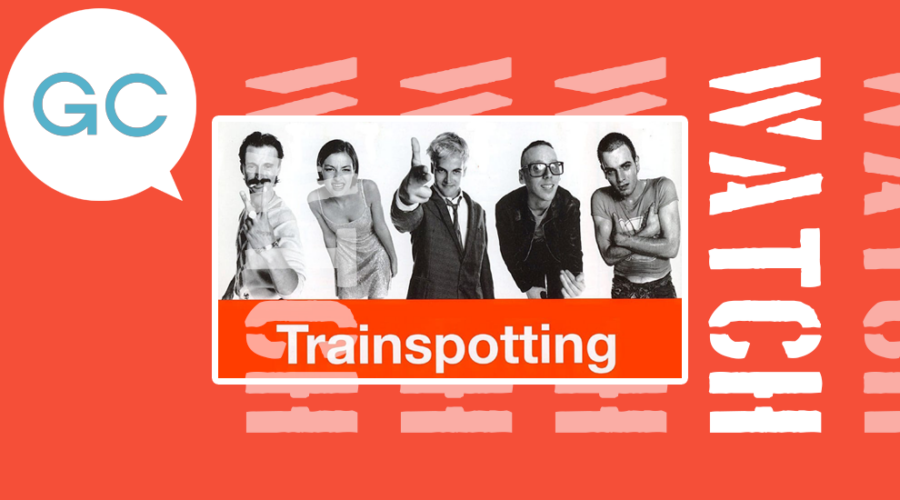
Three decades ago, Ewan McGregor’s Mark Renton decided to ‘choose life’, and cinema will never be able to thank him enough.
The odyssey of this young Scotsman, whose only ambition was to sink into a pit of heroin and betrayal, burst onto UK screens on February 23, 1996, without high expectations.
However, since that day, the narrative, visual, and auditory impact of this cult classic has continued to resonate.
Under the direction of Danny Boyle, who was just beginning to show his genius, Trainspotting portrayed the harsh reality of a group of young people in Edinburgh involved in the world of drugs during the 1980s. Despite a theme that seemed destined for a niche audience, it became a global phenomenon and one of the highest-grossing and most controversial British productions of all time. Irreverent and visceral, it is now recognized by the British Film Institute as one of the 10 best films in UK history.
To celebrate its recent 30th anniversary, we’ve selected some interesting facts that you may have missed as a fan. Warning: if you haven’t seen the movie, go watch it before reading on. If you’re already a convert, find out how much you really know about this masterpiece.
From paper to screen: the phenomenon of the “banned book”
For years, Trainspotting held the record for being the most stolen novel in UK bookstores
Danny Boyle’s film is based on Irvine Welsh’s novel of the same name, published in 1993. Although it is now a cultural icon, the book was almost ignored by the film industry due to its fragmented structure and crude language that defied commercial standards.
Another interesting fact is that, for years, Trainspotting held the record for being the most stolen novel in UK bookstores. Its aura as a countercultural and “forbidden” text exerted a unique magnetism, causing a young generation that rarely consumed fiction of this type to devour its pages.
A peculiar cameo by the author
Irvine Welsh not only ceded the rights to his novel, but also became physically involved in the adaptation, playing a small role as Mikey Forrester, the dealer who sells Renton the opium suppositories at a critical moment in the plot.
The enigma of the title
If you’ve only seen the film, the name may be a mystery to you. While the title is barely explained in the film, Irvine Welsh’s novel contains a revealing scene: Begbie and Renton encounter a drunken old man at the abandoned Leith station. Sarcastically, the man asks them if they are trainspotting (watching trains and noting their numbers), a monotonous and seemingly pointless activity.
This is the great metaphor of the work: injecting heroin is, in the eyes of the world, as absurd and vacuous as recording the passage of trains.
As Welsh himself has pointed out, addiction operates under an internal logic that only those who practice it understand; for the rest of society, it is nothing more than a complete waste of time.
A “guerrilla” budget
Trainspotting was a triumph of ingenuity over scarcity. With just £1.5 million and a lightning-fast seven-and-a-half-week shoot, Danny Boyle turned limitations into a revolutionary aesthetic.
With no funds for real sets, most of the scenes were filmed in an abandoned tobacco factory in Glasgow, which was used to recreate up to 30 different locations. In addition, in a quest for authenticity and with limited options, the team hired former addicts from the Calton Athletic group as advisors and extras, giving the film a visceral rawness.
In the end, the gamble paid off: the film grossed more than $70 million, multiplying its initial investment by almost 50 times and establishing itself as the definitive cult classic of the 1990s.
Ewan McGregor’s radical transformation
To play the skeletal Mark Renton, Ewan McGregor went on an extreme diet that saw him lose 12 kilos (26 pounds) in just two months.
In addition to shaving his head, the actor fully immersed himself in the “method”: he learned how to cook heroin using powdered glucose and spent weeks with the Calton Athletic Recovery Group in Glasgow to study the real gestures of addicts, such as the famous “slouch” he does in the opening scene.
The secret of “Scotland’s Worst Bathroom”
The scene in which Renton dives into a filthy toilet to retrieve his suppositories is a cinematic milestone. But the reality behind the scenes was much sweeter. To create the grime covering the bathroom, the production team used large amounts of chocolate mousse and molasses.
According to Ewan McGregor himself, the set was not only spotless, but it “smelled delicious,” which made it difficult to keep a disgusted look on his face during the takes. For the immersion effect, they used a cut-open toilet and a hidden slide.
Tuning into the Edinburgh accent
Although the film is spoken in English, the Edinburgh accent and local Leith slang posed a challenge for international audiences. When the film was released in the United States, distributors feared that viewers would miss some of the initial dialogue, so they made an unusual decision: to subtitle the first 20 minutes of the film.
The aim was to allow American audiences to “train their ears” and tune into the cadence and slang of Renton and his gang before finally leaving them alone with the original audio.
David Bowie’s fundamental role in the soundtrack
The soundtrack for Trainspotting owes its existence to an unexpected figure: David Bowie. The “White Duke” was a big fan of Danny Boyle’s previous film, Shallow Grave, and decided to sponsor the project. His involvement was crucial: he personally convinced Iggy Pop and Lou Reed (close friends of his) to license the rights to their songs for a fraction of their commercial value.
Without Bowie’s backing, the film would have lost its musical heartbeat. And the fact is, a low-budget production could never have included songs like Lust for Life or Perfect Day, which are now inseparable from the film’s DNA.
Politician Bob Dole’s censorship was the best publicity
Irvine Welsh has always maintained that Dole was the best press agent he could have wished for
In 1996, Republican candidate Bob Dole fiercely attacked Trainspotting in the middle of the presidential campaign, accusing it of promoting “moral depravity.” The thing is, Dole’s offensive soon fell apart when his own team admitted that the politician hadn’t even seen the film before condemning it.
The irony is that this attempt to discredit the film ended up being the best publicity imaginable: his criticism aroused such morbid curiosity among young audiences that the dark comedy became an instant cult phenomenon in the US.
In fact, Irvine Welsh has always maintained that Dole was the best press agent he could have wished for.
The story lived on
Irvine Welsh never fully abandoned his characters following the success of Trainspotting.
In 2002, he released Porno, the direct sequel that served as the basis for the 2017 film T2. Ten years later, he published Skagboys, a prequel chronicling the group’s early days in the 1980s under the shadow of Thatcherism. In 2016, he took an unexpected turn with The Blade Artist, focusing on a reformed Frank Begbie living in California as a successful sculptor.
Finally, the saga drew to a close (for now) in 2018 with Dead Men’s Trousers, where the four protagonists reunite for one last chaotic business deal. In this installment, Welsh determines the gang’s ultimate fate, confirming that even if they choose life, the past always catches up with them.