

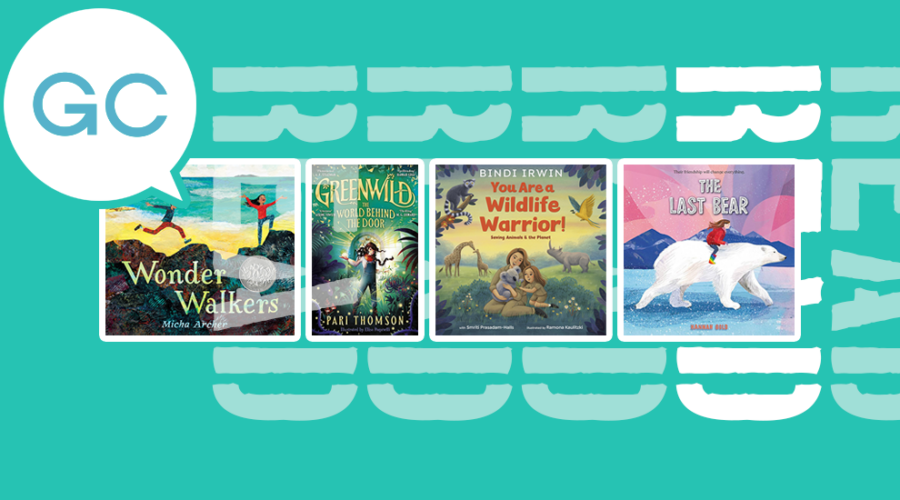
Recent children’s literature has been increasingly addressing children’s relationship with the planet, animals, and the natural environment. Some titles combine accessible, fact-based information about the climate crisis with narratives that help readers understand why caring for the world around us matters; others explore fictional stories in which emotional bonds with animals and natural spaces raise questions that invite reflection on human responsibility toward biodiversity.
This editorial approach reflects a broader trend in children’s literature, recognizing that environmental issues — global warming, species conservation, respect for habitats — are part of the concerns of new generations and can be presented honestly without underestimating young readers’ ability to understand and discuss them.
Beyond raising awareness, these books aim to offer young readers emotional tools to engage with nature through empathy and a sense of wonder. Through stories, characters, and open-ended questions, environmental children’s literature both informs and encourages a critical perspective on the world around them, fostering a deeper understanding of how human actions affect the planet’s balance and why imagining more sustainable futures also begins with reading.
You Are a Wildlife Warrior!: Saving Animals and the Planet by Bindi Irwin
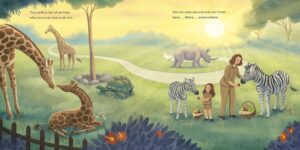
Bindi Irwin is a conservationist known for her work at Australia Zoo and for her family’s legacy in environmental education — she is the daughter of the famous Australian conservationist Steve Irwin and Terri Irwin.
Her book, You Are a Wildlife Warrior!, invites children to explore the diversity of wildlife through illustrations and concrete examples of species such as lemurs, rhinoceroses, kangaroos, and crocodiles, with the aim of sparking interest in the real ecosystems these animals inhabit.
The central value of this title lies in its educational strategy. Irwin addresses the reader as a “wildlife warrior,” appealing to everyday action and individual responsibility toward the planet.
Within its pages, readers encounter practical ways to observe and respect nature, placing them within an experience rather than offering a simple description.
Wonder Walkers by Micha Archer
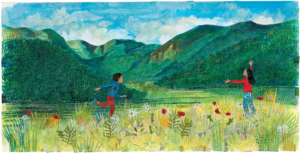
This picture book by Micha Archer follows two children as they go for a walk and observe details of the natural world while asking questions about what they see around them. The strength of Wonder Walkers lies in how it transforms children’s curiosity into a way of learning about ecological connections without relying on explicit didactic explanations.
Each page poses a question that encourages readers to think about how elements of the environment function and interact.
This approach turns reading into an active experience, where internal dialogue holds the same weight as the illustrations, reinforcing a child’s relationship with the natural world.
The Last Bear by Hannah Gold
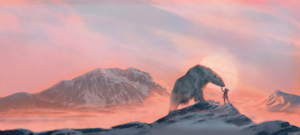
The Last Bear has been established as a key text for discussing endangered species within contemporary children’s literature. Written by British author Hannah Gold, the novel follows a child whose life changes after discovering a solitary polar bear in an Arctic that is warming faster than ever.
The relationship between the protagonist and the bear becomes the narrative’s emotional core, through which the concrete effects of climate change on natural habitats are explored.
The novel has received awards and widespread recognition for the way it presents loss and hope without underestimating its young readers, inviting them to reflect on human responsibility toward species that cannot protect themselves.
Greenwild: The World Behind the Door by Pari Thomson
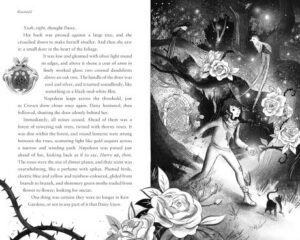
The book introduces Daisy Thistledown, a girl who discovers a hidden world filled with extraordinary plants and singular creatures behind a door in Kew Gardens.
As the story unfolds, the protagonist must confront forces that threaten the vitality of this natural realm, introducing readers to themes of ecosystem fragility and the need for mindful care.
What sets Greenwild apart is how it integrates fantastical elements with a reflection on nature. It is not solely about magic, but about linking human decisions to the state of the plant and animal world that Daisy discovers.
The author crafts a story that works both as entertainment and as an invitation for young readers to value biodiversity and to consider what it means to protect it.
Reading to understand, imagining to care
Taken together, these titles show how contemporary children’s literature has moved beyond treating nature as a simple backdrop, turning it instead into a narrative and ethical core. Rather than simplifying environmental issues, these books offer an approach that recognizes young readers as capable of engaging with the complexity of the world they inhabit.
In this way, reading becomes a space where knowledge and sensitivity intersect, providing tools to interpret today’s ecological challenges without losing a sense of wonder.