

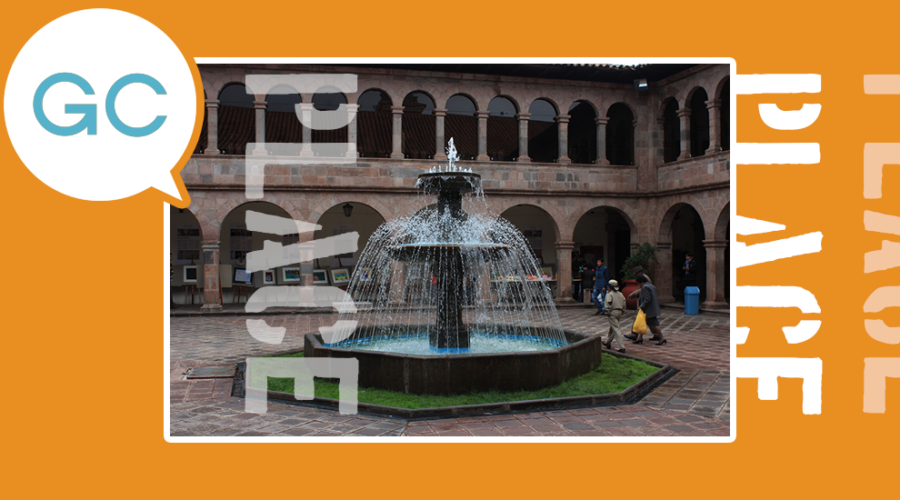
The city of Cusco in Peru is an enduring showcase of architecture. Its historic center and surrounding areas draw travelers from around the world, captivated by the blend of colonial and Inca influences found in its churches, plazas, historic mansions, and narrow stone streets.
Cusco is not a city to simply pass through on the way from Lima to Machu Picchu. The former capital of the Inca Empire deserves a multi-day itinerary to explore its historic center, visit its museums and temples, and discover the archaeological sites surrounding the city. In fact, walking its streets at an unhurried pace is one of the best ways to get to know it.
At more than 10,800 feet above sea level, Cusco retains an identity that is difficult to separate from its past. Throughout the region, culture is palpable, history is visible, and a rich heritage can be experienced as part of everyday life. Its memory endures in the Inca walls that survived the Spanish conquest, in the colonial buildings erected upon them, and in traditions passed down from one generation to the next.
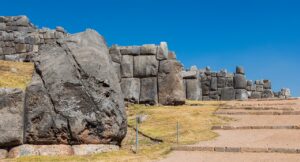
The result is a city where two historical worlds remain layered upon one another. One of the finest examples can be found at the ancient Coricancha, an important Inca temple dedicated to the Sun. After the conquest, the Santo Domingo Convent was built over part of its structures. The solid stone walls of the Inca period thus coexist with the religious architecture introduced by the Spanish.
Something similar can be seen along Hatun Rumiyoc Street, home to the celebrated Twelve-Angled Stone. Set within an ancient Inca wall, the precision of its carving and its remarkable fit with the surrounding blocks reveal the mastery the Incas achieved in stonework. It is hardly surprising that Cusco’s historic center was inscribed on the UNESCO World Heritage List in 1983.
A city of museums
Cusco is also a city of museums, where visitors can discover ceramics, paintings, textiles, ceremonial objects, and metalwork from different periods of Andean history.
One of its most interesting cultural institutions is the Museum of Pre-Columbian Art, housed in a historic mansion on Plaza de las Nazarenas. Its collection offers a closer look at the artistry of different cultures of ancient Peru and the opportunity to see objects created many centuries before the arrival of the Spanish.
The Inka Museum, affiliated with the National University of San Antonio Abad of Cusco, is another worthwhile stop. Its galleries provide insight into the development of Andean societies and the subsequent expansion of the Tahuantinsuyo, or Inca Empire. For travelers who later visit places such as Sacsayhuamán or the Sacred Valley, this historical context is particularly valuable.
The house of Garcilaso de la Vega
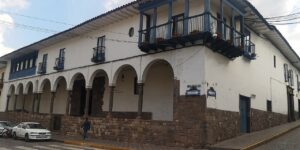
One of the city’s most emblematic collections can be found at the Regional Historical Museum, housed in a mansion associated with Inca Garcilaso de la Vega, a writer born in Cusco in 1539 to a Spanish conquistador and a woman of Inca nobility.
The building itself is part of the experience. The colonial house was constructed over structures of Inca origin, offering a glimpse of the architectural coexistence so characteristic of the historic center.
Its galleries contain archaeological, historical, and artistic collections that take visitors through different periods of the region’s past. Pre-Hispanic artifacts can be found alongside works associated with the colonial period, as well as examples of the celebrated Cusco School of painting.
This artistic movement became particularly important during the 17th and 18th centuries. Although it was clearly influenced by European art, local painters developed distinctive characteristics of their own, gradually incorporating elements of the Andean landscape, flora, fauna, and traditions. Among its best-known figures is Diego Quispe Tito, one of the foremost representatives of colonial Cusco painting.
Contemporary art in Cusco
It would be a mistake to think that Cusco’s art belongs exclusively to the past. The city maintains a vibrant contemporary art scene that is in constant dialogue with its Indigenous and colonial heritage.
The Municipal Museum of Contemporary Art, established in 1995, originated with a donation of works from the collection of Dr. Luis Rivera Dávalos. Its holdings have grown over the years and now include works by Peruvian and international artists.
Painting, sculpture, and other forms of visual expression find a different setting here from the city’s historical collections. It offers another way to discover how contemporary artists interpret a region where the past continues to have an extraordinary presence.
That artistic spirit is not confined to museums. It can also be found in galleries, artisan workshops, and small establishments throughout the historic center, while traditional neighborhoods such as San Blas maintain close ties to artistic craftsmanship. Its steep streets and white-walled houses lead to workshops where ceramics, carving, and other crafts are still practiced.
As evening falls, heading back toward the Plaza de Armas reveals another side of Cusco. Colonial facades are illuminated, mountains surround the city, and its churches recall the transformation of the former Inca capital after the 16th century.
Perhaps that is one of the reasons Cusco requires time. It is not simply a matter of visiting monuments. You have to walk its streets, step inside its courtyards, contemplate its stones, and linger before its paintings.
Cusco does not preserve its history like a motionless artifact behind glass. It keeps that history alive in a city that continues to live upon the traces of those who built it centuries ago.
Images: Diego Delso, Edgary Rodriguez R., Chalisimo5,

