

I love a trip to a gallery, but I know that the idea of going to a formal exhibition is off-putting to many people.
Indeed, I avoided them for many years due to childhood associations with long, darkened rooms full of dull oil paintings of old and dead people.
But since learning that they can instead be all about slug sex and butterfly gowns, and dark oil paintings can be avoided, they’re a lovely treat these days.
Despite this, not everybody can be dragged into a gallery or a museum, nor should they be, because art can be brought into public spaces – in both formal and informal ways – with myriad benefits to communities.
I’ve talked before about the subversive nature of yarn bombing, but whether we’re talking about random graffiti or official commissions, there are many ways that adding a bit of colour to our towns and cities benefits the world.
Public art transforms everyday communal spaces, turning pavements and parks into colourful, welcoming spots. When designed with the community they serve in mind, or the local natural landscape, they are especially cherished. And when we take art to the places people are, they may value those places more highly, they may frequent them more, and they may take extra care of them.
For the community
You don’t need money or a ticket to enjoy a mural on your walk to work or a sculpture in the park. It’s right there for everyone. Public art can highlight a neighbourhood’s unique personality and give people a sense of pride in where they live.
It also helps the local economy. It can mean more foot traffic for nearby cafes, shops and restaurants and makes a park or a public square into a spot where people actually want to hang out.
Increasing our sense of connection to both people and place is of significant psychological and social benefit, and can also send a positive message about belonging and community; a message that is arguably more valuable than ever.
For artists
For the artists themselves, public commissions offer a level of exposure you just can’t get inside a gallery. Instead of a few hundred people seeing a show over a weekend, many thousands of people might pass by a public piece.
It’s an amazing way to get your work seen by people who might never step foot inside a museum. And, if some of those passers-by are anything like me, they won’t be able to resist taking a photo of it for the ‘Gram, increasing awareness of an artist’s work beyond the hyperlocal.
On top of that, public projects open up bigger budgets and considerable creative opportunities. Often focusing on local artists, funding for these works can allow artists to think big, think differently, and work with materials that wouldn’t fit in a standard studio.
Plus, if painting a wall that’s an unusual shape, or fitting a sculpture into an odd corner of a square, it makes an artist take a different approach to their work, frequently boosting creativity in the process.
Variety
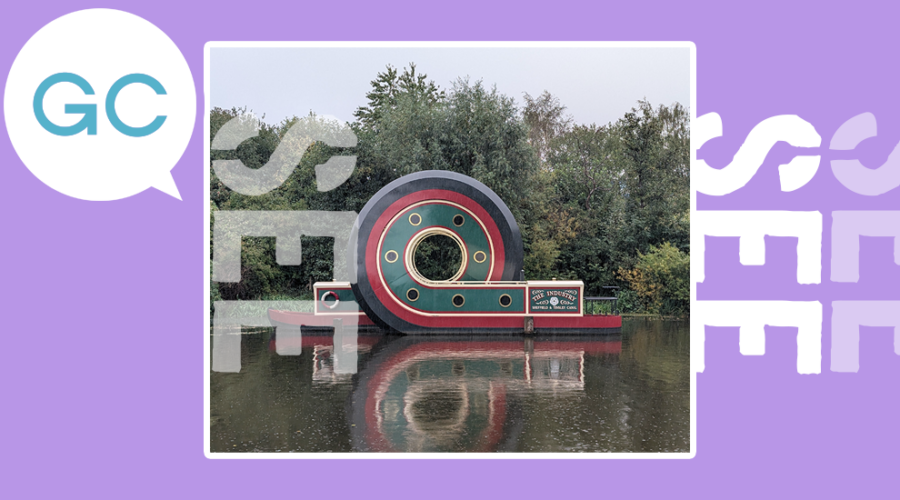
In my city of Sheffield in the north of England, public art can vary from a massive mural of a heron and a kingfisher to a strangely beautiful curved canal boat on the water. We have a sculpture of a peregrine falcon made entirely out of IKEA allen keys, and we have an oddly terrifying boy with a bird on a bench.
Investment in commissioning artists to enhance our local areas might feel like frippery in times of economic uncertainty, but this is also precisely when we need to take extra pride in the places we live, work, and spend time. It’s also precisely when our moods might need a boost, and we might need a reason to drag ourselves out of the house.
Whether huge in scale or tiny, public art and street art can make us pay more attention to our surroundings and appreciate them more. We pay more attention to what’s surrounding us when things get prettier, and even when we’ve seen something many times, we can find new elements to enjoy over time.
Images: Philippa Willitts