

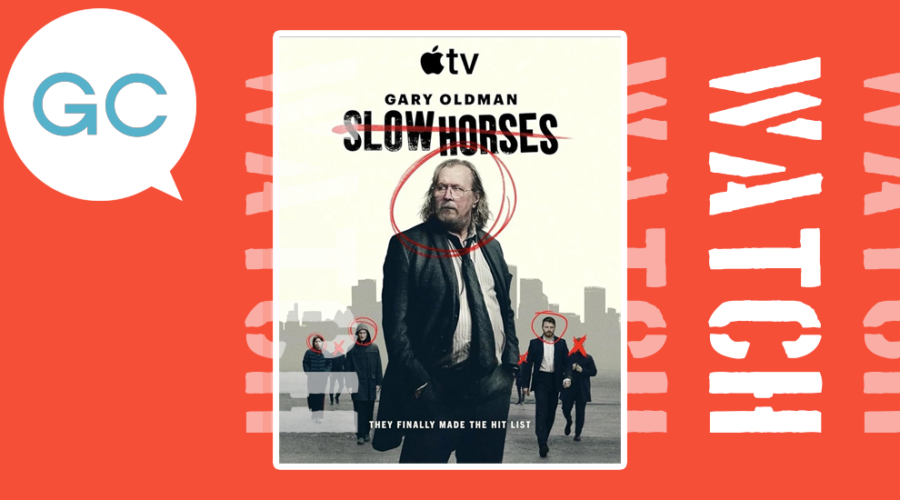
The last time I wrote about Slow Horses was two years ago – and even back then, you didn’t have to convince me of the show’s greatness.
Now, though, I can confidently state that Slow Horses is one of the best shows on television and a flagship franchise for Apple TV that, when all is said and done, is probably more important than the behemoth that is Severance.
Sure, Jack Lowden (who plays hapless MI5 hero River Cartwright) may not have gotten the coveted role of 007 this week. But to be honest, in light of how good Slow Horses has gotten, I see that as a win.
We need Lowden as River. We may or may not riot should something happen to River due to scheduling conflicts.
One of the show’s greatest strengths in this chaotic streaming market is simple consistency. The filming is done on a tight schedule. No one is out there taking two to three years to do a new season (I AM LOOKING AT YOU, HBO). And while beloved characters do occasionally get killed off – the latest season in particular broke my heart in a way I’m still thinking about – there is none of the showy sadism similarly popular showrunners exhibit toward their audience (AGAIN, I AM LOOKING AT YOU, HBO).
The heart of the show functions like a twin star system – there’s young spy River, young, handsome, occasionally idiotic, good of heart. Then there is old spy Jackson Lamb (Gary Oldman) – disgusting, cunning, flatulent, ultimately also good of heart, though he wouldn’t admit it under torture.
These are two extremes. They are also not that extreme at all.
Although I haven’t read the spy books the show is based on, there is a certain cadence between River and Jackson, the idea that River is looking at his future when he sees his jaded boss. It would be tragic for River to end up this way, and also not very tragic at all.
Low expectations and endless self-deprecation are British narratives that American audiences like when they are cute in a stammering, early Hugh Grant sort of way. In other contexts, I think we find this function of British culture to be depressing, and Slow Horses radiates plenty of depression.
But Slow Horses has become a hit in America, steadily gaining in popularity, because it also has heart. It’s a misshapen heart, to be sure. It beats at a strange rhythm. It powers a show that is extremely watchable, even addictive. At the end of every season, I always feel a little bit bereft.
It’s good to see the show get back to dealing with proper villains, and by that I mean Russians. The tensions between the Russian and British security services are always in the news, but the inherent ugliness of that relationship is often hidden beneath euphemisms and double talk.
Slow Horses gets visceral on this long running conflict without being preachy, and good on the writers for that. Russian operations on British territory have been brazen for a long time; this can make for good entertainment, but there is also a fundamental darkness there, a darkness Slow Horses is not afraid of pursuing.
In an age of ridiculous budgets for barely watchable, poorly paced streaming shows (for example, I refuse to continue hate-watching Prime’s Rings of Power, I simply cannot do this to myself, life is too short), Slow Horses proves that you can tell a good story in a grounded, economical way.
You can let your actors shine, you can tease out both laughter and tears from your audience, and you can turn the screws in your complicated plotlines efficiently.
Of course there are excesses of the spy genre here, Slow Horses wouldn’t be nearly as fun without them. It’s just that they complement the story, instead of bulldozing over it. In the latest season, even the oligarch daughter turned spy comes off as human – even if she is a terrible human overall.
One of the scariest things about Slow Horses is how believable the settings and details can be: The dead body burned to a crisp in an ugly shipping container. The real estate agent snooping around Slough House, a dirty office that happens to be run by one of the best – and most revolting – spies in the United Kingdom. The bereaved, alcoholic MI5 operative gazing longingly at a fancy printer she is not allowed to have. The haggling over budgets.
The fleeting glamour of spycraft is mixed freely with grime and resignation on Slow Horses. It’s espionage done on the backs of resentful pack mules. It’s tragic. It’s funny. It’s a stunning success.