

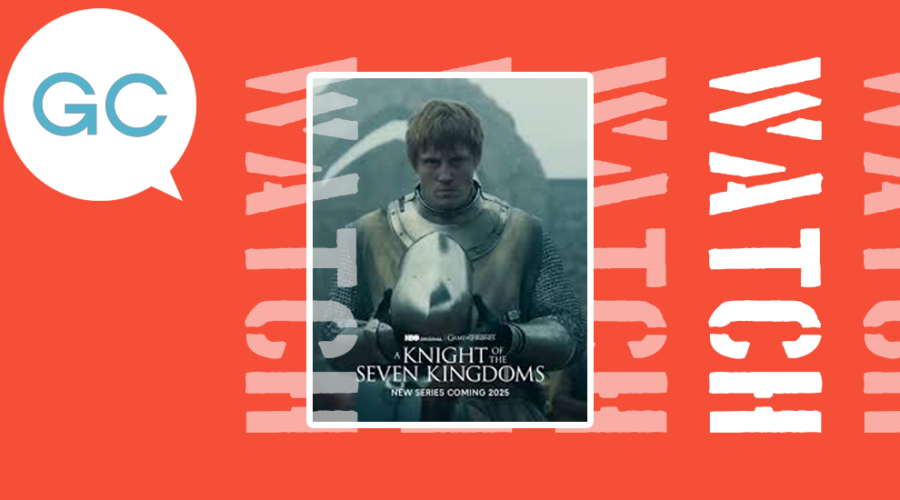
After the bitter taste left by the end of Game of Thrones and the dense political tragedy of House of the Dragon, HBO has surprised us with a proposal that feels like a real breath of fresh air in Westeros.
Based on the novellas by George R.R. Martin, A Knight of the Seven Kingdoms has already been hailed by critics as one of the best fantasy adaptations in recent years, offering a story that is as intimate as it is hopeful and entertaining.
Created by Martin himself and Ira Parker (executive co-producer of House of the Dragon), the series brings to the screen the famous “The Tales of Dunk and Egg,” set a century before the original series. This spin-off distances itself from the absolute darkness of the saga to offer a brighter view of the nobility.
Although it retains the author’s signature style, its narrative takes on shades of young adult literature and essentially functions as an ode to chivalry.
The production follows two of the most beloved characters in Martin’s universe: Ser Duncan the Tall (Peter Claffey) and his young squire, Egg (Dexter Sol Ansell). Unlike the complex power games between kings we are accustomed to, here we experience a genuine friendship between a warrior of humble origins and a boy with a secret royal destiny.
The plot focuses on their journey together, and it is the chemistry between them that makes the series so compelling.
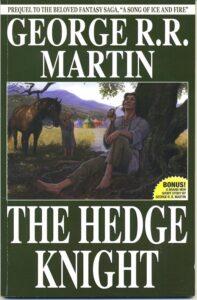 Inspired specifically by The Hedge Knight, this installment stands out from its grandiose predecessors: there are no powerful dragons, epic battles, or sought-after Hollywood stars here. Instead, the six episodes explore the more human side of Martin’s universe through Dunk: a knight without a surname or wealth who, after the death of his mentor, embarks on a daring challenge at the Ashford tournament alongside the ingenious Egg.
The power of this intimate story has been reflected in the viewing figures: A Knight of the Seven Kingdoms has not only won over critics, but has also surpassed The Pitt — the HBO medical series that is redefining television today — in terms of audience, beating it by a million viewers per episode.
Haven’t seen it yet? Here are the five reasons why you shouldn’t miss it:
A refreshing change of tone
While previous series in this universe were dominated by political intrigue, dynastic tragedy, and the roar of dragons, this new installment presents us with a smaller, more hopeful world filled with camaraderie rather than blood and battles.
The narrative breaks the mold established in the first five minutes, when the epic musical theme of Westeros begins to play and is abruptly interrupted by a much more earthly sound: that of our protagonist relieving himself. This beginning is not an oversight, but a statement of intent. The series immediately tells us that this is not another fight for the Iron Throne, but a story of survival and honor in everyday life.
While its predecessors strove to be intense and transcendental in every scene, A Knight of the Seven Kingdoms allows itself to be slow-paced and restrained. The series explores the daily life of a knight errant and his squire, leaving aside the spectacle of violence to connect with a much more human melancholy. It is an honest series about characters who, rather than changing the world, are simply looking for their place in it.
In addition, its sense of humor adds a necessary layer of lightness: the interactions between Dunk’s noble clumsiness and Egg’s sharp wit humanize Westeros in a way we’ve never seen before, reminding us that even in the darkest of times, there is room for laughter and loyalty.
A captivating pair of protagonists
The soul of this production lies in the chemistry between Ser Duncan the Tall and his young squire, Egg. Together they form one of the most endearing and sincere duos this universe has ever brought to the screen.
Dunk is the ultimate “knight errant”: a gentle giant of humble origins and unwavering honesty who seeks his purpose after the death of his mentor. He is, in essence, the ronin of Westeros; a warrior without a lord who tries to act with righteousness in a world that often punishes kindness. Claffey’s performance is masterful, as he manages to contrast his imposing physique with a gestural vulnerability that makes him deeply human.
At his side, Egg is the ideal companion and the perfect counterpoint. With a mixture of childish cunning and a seriousness that is unusual for his age, young Dexter Sol Ansell is a true revelation. His performance delicately balances the mischief of a child with the burden of a very difficult family secret.
In a realm obsessed with lineage, this duo reminds us that there are chosen families and that, sometimes, that bond is worth much more than all the gold in the realms
A fast-paced and direct format
Unlike the franchise’s lengthy seasons, this spin-off opts for a structure of six notably short and fast-paced episodes that make the most of every minute.
This narrative decision works in its favor: by reducing the scale, the series gains focus and makes each scene an essential piece of a compact story. A Knight of the Seven Kingdoms shows us that, in Westeros, sometimes less is truly more.
A social commentary on honor and chivalry
This installment takes its time to explore what it really means to be a knight in a world that seems to have commercialized the sword and forgotten honor. Through Dunk — a man who doubts himself and makes all kinds of mistakes — the series demystifies the perfect hero and offers a raw look at class divisions in Westeros and the rottenness of many castes.
While the knights of “noble blood” act with cruelty and hypocrisy, it is this warrior without lineage or wealth who rescues the true values of chivalry: protecting the helpless, maintaining unwavering integrity, persevering in the face of failure, and seeking justice.
In the end, the series shows us that true nobility is not a privilege of birth, but an ethical behavior that is chosen, forged, and must be upheld even in the harshest moments of life.
A tournament like no other
Although the series begins lightly under the direction of Owen Harris, the narrative changes in the second half of the season with the arrival of Sarah Adina Smith. That’s when the latent darkness explodes, especially when Dunk makes a decision that threatens both his life and the fragile harmony of the kingdom.
The glory of chivalry vanishes completely in the fifth episode, “In the Name of the Mother,” giving way to one of the most visceral moments in the entire franchise.
Although the series shies away from gratuitous gore, this passage makes a profound impact through its almost unbearable rawness. Using close-ups and subjective cameras, the direction forces us to feel every blow and wound Dunk suffers with disturbing closeness. It is violence that really hurts, not because of the visual impact, but because of the affection we already feel for the man beneath the armor.
It’s no surprise that critics and fans alike have surrendered to this installment: the episode has achieved near-perfect scores on platforms such as IMDb, ranking as one of the highest-rated episodes in the entire Westeros universe.
Read Natalia Antonova’s review of the same show here.