


You might think that only a child would get any enjoyment from a trip to an aquarium, but as long as you bring some childlike wonder of your own, they can absolutely be places for adults, too.
Bournemouth Oceanarium on the south coast of England was a bit of an unknown, and my friend and I did not know what to expect on our visit. But the moment we were in the glass tunnel with fish swimming around and above us, I felt confident we were going to have a great time.
We arrived just in time to see the penguins being fed, and quickly abandoned any sense that we should only enjoy this if accompanied by a six year old.
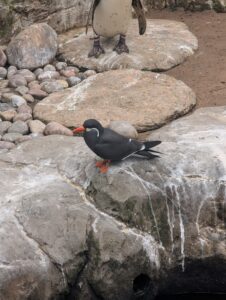

But while the Humboldt penguins were adorable, and the commentary was interesting, our attention was quickly drawn to some other birds flying around that we couldn’t initially identify.
Inca terns are black and white birds with glorious white moustaches and a beak that somehow looks like a carrot on a snowman. Inca terns, unsurprisingly given their name, come from the Pacific coasts of Chile, Ecuador and Perú, and are near-threatened in their natural habitat.
In the relative security of Bournemouth, however, they cackled uproariously and happily existed alongside – and more or less entirely ignoring – the penguins.
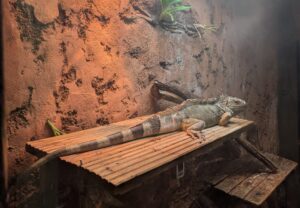
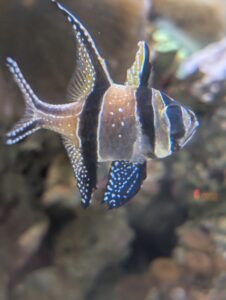
Wandering further through the Oceanarium, we admired the green iguana called Eddie Lizard, saw otters, and marvelled at the weird and wonderful colours and shapes of the numerous fish and corals and other animals on display.
It is always slightly uncomfortable to see animals in captivity, but at the Oceanarium there was space, and food, and thoughtful habitats that surely benefit the creatures who live there.
By pure chance, we also accidentally witnessed the feeding of some of the other fish and stingrays.
The rays gobbled catfish but, to our surprise, the fish – which I think were piraputanga, a close relative of the piranha, but the Oceanarium Press Office has not responded to requests for confirmation – ate carrots, because in the wild they eat fruit that falls from the trees.
For anything that looked so like a piranha to be eating anything other than the toes and arms of unsuspecting fishermen, as per every comic in the 1980s I grew up in, was genuinely quite shocking. I suppose it’s good to know nearby goats are not being slaughtered to sate their thirst for blood.
 Bournemouth Oceanarium has information boards with details of the animals and their habitats, but overall I found these quite stressful and inconsistent. They were often electronic, so on the offchance you were looking at it at the right moment (and the fish you were trying to identify was the one featured), it could disappear any second.
So if identifying what you are seeing is something you are keen to do, you may want to come with a reference book or a good app on your phone rather than rely on the walls to complete the picture.
It is crucial, however, for this kind of destination to provide information about the fish and animals in the Oceanarium, as well as the part of the world they come from and the climate change and pollution-related threats they are facing. It would absolutely be remiss to be showcasing exceptional wildlife without raising awareness of the damage humans are causing to it in the outside world, and the Oceanarium does a good job of balancing truthful information with ideas of what we can do better and what needs to change.
Disabled access in Bournemouth Oceanarium was decent, though because the front doors had already been locked by the time we left, we had to navigate an alarmingly steep ramp to get out of the building. Otherwise, there was level access and decent signage, which helped.
So if you’re on the south coast and looking for something to occupy a few hours, Bournemouth’s Oceanarium, which is situated on the sea front in the middle of all the action, is well worth a trip.
Marvel at the life we know so little about, and get inspired with ideas about how to treat this planet – and its non-human inhabitants – a little bit better.
Images: Philippa Willitts