

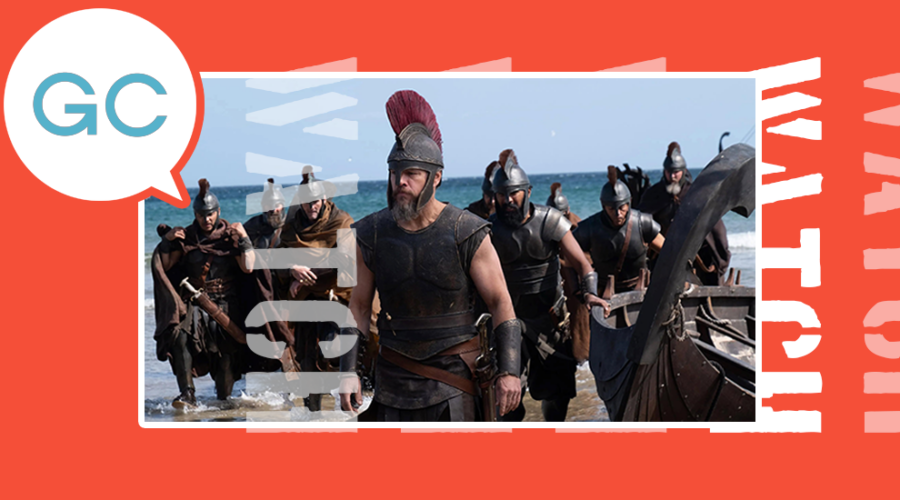
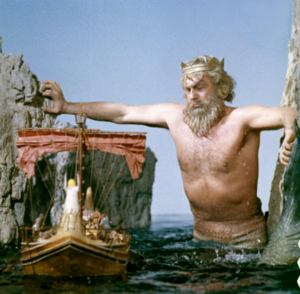
When we were children, flickered in light and held in thrall to the shuddering genius of Ray Harryhausen’s mythical beasts in Jason and the Argonauts and Clash of the Titans we could only dare to dream what he would have made of the sea monster Scylla, the cannibalistic Laestrygonians, and the Sirens, those muses of death, from Homer’s The Odyssey.
Tragically Harryhausen’s vision of The Odyssey never manifested itself in the mortal realm and lingered in our imagination as spectres of what might have been, but the fantasy boom of the noughties writ large by the sorcerous divinations of computer-generated imagery unleashed legions of creatures from the annals of the Dungeons & Dragons bestiary to assault our senses.
Some of these monsters were rendered terrifying but most appeared two-dimensional and incorporeal, several steps backwards from Harryhausen’s imperious skeletons conjured from the teeth of the Hydra, or Medusa stalking Perseus through the petrified statues of her previous victims, the flight of her arrows and the rattle of her tail dreadful to the ear.
The Iliad was filmed as Troy in 2004, an all-star camp classic featuring Brad Pitt as Achilles with peroxide hair cascading from his helm, staring into the middle-distance ruminating on how his legend will be heralded across the ages.
The fantastical elements of The Iliad are sacrificed for a straightforward sword and sandals epic temporarily raised by the pathos of Hector’s death and subsequent scene where Peter O’Toole’s King Priam pleads for the return of Hector’s body.
Thus, we now find ourselves kneeling at the feet of Sir Christopher Nolan’s The Odyssey, his monumental retelling of Western literature’s foundational text. Nolan’s vision is gargantuan in scale, IMAXIAN in its global reach like the cyclops devouring Odysseus’ men in the dark. Is this his magnus opus? or just another monumental salvo in his own Titanomachy against Denis Villeneuve who will retaliate in kind with the conclusion of his epic Dune trilogy in December.
Who better than Matt Damon to play the cunning, ruthless, intelligent Odysseus who is ground to dust over two decades of war and return?
We’ve seen Damon as a genius in Good Will Hunting, lost at sea suffering from PTSD in The Bourne Identity, wrathful and defeated in The Last Duel. His body is muscled yet gnarled with scars and wounds. His beard, Lear like, hangs below his sorrowful eyes like a torrent of guilt having led his men to their annihilation at the hubris of kings, Agamemnon’s, Menelaus’, and most hauntingly his own.
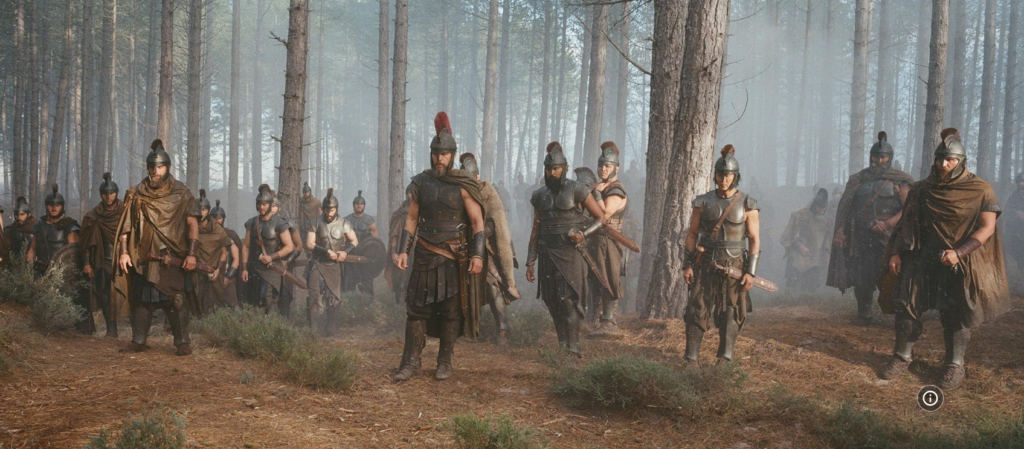
Odysseus is plagued by the original sin of the Trojan Horse, his treacherous gift to Troy that undermines the Ancient Greek concept of hospitality-xenia. Hosts were to treat their guests with compassion and hospitality with no chance of harm befalling them.
In return, the guests should treat their hosts with the utmost respect, bearing gifts and kindness.
After ten years of failure on the beaches of Troy, Nolan distils the frustration and rage of the Greeks into the bowels of the horse as we witness their squalor and degradation as they shit and piss on one another waiting for the Trojans to take the bait; war as reality rather than the propaganda of mythology. It’s an astonishing sequence.
Outside the horse, Sinon, just a youth when he left for Troy, is sacrificed to make the subterfuge more believable. When the horse is laboured by hundreds of Trojans in the city walls, we see the Greeks inside experience violent contractions as if crammed into the womb of a wooden U-boat, the birthing pangs spewing out Odysseus and his men in a thrilling attempt to open the titanic gates.
When they do, Agamemnon’s army spills forth to rape and slaughter the population with sadistic impunity.
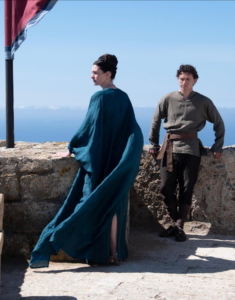
The Trojan War, the original forever war, fundamentally breaks the Bronze Age of civilisation and leaves Odysseus and his peers at the mercy of vengeful gods and monsters to atone for their wanton desecration of the laws of Zeus.
What befalls Odysseus and his men is well known, but in Nolan’s grasp we experience the Homeric struggle as body horror in the mould of Society and The Company of Wolves, abject terror in the cave of the Cyclops as if masterminded by Pan’s Labyrinth era Guillermo del Toro, and as usual, Nolan’s Tarkovsky level of genius when manipulating the vagueness of time and memory stretching back and forth amongst the eons.
Yet with all Nolan’s grand works the annoyance of some of his choices impede his films from being truly magnificent. Scylla and Charybdis are navigated too quickly, a triviality rather than a Herculean labour to overcome, whilst the Sirens are equally given short shrift, their mournful horror left strangely unfulfilled.
However, when Odysseus finally makes it home to Ithaca his vengeance upon Penelope’s suitors is wrathful and totemic, “Bringing it all” he rasps before laying waste to their insidious invasion within his palace walls.
It’s the strongest episode in this towering monument to Nolan’s near greatness, a shrine maintained by a stellar supporting cast, Anne Hathaway, Tom Holland, Robert Pattinson, Zendaya, Charlize Theron, Elliot Page, Jon Bernthal, Mia Goth, John Leguizamo, Lupita Nyong’o and Samantha Morton Oscar bound for her stunning portrayal of Circe.
As Odysseus says, “The power of a sacrifice is in the cost of the one making it.” Where does Nolan go from here?
Surely The Iliad’s Siren call will be too alluring for him to ignore…