

It is very common to assume that popularity is what proves relevance or value. We live in an era where the number of likes, followers, and views seems to be the key metric for measuring real impact.
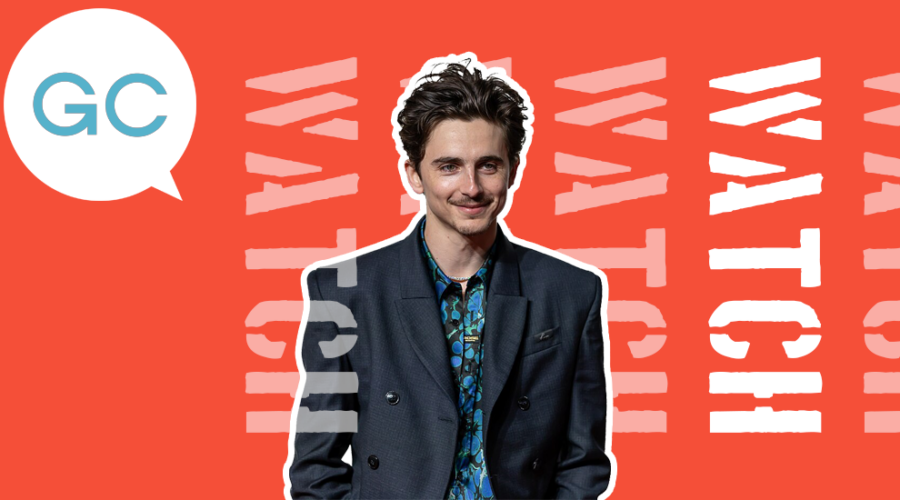
But comments made by Timothée Chalamet in an interview with Matthew McConaughey for Variety only demonstrate how we are looking in the wrong places. According to the BBC, Chalamet said, “I don’t want to be working in ballet, or opera, or things where it’s like, ‘Hey, keep this thing alive, even though like no one cares about this anymore.'”
The Hollywood actor’s remarks caused a stir within the artistic community for being disrespectful. We would think that an actor would have a greater appreciation for the arts. Saying that others are trying to keep alive something that nobody cares about anymore, mentioning that he would lose only 14 cents for making an unpopular comment, and mocking the performances of other artists — all in the span of two minutes — shows considerable arrogance.
It is disappointing that someone devoted to the seventh art would make remarks that diminish the work of others. Cinema has long drawn from, and continues to draw from, other forms of art. Without them, it would not be what it is today.
It is understandable that tastes are not the same for everyone. It is reasonable to think that ballet and opera are not for everybody. Many might say the same about Chalamet’s movies. However, these art forms are not dying, nor are they obsolete. His words reflect only the limited perspective of one person, not what is actually happening.
Cinema has long drawn from, and continues to draw from, other forms of art. Without them, it would not be what it is today.
The performing arts went through a difficult period during the pandemic. The temporary closure of theaters, followed by social distancing restrictions when they reopened, dealt a heavy blow to the industry — just as it did to many other industries. But this did not mean the end by any means. These art forms have overcome countless obstacles over hundreds of years, and they will undoubtedly continue to do so.
Although ballet and opera do not attract audiences in the massive numbers that some films do, that does not make them any less relevant. In fact, many live performances sell out before opening night, while some movie theaters sit half empty.
Chalamet may believe these art forms are agonizing and only of interest to those unwilling to watch them die, but that does not make it true. Many films considered works of art were not successful at the box office, while others that received little praise for their artistic or cinematic qualities sold millions of tickets. Popularity has never been a reliable measure of quality.
Numbers tied to popularity do not translate into true transcendence. The most followed influencers or the most watched films of the year may be forgotten tomorrow. Meanwhile, works of art created 400 years ago are still performed in theaters because of their artistic merit.
But value is not limited to the past. Every day, meaningful works are created around the world that move audiences. Art exists to awaken sensitivity and evoke emotion —not to earn a fleeting like.
While it is true that art needs an audience to pay the salaries of those who work in the industry, not everything is about money. Comparing artists’ work purely in those terms could be seen as both presumptuous and ignorant. The fact that the comment comes from the son of a former dancer adds a psychological layer; unfortunately, we all carry childhood issues that might be better resolved with good therapy. Sometimes this manifests as an attempt to surpass one’s parents, to feel superior to them, or to do the exact opposite of what they did.
But rather than engage in psychological speculation, let us focus on the facts: just because you do not like something does not mean the rest of the world feels the same way.
Often, this becomes clear when we broaden our perspective — by traveling, reading, meeting new people, or simply listening to what others have to say. We do not all think the same way, and we do not all have to like the same things, which is perfectly fine.
What it does not justify is dismissing the work of others.
We are living through a time in which our attention is constantly captured by the small screen in our hands. This is affecting our brains and our capacity to focus. The issue even surfaced during the interview: cinema itself is already experiencing it and making adjustments to keep audiences engaged. The formulas are not foolproof. How do you ask viewers to sit for two hours in front of a screen without checking their phones? Hollywood and companies like Netflix are betting on faster-paced storytelling and repeating plot elements every few seconds. Yet, while some — like Chalamet — may dismiss ballet and opera, these art forms might hold part of the answer to keeping audiences truly focused.
From my perspective, the situation may begin to shift in 2026. The performing arts could gain even more audiences in an increasingly digital world.
Moments created on a theater stage are unrepeatable — they exist only once
While artificial intelligence threatens certain roles in filmmaking, the same is not true across all artistic disciplines. Live experiences may become the place people turn to in order to feel something real.
We are saturated with information, social media trends, and AI-generated content. What remains is the need to return to the real and the tangible. Moments created on a theater stage are unrepeatable — they exist only once. They also help us develop patience, process things slowly, interpret, listen to musical timing, understand ourselves emotionally, and enjoy being with ourselves without the constant bombardment of flashing content.
Treating ballet, classical music, and opera as irrelevant places cultural value in the wrong hands. The amount of talent required in these professions is immense, not to mention the hard work and dedication needed to master these art forms.
From the audience’s perspective, depth is also required to establish that human connection. To truly understand it, perhaps we simply need to open our minds — and our souls — a little more, stepping down from the sense of superiority we sometimes place ourselves in.
Image: Amy Martin Photography
