

If you’re following U.S. foreign policy – whether with a sense of amusement, fear, scorn, or whatever it is you want to feel – you might have noticed allegations in the press that the Pentagon threatened the Vatican with the return of the Avignon Papacy; basically a time when popes resided in France due to political pressure from French kings.
The Pentagon has denied this report. Although President Trump, in characteristic fashion, proceeded to slam the Vatican on social media, lending it more credence.
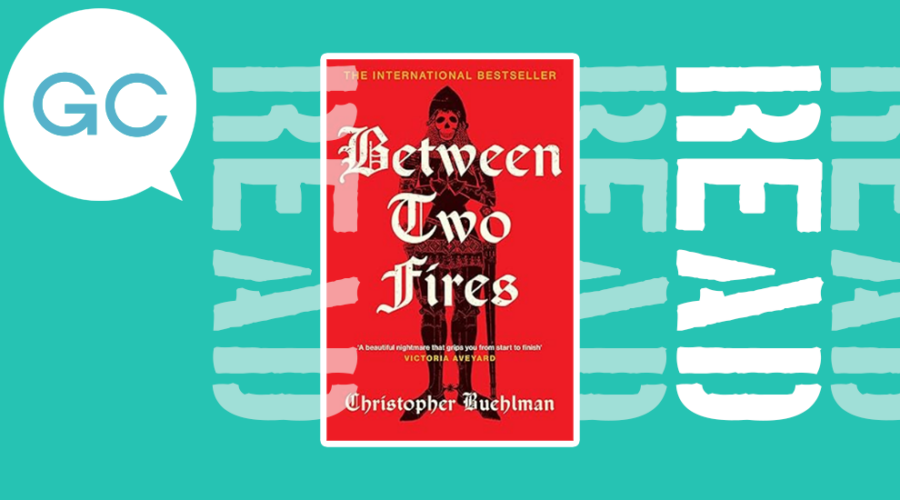
I’m not going to discuss the politics of what happened, but I am glad that the debacle gave me an excuse to finally crack open Christopher Buehman’s Between Two Fires, a gorgeous and grisly horror novel set during the time of the Avignon Papacy and the Black Death.
A good book will always live a life of its own
Between Two Fires was originally published in 2012. As Joe Hill notes in his 2025 foreword to the book, it wasn’t a big hit at first, even if it did get praise.
The fame came years later, when social media, TikTok in particular, re-discovered the story after Buehlman reclaimed his publishing rights and re-published it himself, having by then gathered a keen and active audience.
A good book will always live a life of its own. Between Two Fires is a great book, and has lived many lives already.
The themes of sorrow, and God’s absence from a besieged world, and disgrace, and forgiveness are always going to be important – but the theological and political tint of the narrative makes this terrifying narrative especially relevant today.
This is a medieval tale, and it goes medieval on you. It’s cruel and dark, although not as gratuitously as, say, the TV adaptation of Game of Thrones was (I can only hope that when this book gets adopted for the screen, and I do think it’s a matter of if and not when, it will be treated better and with more nuance), and its blackened heart beats to an irregular, spasmic rhythm.
Everyone keeps dying, but it’s Buehlman’s skill as an author that the litany of deaths doesn’t make you numb. The successive tragedies just whack you over the face, over and over again. They speak to you in Biblical terms. “Come and see.”
The central figure, an unjustly excommunicated knight, Thomas, could be a veteran from any terrible military campaign. He’s handsome, and graying, and rightfully angry, and his anger feeds the plot while simultaneously threatening to consume him.
The theological and political tint of the narrative makes this terrifying narrative especially relevant today
Delphine, the young girl that Thomas reluctantly decides to take to Avignon, may have a divine presence around her – but she’s also just a girl. She gets her first period. She must hide from would-be rapists. She grieves a horrible grief. She questions Thomas’ brutality, even as brutality is frequently the only way to survive in the plague-marred, monster-filled landscape they travel.
It would have been easy to turn Delphine into a two-dimensional angel or saint, but ultimately, she is a girl, and you fear for her.
Normal people will recognize the age that Buehlman’s characters inhabit – an age that everyone from flat-earthers to anti-vaxxers is trying to drag us back to. Children die young, in fear and in pain. Superstition clouds judgment. The rich are petty cowards. The brigands are on the loose.
The scope of the Black Death is something that most of us don’t know about, and prefer to not think about. The pain and chaos of the Covid-19 pandemic looks like the worst thing ever if you shut out historical memory.
Between Two Fires reminds us that it can always get much worse.
We have always lived in a world of monsters – and the worst things we can imagine are borne from our collective reality
The Black Death was the most devastating plague known to humankind. Considering our concentrated efforts to dumb ourselves down, who knows if history might repeat itself. Maybe Covid was just a taste.
However, I am not a doomer. We will all die, one way or another, and some deaths are worse than others, but all death is an inevitability.
At the end, I believe, and Buehlman writes, we should consider surrendering ourselves to forgiveness. Forgiveness is the golden thread that ties the horrifying spectacles of Between Two Fires together. Sometimes, you think the thread might snap – but then it turns out that it’s stronger than ever. Forgiveness is something we pass on from one to another, just like a virus, except that it allows us to live, and live in a way that goes beyond our fragile flesh.
We have always lived in a world of monsters – and the worst things we can imagine are borne from our collective reality. For fans of hardcore realism, Between Two Fires might appear precious and fanciful, but that’s because most realist hardliners don’t yet understand the surrender that Buehlman is describing. Not yet, anyway. I think it comes for us all, eventually.
This is a book written in blood, and it deserves to be read and re-read. Today especially.