

Javier Bardem is just too good at playing villains. I have loved his work in his softer roles – 2010’s Biutiful comes to mind – but the man can evoke so many layers of shimmering menace that his villainous roles are better retained in the public conscience.
As Anton Chigurh in 2007’s No Country for Old Men, Bardem rose to meme status, and will remain there henceforth. I believe he would have done so even if hadn’t snagged an Oscar for that role.
Now Bardem is back to playing another instantly memorable, and potentially memeable, villain: Max Cady in a new reboot of Cape Fear.
I have quite the relationship with the 1991 version of Cape Fear, which is itself a remake of a 1962 classic, which is in turn an adaptation of a famous novel.
Martin Scorsese directed the 1991 version, and Juliette Lewis had a particularly memorable turn, alongside Robert De Niro as the villain – an ex-con out for revenge.
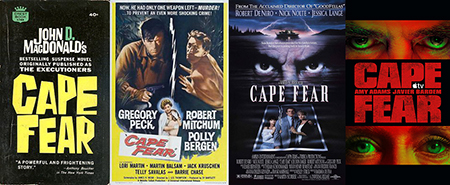
The thing is, I wasn’t allowed to watch that version of Cape Fear for years. My father was the type who’d let me watch Terminator 2 (it became my favorite movie, and remains my favorite movie), but my mother put her foot down when it came to Scorsese. The prohibition triggered a mild obsession in me.
When I finally got the chance to watch it, years later, I dwelled on the trauma hidden in the twists of the narrative. My family had been through quite a bit of trauma by that point in our lives and, like the family at the heart of the story, we never spoke of it.
All of this is just to say that I approached the new Apple+ version of Cape Fear with some caution. Could it possibly be good? I mean, sure, Scorsese had returned to be an executive producer on this project – but how could they outdo the original.
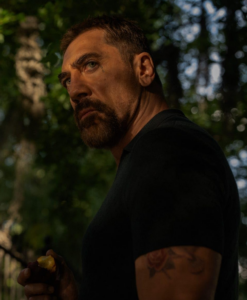 We are far from the finale now – it airs on July 31st – but I can tell you that what I’ve seen so far is very, very good. Obviously, Bardem’s performance as Max Cady is an anchor for the miniseries. He is brutal and poetic, charming and damned, and ready to damn you. A chameleon with a dart of poison hidden inside.
However, Bardem is not the only one doing the heavy lifting. Amy Adams and Patrick Wilson are perfectly cast as the Bowdens, a local power couple and a legal dream team with a strange past, who are the target of Max Cady’s glimmering rage. They are both likeable and extremely unlikable. It’s a dynamic mix of dirty secrets and parental angst with these two. You are afraid for them, and you kind of want to smack some sense into them.
I also liked the modern touches. The true crime obsessives get a shout out for the leeching weirdos that they are. Online grooming comes into play. Cancel culture comes into play. The strangely cynical aspects of NGO fundraising come into play. The political battle over the prison industrial complex comes into play. The setting has been moved to Georgia (1991’s Cape Fear was set in Florida), and it works to great, moody effect.
I am not giving away all of the twists and turns of the plot, but I do want to point out that I like the way this miniseries was filmed and put together. The dramatic score in particular is a throwback to the classics, and so is the cinematography. There is none of that grimy palette that characterizes so much of our current prestige television. This new Cape Fear is a riot of color, like a poisonous plant patch.
It does make me long for a time when Javier Bardem can go back to playing soft roles with as much intensity as his villain roles. His Max Cady is not quite comparable to Anton Chigurh – nor should he be, that was a career-defining role that became a cultural touchstone – but you can see how much fun he has with this character.
What I want to see next is him inhabiting a big dramatic role fully as a hero. We saw flashes of that in F1 – the affability, and the vulnerability both. We deserve more. And so does Bardem.