

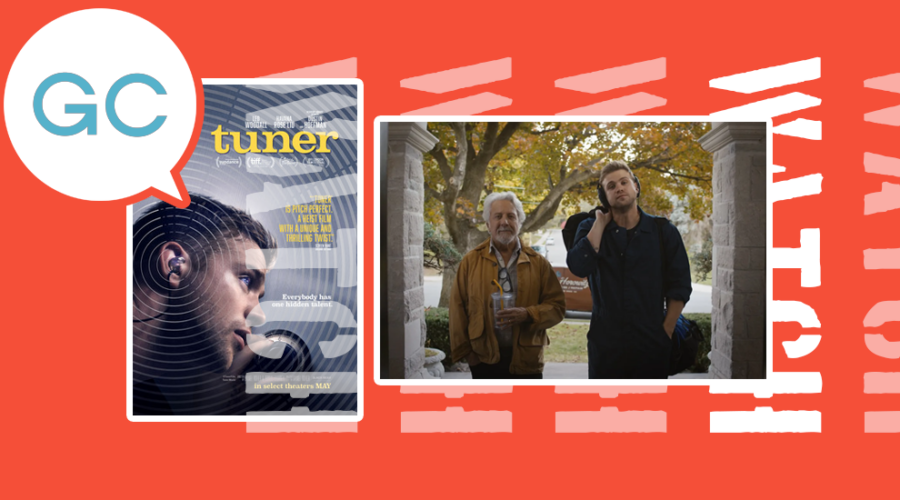
If you haven’t seen Daniel Roher’s film Tuner, then you need to remedy that quickly. Leo Woodall is Niki White a former New York musical prodigy turned piano tuner who suffers from hyperacusis. Niki must always wear ear protection as loud noises cause him crippling pain; a real downer when you live in the city that never sleeps.
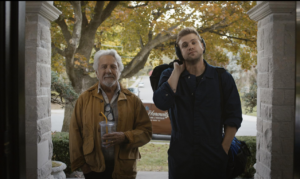
Niki is like a son to his aging mentor Harry Horowitz, played by late-stage Dustin Hoffman at his most loveable and heartbreaking best. The opening is terrific as master and apprentice shoot the breeze criss-crossing New York in montage from one wealthy client to another in a series of mansions that would make Robin Leach blush.
Each piano is stunning, set up in lavish and dramatic surroundings where each note should cascade with acoustic precision and beauty befitting each exquisite milieu. The heartbreak is that the pianos are seldom played, emblematic of the diminishing marginal utility of income and wealth, another trinket on a grand scale for people who know the cost of everything but the value of nothing.
Through these capitalist expanses a multitude of artisans operate unseen and unheralded, keeping these empty palaces running. Niki and Harry are asked to mend toilets and fix internet routers, their craft diminished by people far removed from reality, that short-lived promise during the pandemic of tradespeople garnering more money and respect quickly dashed on the rocks of corporate greed.
An analysis by Oxfam using Forbes data found that 127 new American billionaires were created during Covid and existing billionaires increased their wealth by up to 88%.
Amongst this cultural barbarism the chemistry between Woodall and Hoffman is palpable, Woodall not unlike a young Jon Voight who once partnered Hoffman in the Big Apple’s more sleazy neighbourhoods in Midnight Cowboy. Woodall’s Niki has that James Dean, early Brad Pitt quality but he’s far more nuanced and quietly tragic, a smouldering charisma machine subtly dialled back for maximum pathos.
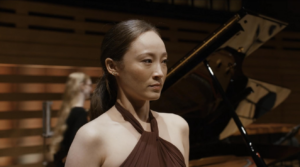
Niki’s stoicism is challenged by two chance encounters. The first, Ruthie portrayed by the model turned actor Havana Rose Liu, a dedicated pianist and composer he meets whilst tuning her piano at a music conservatory. She’s dismissive and challenging at first, but Niki’s dedication to his craft effortlessly turns the scene into an ingenious meet cute.
If we werent impressed before, we’re smitten now.
The second is when Niki meets Uri at a client’s house. Uri runs security to the rich and famous with his two associates Benny and Yonni and has a Robin Hood sideline in liberating his clients from expensive items they won’t notice missing. Uri is a charmer and lures Niki into using his enhanced hearing to crack a variety of safes by explaining how one of the owners sells subprime loans to minorities and forecloses if they miss just two payments. You just know it’s going to end in tears, but such is the investment in all the characters we can forgive a touch of cliché.
Everything about this low-key crime movie is crafted with precision. The sound design immerses us in Niki’s world so completely we can determine every click and whir of a combination lock or know when a piano key is out of tune. We are paralysed with the same excruciating agony as Niki when a fire alarm shrieks rendering him helpless, a sign of his future torment.
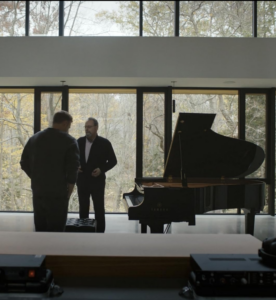 The music throughout operates at a high level of intricacy, Will Bates’ electronic score is increasingly edgy and fragmented both at odds with and synchronised to the jazz standards including those of Herbie Hancock and Nina Simone. Marius De Vries also composes the pieces played on screen by Ruthie, communicating both her sophistication and naïveté of character in her own musical arrangements.
Tuner would make a great double feature with Jacques Audiard’s The Beat That My Heart Skipped itself a remake of James Toback’s Fingers, or Damien Chazelle’s Whiplash. Tuner also shares some DNA with Jonathan Levine’s criminally underseen coming of age drama, The Wackness and Darren Aronofsky’s recent underrated comedy-thriller, Caught Stealing.
Woodall borrows from the Tom Cruise early career playbook of working alongside established older Hollywood stars like Paul Newman, Robert Suvall, and of course Dustin Hoffman. There’s a poignant moment when we cut to a youthful picture of Hoffman playing the piano, carefree and exuberant, frozen in a New Hollywood time frame reminding us that those vital New York trio of actors, Hoffman, Pacino, and De Niro all in their 80s won’t be with us forever.
However as old stars go, supernova new stars are born and Woodall gifts us an incredible performance; just watch him trying to dispose of an unwanted doughnut whilst walking Ruthie to class.
Other moments that highlight his burgeoning talent include Niki’s impassioned, sorrowful monologue on coping with the loss of his hearing and the disintegration of his musical dreams as a child, finishing his crescendo with an explosive sforzando delivering one of the greatest closing lines of a film in recent memory.