

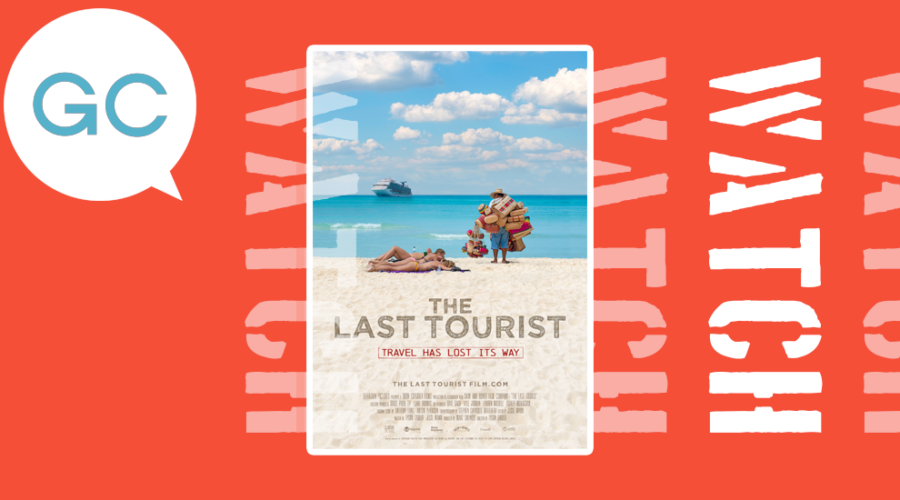
Travel can broaden the mind, but are we doing too much of it? And, when we do, is it causing harm?
This is what the documentary film, The Last Tourist, directed by Tyson Sadler, sets out to ask. But does The Last Tourist succeed at holding a mirror up to the vast travel industry? Or does it reach too far to truly land its points?
Over-tourism is a massive problem, and the ecological harms, as well as the devastation of local communities, are significant.
However, The Last Tourist does not start well. Opening with what could arguably be thought of as snobbery, people talk about the good old days when travel was a rather exclusive pastime.
Now, however, travelling the world is open to many more people. And, to the horror of some of the speakers, they post about it on Instagram.
This implication that the masses cannot possibly appreciate travel in the same way that people who have historically been able to access it is unpleasant, but the documentary – thankfully – soon moves onto more persuasive and pertinent discussions.
Cruise ship tourism
One target of the film is the cruise industry. As somebody who has never seen the appeal of being trapped on a boat with the kinds of people who want to go on a cruise (sorry!), I have little knowledge or experience of how these things work, other than what the people I know who’ve been on them tell me. (And nearly all of those people are delightful, so I’m not even entirely sure where I’ve got my own impressions of cruise-goers from.)
A core criticism of cruise culture in The Last Tourist is how insulated ships’ tourists are from the places they visit, making it hard for them to get a genuine local experience – and, crucially, making it impossible for people running local businesses like shops and restaurants to benefit from the massive influx of foreign visitors on their shores.
Local business owners speak of seeing swathes of people coming onto land and being ushered into a tiny number of premises that have a pre-arranged (and financially compensated) agreement with the cruise companies.
All of this means that there is considerable wealth coming to the shores of often very precarious places, and the locals are seeing next to none of that wealth themselves.
Interviewees also touch on the desperation caused by poverty and deprivation and how this can make people much more vulnerable to exploitation. This point could certainly have been further explored but this would have exacerbated one significant drawback of the film, which is just how very many topics it tries to cover.
Ecological harms and animal cruelty

The ecological harms of tourism are well documented, so looking at ways to mitigate and prevent that was an important thread throughout this film. There was significant coverage of animal cruelty in various tourism hotspots, too, which was persuasive but – surely – not surprising to many. Does it really need stating that the wild animal somebody is petting may not be being treated as well as it should?
White saviourism and “voluntourism”
The most memorable and thought-provoking segment of The Last Tourist, for me, was its look at “voluntourism”.
By this stage of the film, I was already tiring of too many topics being introduced and, by necessity, somewhat glossed over. So I was ready for the damage caused to communities and environments by well-meaning white saviours to be yet another thing where I would not learn a huge amount.
In fact, this section of the film was by far the most impactful. The fact that saviour tourism is often unregulated came as no surprise, but “orphanage tourism has become a lucrative business” is one of the most devastating phrases I’ve probably ever heard.
Looking at the way children in orphanages and schools are treated, briefly bonding with well-meaning visitors who are in their lives for a matter of days, then leave to be replaced by more, the attachment stress and profound developmental trauma – not to mention the objectification of these children in pics for social media – was undeniable.
White saviourism is a phrase I’m well aware of, voluntourism is something I’m very sceptical of. But The Last Tourist gave me additional context, stories and information that cemented an already-present discomfort with this aspect of the way some privileged people travel and treat the people they visit.
Scope
 Overall, however, the scope of The Last Tourist is too broad. Whether caused by over-ambition or a lack of focus, trying to cover the exploitation of wildlife, people, environments, and local businesses without a clear narrative or thread connecting them together, made this film feel somewhat diluted in most of the points it was trying to make.
Individual sequences were powerful and convincing, but being slammed with one thing after another after another, without much coherence between them (when these are, in fact, very intersecting issues when looked at holistically) means that the film can feel a little relentless and disjointed.
Exploitation and abuse in the context of travel and tourism must be addressed, and industries like cruises clearly are central to this story. Which adds even more bafflement to the opening scenes of people implying that the way modern (less well-off) travellers now pose for photos is just a little too common.
Systemic vs individual
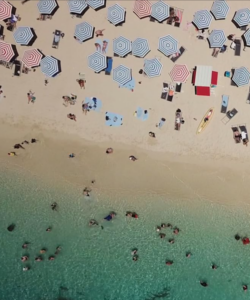
The issues around the unsustainability and abuses of tourism industries are structural, and can only be fixed structurally. Sneering at tourists pouring onto a Spanish beach in their only two weeks off work is snobbery, but that’s not the only problem with this criticism.
A more core point is that these people are not the ones who can fix the problem.
I could feel smug about not having been abroad for years and taking great, great joy at exploring places in my country, my region, and my own city. But I won’t, because even if I did fly to Italy every couple of years, I wouldn’t single-handedly be causing the over-tourism problem.
Systems failures can only be fixed by looking at the systems that cause and allow exploitation, and The Last Tourist does not always look systemically at systemic problems.
Tourism is, after all, capable of enhancing as well as destroying lives, and this film left me a little cold in its lack of cohesive solutions thinking.
The Last Tourist is a worthwhile watch for anyone who hasn’t given much thought to what happens after they leave on a foreign trip, or those who want to understand more about the problems local communities face when their area becomes full every summer and empty every winter. This is not an especially disciplined or expansive documentary, but even viewers with a cursory knowledge of some of the harms of tourism will learn, and doubtless be disturbed by, new facts and thoughtful interviews.
We are right to question these vast industries, and this documentary helps us to do so in a more informed way. But don’t expect to come out of it with in-depth expertise on any one of the topics it covers.