

35 years later, Wes Craven’s best movie is also one of his least well known, and it’s well worth dusting off the VHS off in our current Trumpian nightmare.
The People Under the Stairs is an urban fairy tale, a vital social commentary on the devastating effect Reaganomics had on the black working class in the late 80s, terminating at the logical conclusion of the first Gulf War fought by soldiers from the poorest sections of American society that enabled the oil to flow and grease the capitalist ideal.
12-year-old Fool feels the blight of gentrification first hand as he is to be evicted with his sister and cancer-ridden mother by a shadowy couple who control most of the slum accommodation in the ghetto. By running these properties into the ground and evicting the tenants they can sell the land to big business and make a killing.
Sound familiar?
Fool teams up with a pair of older robbers to steal the fabulous riches believed to exist within the couple’s heavily fortified home. The treasure trove will pay for his mother’s cancer treatment as she cannot afford the simple operation that will save her life – a withering condemnation of the American medical system by Craven.
Where Craven succeeds is by casting the morally corrupt pair of Mummy and Daddy with Twin Peaks duo Everett McGill and Wendy Robie. Their instant chemistry and familiarity from that cult series means that we buy their twisted family unit from the off.
When Craven finally reveals the true extent of their depraved madness, their soulless existence, how defunct they have become as human beings, our disbelief is well and truly suspended, such is the wild relish and abandon of McGill’s and Robie’s deranged performances.
Mommy and Daddy have withdrawn completely into their crumbling mansion draining the lifeblood of the black community they are supposed to serve. They are so afraid of their black neighbours that they have only their racism and warped view of Christianity to protect them from America’s rapidly changing population.
They seem stuck in the middle of a time warp – a gothic version of 50s America, such is their dress and speech, and one Craven clearly despises; yet they hate even this blurred reality only finding solace in their blood money.
The perverted pair have imprisoned boys who have not lived up to their perfect child fantasies. They are deprived of light and watch an old television set which shows the famous night vision footage of the aerial attack on Baghdad. They are fed the flesh of dead workmen and have become Zombie-like, unable to mix with the wider community, another comment on the social and racial divide in America, keeping the sub-class firmly under the stairs.
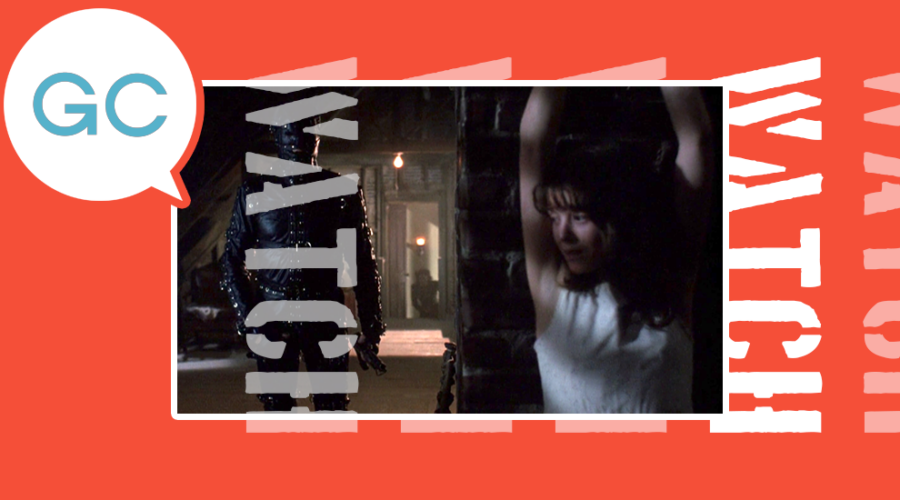
Craven effortlessly blends cartoon violence with excessive gore as Daddy chases Fool and his friends through the house dressed in a gimp outfit preceding Tarantino’s Pulp Fiction by three years. Daddy is at times hilariously injured by Fool, which reminds the audience of Home Alone or Tom and Jerry rather than The Texas Chainsaw Massacre.
Even this is used to comment on the zeitgeist of the early 90s as Fool having smashed a brick on Daddy’s head from range quips, “That must be one of those smart bricks.”
Craven has crafted a truly original piece in The People Under the Stairs, nothing quite like it exists and as an allegorical tale it is essential.
For all the darkly comic elements and bloody violence, the most horrific scene is when Mummy scrubs her captive daughter in boiling hot water. Craven uses this scene to shock the audience into believing how far removed she is from normal family life. Are the rich white minority so morally detached, so used to monetising happiness, throttling the life out of anything decent that they think they can mould their family (or anyone else’s) any way they see fit?
When Mummy later says, “There is no community” she doesn’t realise that for all their hardship, for all of the racist policies engineered to subjugate them, the black population have a sense of family and belonging she will never understand, one she has helped create from her hatred and one she has ultimately excluded herself from like so many others in gated communities because of her fear and ignorance fed by the parasitic media establishment now further in the thrall of a fascist American regime.
Craven has crafted a truly original piece in The People Under the Stairs, nothing quite like it exists and as an allegorical tale it is essential. Today it feels even more essential with the weight of 35 years of American history, evangelical Christian neoliberalism run amok leaving the door open for Trump to pick the bones clean.
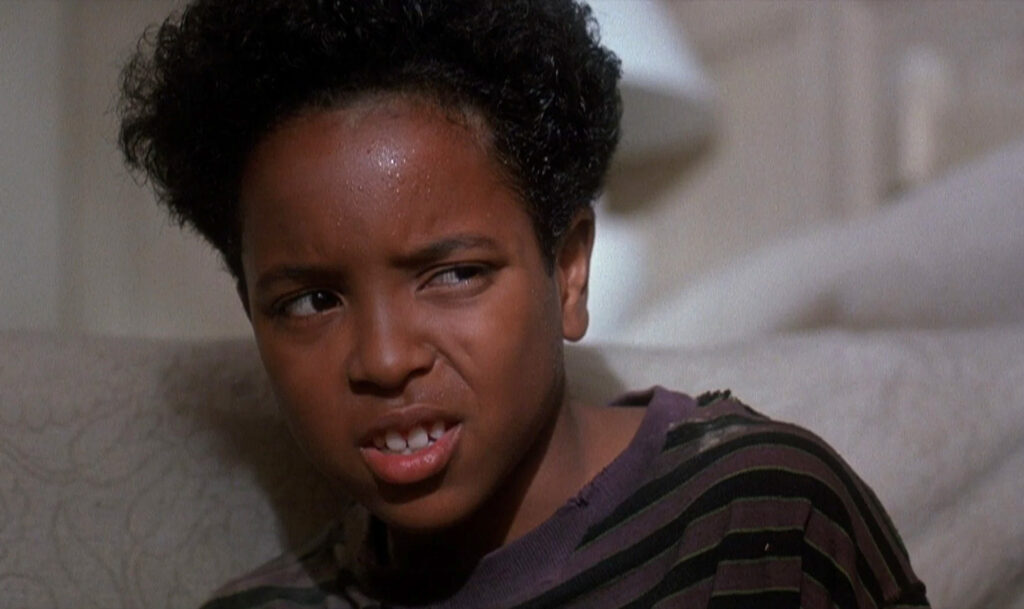
But even more remarkable for the time of its release is the fact that the main character is a 12-year-old black boy played with a knowing exuberance by Brandon Adams, who carries the film with a shining dignity. He fully deserves his place in the pantheon of the greatest child performances of all time.