

Paris is, without a doubt, one of the most photogenic cities in the world. Its avenues, monuments, cafés, and historic buildings have appeared in countless film productions, becoming the settings for some of cinema’s most memorable stories.
From major Hollywood productions to French films that have won over international audiences, the capital has served as inspiration for directors who have found in its streets the perfect setting to unfold their stories.
But beyond the Eiffel Tower and other iconic landmarks, cinema has also spotlighted small cafés, bridges, squares, and hidden corners that are part of everyday life for Parisians.
Some have become famous thanks to a particular scene, while others already had a long history before appearing on the big screen.
What makes this special is that many of these places are open to visitors and offer a chance to discover the city from a different perspective. These five films take you on a tour of some of Paris’s most recognizable locations.
Moulin Rouge (2001): The cabaret that inspired one of cinema’s most famous musicals
Location: 82 Boulevard de Clichy, 75018 Paris.
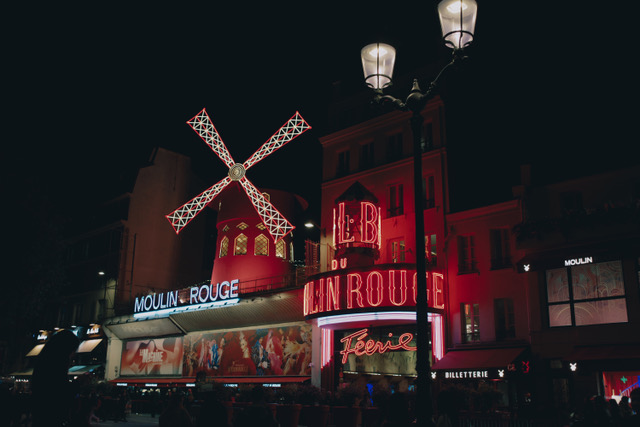
In the Montmartre neighborhood, the famous red windmill that adorns the façade of the Moulin Rouge is one of the most recognizable symbols of Parisian nightlife. The cabaret opened its doors in 1889, during the Belle Époque, a period of intense artistic and cultural activity. It soon became a gathering place for artists, dancers, writers, and figures from Parisian high society.
More than a century after its opening, the cabaret inspired Moulin Rouge!, directed by Baz Luhrmann and starring Nicole Kidman and Ewan McGregor. The film, released in 2001, tells the love story between Satine, a cabaret star, and Christian, a young writer who arrives in Paris hoping to make a name for himself.
Although the story is set in Montmartre, the major musical numbers were not filmed inside the actual Moulin Rouge. The production team recreated its interiors and much of 1900s Paris in studios in Australia.
Today, the original cabaret continues to host shows and offers visitors a chance to experience the place that inspired this story, although its current interior is not the set that appears on screen.
The Devil Wears Prada (2006): Fashion comes to the Place de la Concorde
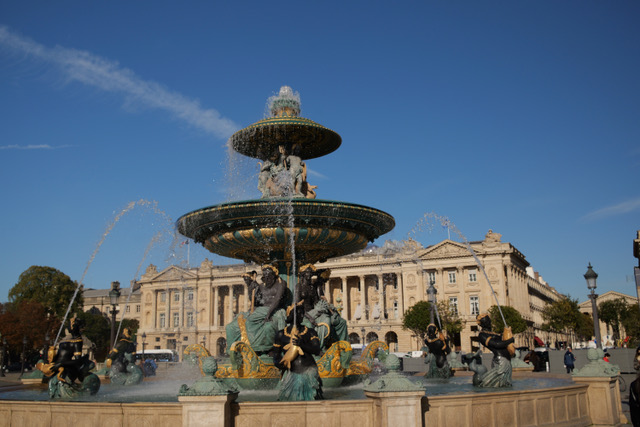
Location: Place de la Concorde, 75008 Paris.
Although much of The Devil Wears Prada takes place in New York, Paris plays a pivotal role in the story. The film, directed by David Frankel and starring Meryl Streep and Anne Hathaway, follows Andy Sachs, a young journalist who begins working as an assistant to Miranda Priestly, the demanding editor-in-chief of a major fashion magazine.
The trip to Paris Fashion Week marks a pivotal moment in her development, when she begins to question just how far she’s willing to go to achieve professional success.
One of the most memorable scenes takes place at Place de la Concorde, where Andy throws her cell phone into one of the fountains after making a decision about her future.
The scene was filmed next to the Fontaine des Fleuves, on the north side of the square. For fans of the film, it is one of the most easily recognizable and accessible locations to visit.
The chosen spot could not be more closely tied to the iconic image of Paris: it is one of the city’s most important squares, situated between the Champs-Élysées and the Tuileries Garden.
The Da Vinci Code (2006): The mysteries of the Louvre
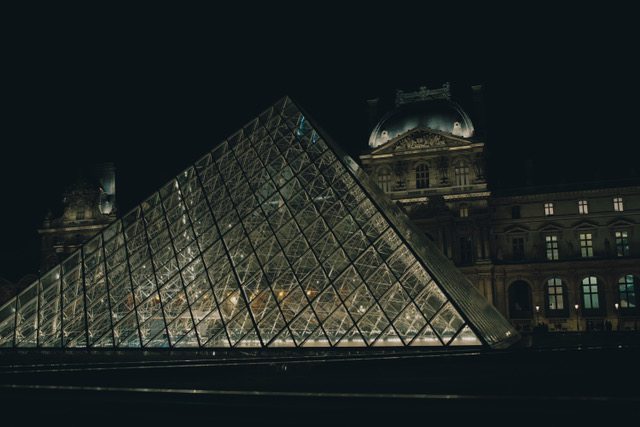
Location: Louvre Museum, 75001 Paris.
The Louvre is one of the most visited museums in the world, but in The Da Vinci Code it becomes the starting point for an investigation that blends art, religion, and secret societies. The film, directed by Ron Howard, is an adaptation of Dan Brown’s best-selling novel and stars Tom Hanks, Audrey Tautou, and Ian McKellen.
The story begins with the murder of a museum curator and a series of clues linked to some of the most famous works in art history. Professor Robert Langdon and cryptologist Sophie Neveu attempt to solve the mystery as they travel to various locations in Paris and elsewhere in Europe.
Unlike other productions that had to recreate their settings, the team behind The Da Vinci Code obtained permission to film at the actual Louvre, including some of its galleries.
Filming took place in 2005, taking advantage of times when the museum was closed to the public. One of the most recognizable architectural features is its glass pyramid, designed by I. M. Pei and inaugurated in 1989, which plays a significant role in the story.
Amélie (2001): Everyday Paris in Montmartre
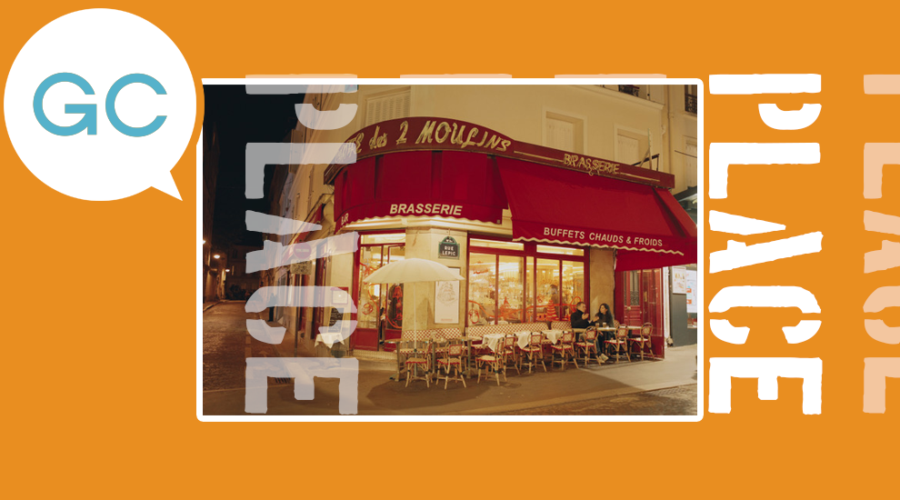
Location: Café des Deux Moulins, 15, rue Lepic, 75018 Paris.
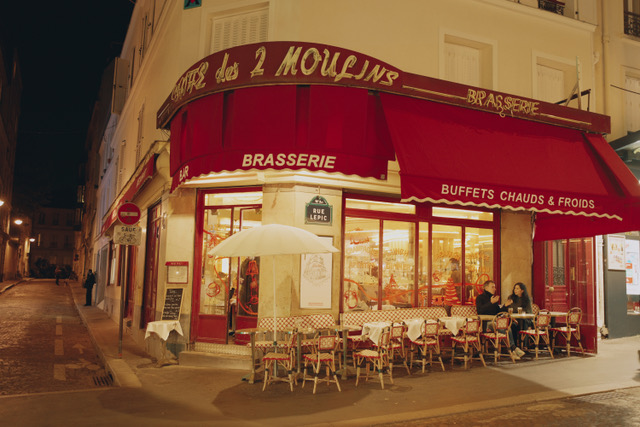
If there’s one film that managed to turn the everyday corners of Paris into internationally recognized landmarks, it’s Amélie. Released in 2001 and directed by Jean-Pierre Jeunet, it tells the story of Amélie Poulain, a young waitress played by Audrey Tautou who decides to discreetly intervene in the lives of those around her to help them find happiness.
Much of the film takes place in Montmartre, a neighborhood known for its steep streets, small shops, and artistic tradition. Jeunet used real locations but also carefully crafted the cinematography and colors to present a very distinctive version of the city.
One of its most famous settings is the Café des Deux Moulins, the café where the protagonist works. The café actually exists and is still in operation on Rue Lepic, just a few minutes from the Moulin Rouge.
Although some elements of the interior have changed since filming, it remains easily recognizable and welcomes visitors who want to see the place or try the crème brûlée featured in the film.
But Amélie’s journey doesn’t end there. Scenes were also filmed at the grocery store on Rue des Trois-Frères, on the stairs near Sacré-Cœur, and along the Canal Saint-Martin. The film earned five Oscar nominations and turned several neighborhood spots into regular destinations for its fans.
Inception (2010): The bridge where Paris defies reality
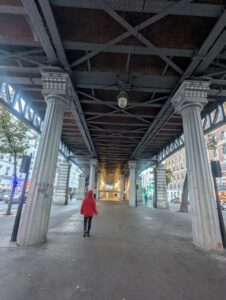
Location: Pont de Bir-Hakeim, between the 15th and 16th arrondissements of Paris.
In Inception, Paris appears in one of the film’s most memorable sequences. Directed by Christopher Nolan and starring Leonardo DiCaprio, the story explores the possibility of entering other people’s dreams and altering their thoughts.
In one scene, Cobb, played by DiCaprio, teaches Ariadne, played by Elliot Page, how to construct spaces within a dream. As they walk through Paris, the streets begin to transform, and the city seems to fold in on itself.
In one scene, Ariadne uses mirrors to transform the space around her. These sequences combine real locations with visual effects and have become some of the film’s most recognizable moments.
Part of that scene was filmed on the Pont de Bir-Hakeim, a two-level bridge that crosses the Seine and offers a spectacular view of the Eiffel Tower. Its metal structure, built in the early 20th century, has a unique feature: Metro Line 6 runs along the upper level, while the lower level is reserved for vehicles, cyclists, and pedestrians.
Images: Edgary Rodriguez R.