

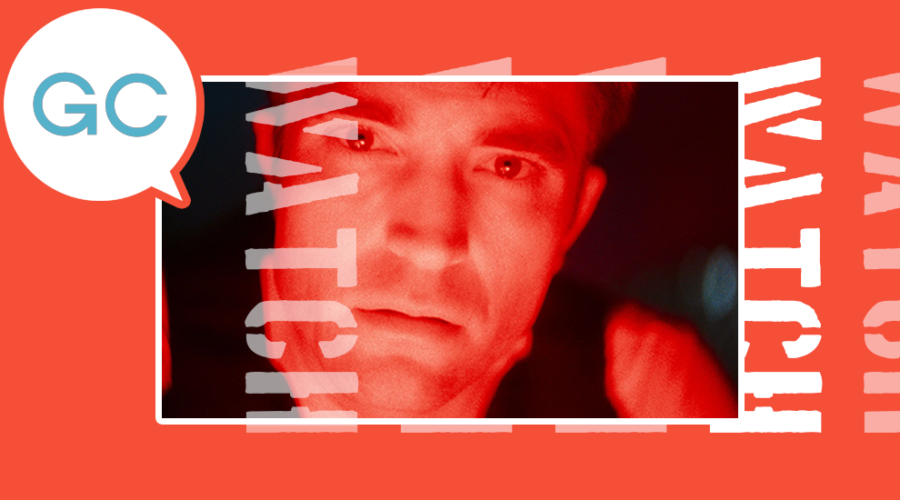
Robert Pattinson has always had something dark and off kilter skulking behind his matinee idol looks. His teeth are vaguely reptilian, sharpened discreetly to resemble Willem Dafoe, fashioned to rupture throats in a Victorian back alley past midnight, his eyes blaze with a diabolical intent, his skin a ghostly pallor reminiscent of Cracked Actor era David Bowie, his countenance arch, earnest, and thoroughly aloof.
Like his former co-star and love interest Kristen Stewart, Pattinson has an eclectic and astute filmography working with auteur directors like David Cronenberg, the Safdie Brothers, Claire Denis, Robert Eggers, and Christopher Nolan, each subsequent film exorcising the sickly mid noughties taint of YA fiction that has consumed and blighted so many of his contemporaries.
Pattinson’s feverish performances smack of a man trying to outrun a Faustian pact with the devil, a deal made in haste before he realised the mark of his own genius. In many ways he is the successor to Nicolas Cage, trying his hand at every genre, the film critic Luke Buckmaster’s quote about Cage could equally apply to Pattinson, “He is erratic and unpredictable; he is captivating and he is capricious. He is a performer. He is a troubadour. He is a jazz musician.”
Lance Oppenheim’s film Primetime, an electric fusion of Network and Videodrome, is the latest vehicle employed by Pattinson to avoid two dozen years of servitude in hell. As penance, Pattinson plays a thoroughly wicked demon prince in the form of NBC anchor Chris Hansen, the host of To Catch a Predator, the mid 2000s hit show that featured Hansen confronting men lured to a sting house wanting sex with a minor before being arrested by armed police.
Charlie Brooker’s review of To Catch a Predator 18 years ago sums this deranged conceit up perfectly, “When a TV show makes you feel sorry for potential child rapists, you know it’s doing something wrong.”
Years later, Brooker’s rage at shows like To Catch a Predator will manifest itself in the form of his Black Mirror anthology series.
Oppenheim’s direction infests Primetime with Brooker’s cynicism to the point we could be watching an episode of Black Mirror, that digital malaise, the queasiness that blends itself into overexposed blues and reds, hues that make us feel sick to our stomach, a world where ratings are garnered by would-be rapists, shock television starting to evolve losing gills and growing legs, slithering towards the infernal 30-second reels of present-day social media.
 Pattinson’s Hansen is an evangelical shyster, desperately trying to convince himself of his own moral righteousness whilst trying to slay Lost in a Thursday night ratings war. We are told that scripted television is dying a slow death and we’re reminded of that fact within the context of 9/11, the embedded reporters in the wars in Afghanistan and Iraq, and the countless atrocities surrounding those conflicts that reengineered the human condition to revel in the theatre of cruelty and humiliation.
Hansen is our avatar in this brave new world, Captain Ahab as quasi reporter/gameshow host leading his crew to oblivion in tumultuous uncharted waters in a quest for revenge. Hansen believes he is “Cleansing the world of an ancient evil”, an entity he believed he witnessed when investigating child disappearances and murders in India, driving his messianic destiny to ever greater hubris.
When one of his crew, Xavier Von Erck, who poses as young children online, reveals he may have a whale on his hook in the form of a high-ranking government official, Hansen’s obsession reaches fever pitch.
Convinced that he might be hunting the president, the Moby Dick comparisons are ramped up, the weather is tempestuous, the online sightings of the whale lure Hansen and his team deeper into psychosis and ultimately catastrophe. Von Erck’s messages act as harpoons that are cast at the whale alongside Hansen’s two decoys, Dan Plum and Del Harvey, the trio imbued with a terrible skill set, an electronic paganism that make them darkly revered as the Pequod’s three harpooners, Tashtego, Queequeg, and Daggoo.
Whereas Ahab’s relationship with Pip the cabin boy offers the Pequod’s captain the slightest chance of redemption, Hansen’s beguiling of Dan, his latest decoy, an actor in his early 20s looking to get into the Screen Actors Guild is tantamount to the grooming employed by the paedophiles they are trying to capture.

Hansen’s idea of family entertainment is to wake his two young sons up and show them his latest episode challenging would-be child molesters but when caught by his wife Mary Joan, lies to say the boys walked into the room whilst he was checking the edit. Mary Joan is played against type by Anna Faris, an adroit piece of casting seeing as Faris was a staple of mid noughties celebrity culture within the Scary Movie franchise.
Even more striking is the inclusion of actor and director Alex Winter as the whale. Oppenheim knew Winter’s history of sexual abuse when he was acting on Broadway and his activism with survivors and their struggles with PTSD.
Winter wanted to humanise his character, add nuance to the argument, “If I could have some small part in creating a little bit of a tweak within the cultural understanding of these people, especially in the sort of post-Epstein world we are in now, where it’s become so caricatured and politicized.”
Primetime’s release coincides with House Judiciary Committee Democrats releasing a 50-page staff report detailing Donald Trump’s alleged ties to Jeffrey Epstein’s criminal network and accusing the Department of Justice of a cover-up just before the crucial mid-terms.
What impact this strategic move by the Democrats will have, especially in the shadow of the appalling attack ad on Amy Acton by Vivek Ramaswamy digging up the abuse she suffered at the hands of her stepfather in the form of her complicit mother, is anyone’s guess. We can only hope that films like Primetime will help shift the discourse so everyone receives the justice they truly deserve and bring down the orange whale that resides in the White House.