

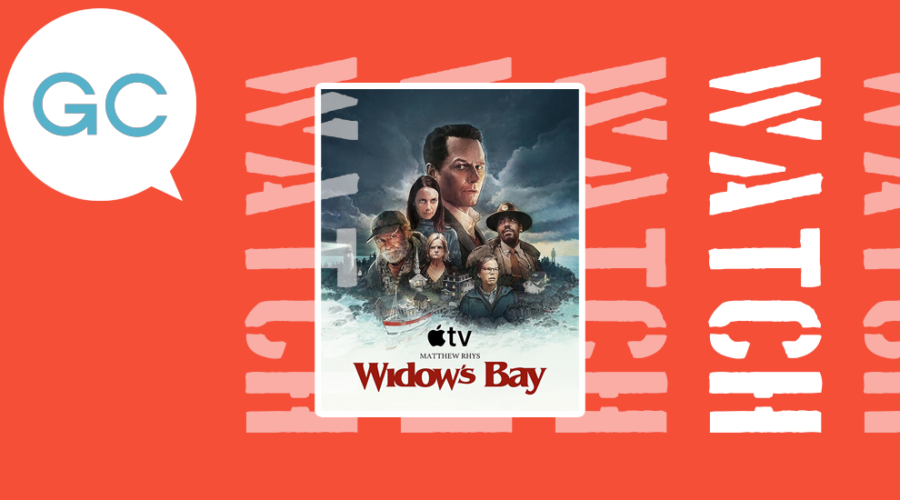
As previously mentioned, I think Matthew Rhys is terrific when he’s playing evil people – but then again, everyone thinks that Matthew Rhys is terrific when he’s playing evil people.
But a chance to play a hero? A kind-hearted and bumbling sort of hero? It’s a change of pace for Rhys for sure, and it’s one of the many reasons why Widow’s Bay on Apple+ works as a show.
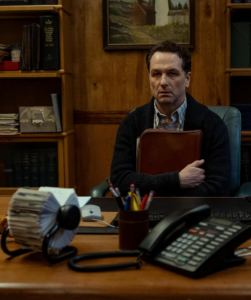
Rhys is deftly cast as Tom Loftis, the not-very-popular mayor of a small island community living under a curse, not that Loftis wants to believe that. At first the curse appears to just be some old-time superstition combined with infrastructure problems – there’s hardly any cellphone reception on the island, unthinkable in this day and age.
Busy trying to turn his island into the next Martha’s Vineyard when he’s not trying to keep tabs on his increasingly rebellious teenage son, Loftis doesn’t have time for the supernatural.
Yet soon enough, it becomes apparent that the do-good mayor and his associates are up against a genuine evil force. The best way to describe their situation is Stranger Things meets Parks and Rec (yes, before you ask, Widow’s Bay creator Katie Dippold did work on Parks and Rec). There are terrifying entities stalking the island, but also there is low workplace morale and bureaucratic infighting.
Loftis has a terrific foil in Kate O’Flynn’s Patricia, one of the more capable members of his staff. Patricia grapples with her social isolation, the advance of middle age, and a dark childhood history involving a local madman.
There are terrifying entities stalking the island, but also there is low workplace morale and bureaucratic infighting
“Beach Reads,” the fourth episode of this season, is one of the best episodes of new television I’ve seen all year, and it centers on Patricia’s anguish – and how this anguish makes her susceptible to the island’s dark magic, all while she’s trying to host a cocktail party.
The dark magic is incredibly scary, but equally scary is Patricia’s desperation to please the island guests and locals with her hors d’oeuvres. The writing seamlessly integrates folk horror with the horror of social awkwardness.
 Another revelation is Stephen Root’s Wyck – a slightly insane local boat captain who sings sea shanties when it is and isn’t appropriate, and can kill a sea witch before she murders you by sitting on your face (yes, the writers absolutely go there, and I salute them for it). Wyck has a painful history of his own and his character is another good balancing act, reminiscent of Stephen King’s portrayals of grizzled New Englanders who have seen some shit, but written with a lighter touch.
The supporting cast is equally terrific and I’m especially fond of Dale Dickey’s portrayal of Rosemary, a crotchety, chain-smoking office drone, and of Kevin Carroll as the island’s beleaguered mayor.
It’s Matthew Rhys’ performance, however, that keeps this ship firmly afloat. Rhys’ work on The Americans made him a television legend (and introduced him to his partner and the mother of his child, Keri Russell), but he has long needed a softer, funnier role to showcase his full range.
Mayor Tom Loftis is so perfectly calibrated toward stretching Rhys’ range – a little bit annoying, perpetually haunted, longing for a bright future while having to contend with the fact that monsters are real – that it was actually surprising to find out that Katie Dippold didn’t immediately see him in the role. I’m glad she was convinced, in the end.
If all of that doesn’t immediately convince you to sit down and watch this show, I’d like to point out that a Colonial Era town leader turned cursed thrall (Hamish Linklater, who is simply made for playing misguided leaders of terrifying little island communities) makes an appearance eventually, and that his story is equal parts horrifying, heartbreaking, and funny.
The entire time I was watching the thrall and his arc, I was amazed at how Dippold and the writers managed to pull it off.
It’s not just wonderful writing, it’s very bold writing, and once again proves that some of the most innovative people in the industry are gravitating toward good horror for good reasons.