Medjugorje: Fervent Worship and Booming Business

The last time I came to Bosnia was in the middle of the Balkan War. My mother loves bargains and war zone holidays always are cheaper. In Bosnia, though, we were looking for something more profound than bargain-priced entertainment.

We got onto the only plane that flew there (surely enough, there were only about five holidaymakers on the plane). When we landed at the airport, we realized were on the only civilian plane there.

On the bus to Medjugorje we could hear and see the bombs going off in the distance, and it was a bit scary. However, when we arrived at Medjugorje, where the virgin Mary has been appearing to 6 visionaries since 1981, we realized that the scary part was well worth it.

The village was small and rustic with a big modern church surrounded by vineyards. The village itself was situated between two hills, Krizvas and Podbrdo (the name Medjugorje means “between the mountains”). Miraculously, although the surrounding villages were bombed severely in the war, Medjugorje was somehow left untouched. The village was comprised mostly of rustic stone houses where we enjoyed home-cooked meals.

My recent drive to Medjugorje from Split, Croatia, was very different. No bombs were going off in the distances, and instead of closing my eyes and ears in fear, I was able to appreciate the beautiful scenery. The drive up the hills, overlooking the coast below, was breathtaking. Beautiful wildflowers grew by the roadside.

Here’s a tip, however: if you drive to Bosnia, don’t get carried away and daydream, surrounded as you are by beautiful nature. Be careful when crossing the border. Read More »

There and Back Again: My Trip to Orlando

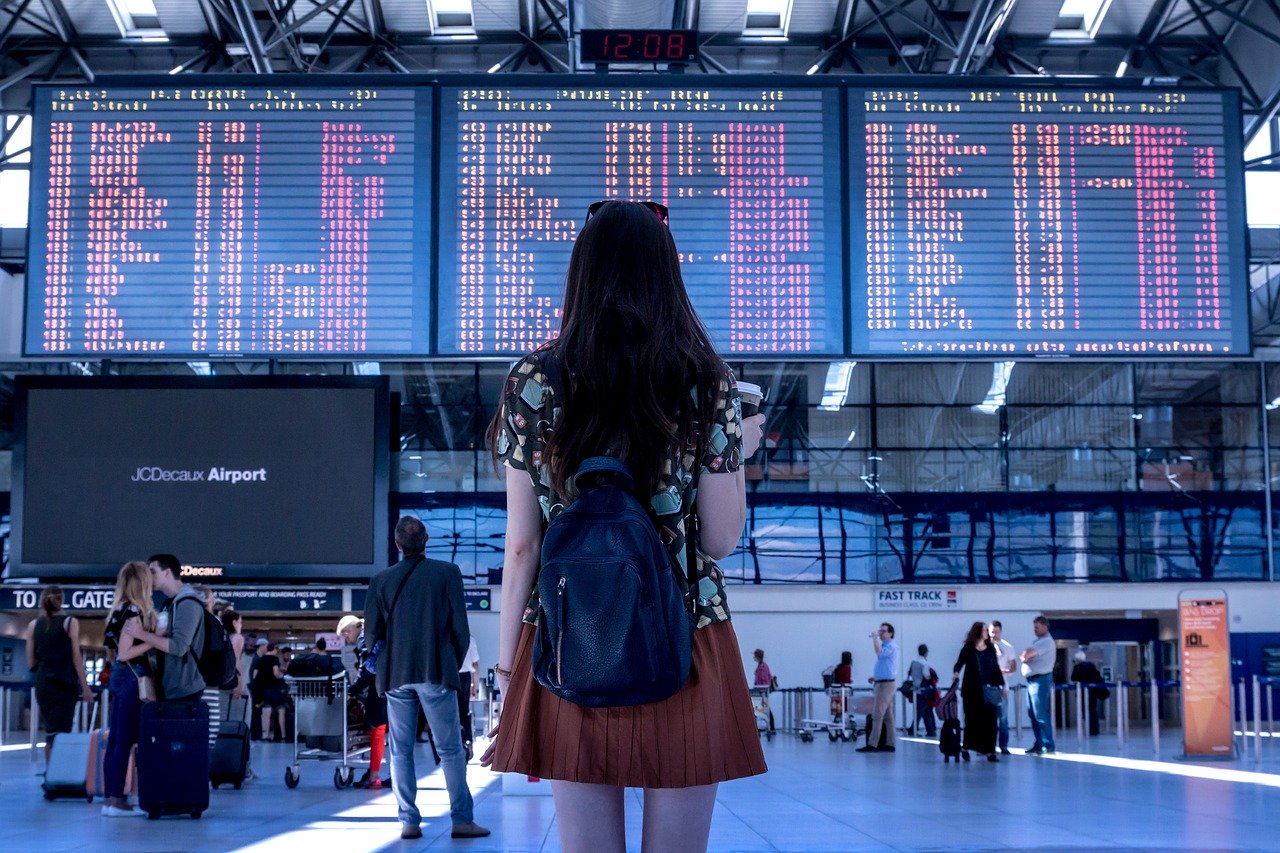
I’m like a million other people: I’m at the airport, waiting for a flight. I packed last night, and even checked in on-line; it was all extremely organized. I’m that sort of person. Of course, I’m also the sort of person that you see hip-sliding across car hoods in the parking deck and vaulting over old ladies to get to class on time.

Sometimes, when I’m in an airport, or a mall, or any other sort of crowded place, I feel totally unique. This is, of course, ironic, because there are probably thirty or forty other people that feel the exact same way. I find this notion charming. If you can understand this – and perhaps you can – it makes me feel like a writer.

The people around me are a blend, a spectrum of human existence. I look at individuals, and see a few facets of their lives – and I feel like I know them. As different and anonymous as we all are, we are temporary siblings in the fraternal order of Those In Transit.

I do not know the elderly woman sitting across from me, but when we board the plane, there is every chance that our eyes will meet and we will attain an instant, unspoken understanding over the fact that this food would give diarrhea to a wharf rat. When my stomach burbles, signaling that the “chicken” I ate wasn’t exactly “dead,” and is plotting some sort of internal coup, hers will burble in sympathy. And when she gasps, wheezes and shifts over to relieve the pressure on that G-D sciatic nerve, I will do the same.

In short, I’m in a singular situation, and it’s awfully interesting from the perspective of a nosy bastard that likes to turn phrases.

Do you know why every comedian has at least a few things to say about airports? Because it’s just what a comedian does. I suppose it’s similar to the way that about 95% of police chow on donuts and hot dogs until they’re too overweight to protect or serve - it’s not necessarily important to the job, and it’s even kind of cliché, but you don’t just ignore tradition. But why exactly did airport mockery become a tradition?

I think it’s because airports are a common experience for all. Additionally – and this part’s important – airports are brimming with stupid. Making fun of airports is like playing chess with Nicole Ritchie, or arm wrestling a baby turtle, but I am not above any of those things. Read More »

Monaco: For Those With Massive Credit Limits!

For the last ten years, I have been coming to sunny and opulent Monaco for the odd weekend here and there. My mother moved here following my parents’ divorce.

Monaco a strange place, rather like Disneyland. It’s full of mega rich businessmen (like Stelios Haji-Ioannou of easyJet), royals (not only local ones, but the Kuwaiti royal family as well), super models (such as Karen Mulden), as well as the odd film star (Roger Moore lives just above the public beach). Unlike tourists, these people are here not to gamble and take in the sights, but to benefit from zero taxes.

Monaco is Monte Carlo. I’m sure once upon a time Monte Carlo was a town in the middle of the countryside, but now that real estate has become so valuable, every inch of Monaco has been built on, and the country has been swallowed up by the city.

Even the harbor is being expanded so that more yachts can anchor there. Not to mention an island being build out on the sea, with a surface area of some 275,000 square meters. This new development might take the pressure off the Monegasque property market, which has some of highest real-estate prices in the world: a 3-bedroom flat costs up to 5 million euros!

If you do not own any property here, you can stay in fabulous hotels: Hotel de Paris, the Hermitage, or the Metropole, to name a few. Every other weekend there’s some wonderful event going on, such as Red Cross Ball or the Bal de Ete, with expensive tickets attached. Or else there are sporting events such as the Tennis Master Series, or the Monaco Marathon, not to mention the Grand Prix. Read More »

Budapest: Good Food and Good Times

I was excited to explore this city after having heard so much about Budapest from my Grandmother, Pempe Aitken, who once joined Queen Juliana of Holland on her honeymoon here.

It was the celebratory weekend of St. Stephen, the first king of Hungary. All weekend long fireworks lit up the city which consists of two sides: the Buda side and the Pest side.

Buda is the mountainous side with all the castles. The Pest side is flat, newer, and more industrial. On the plane, I had finished Michael Kaufman’s biography of George Soros and discovered what Budapest was like during Soros’ childhood (miserable). Yet communism has long since died, and I was hoping for a friendly welcome. I was not disappointed, to say the least.

First, I headed toward the famous green cupola of the Gellert Hotel to experience Hungary’s spa culture. Hungary is famous for its medicinal waters and there are roughly 1,300 thermal springs that have been discovered so far. The mineral composition of the waters at each spa varies, resulting in different spas specializing in curing different ailments.

Even if you are totally healthy you can benefit, because we all need a bit of tuning up. Budapest spas offer very cheaply priced beauty treatments. It’s no mistake that Estée Lauder had Hungarian blood - Hungary is not only beautiful but its spas will keep you beautiful too!

There are drawbacks for heading to the most famous spa in town, because tout le monde was at the Gellert. One could hardly move, it was like Fulham Pool on a Saturday. I promptly checked out and moved from the Buda side to the low-key Mercure hotel on the Pest side.

After finding a less famous (i.e. quieter) spa, I soaked up the thermal waters and enjoyed the best massage I have ever experienced. My masseuse did not have Western European training - which teaches one to follow a formal massage pattern that can end up feeling mechanical. Here, masseuses follow their instincts and find knots you never knew existed.

Finally, I was relaxed and ready to experience the festivities. The biggest socialite in Budapest, Elena Ernst (she runs the Ernst gallery), was throwing a party. Read More »

In Belgrade And In Love

No. 42 was once an elegant house. Its crumbling façade exuded an air or mystery and romance. As I stood on its cracked marble doorstep I felt I had arrived home.

For sixty years, No. 42 was the home of my Serbian great grandmother, Granny Spasa. Like today’s Belgrade, Granny Spasa was original, colourful, beautiful and never, ever dull.

A visit to modern Belgrade is full of surprises, beginning with the drive from the airport. My guide was Milo, a handsome young charmer with hedgehog hair who wore a bright blue leather jacket.

Milo drove his 1960’s Mercedes as if he were practicing for an F1 race, speeding to the heart of a city along tree-lined boulevards. Here, many buildings are scarred by bomb damage, and some have been reduced entirely to rubble. These sights are sad reminders of Serbia’s recent war troubles. To make matters worse, many ancient Ladas and Skodas still dominate Belgrade’s streets, making the air harder to breathe.

And yet, such problems are quickly forgotten when one encounters the joyful vitality of the new generation of Belgradians. Serbs, I would discover, party hard. One guy told me: “Darling, if you have any trouble with men, you tell me and I deal with them” - “Deal with them?” - “Never you mind, this is Serbia, it’s the jungle.” I had the chance to reflect on that statement later.

I wasn’t thinking about men as I went up to my great grandmother’s wonderful apartment. The next-door neighbor told me that Granny Spasa loved fish so much that she used one bath as a fish tank, dipping in when she was ready to cook and eat a particular specimen. She kept the other as a bathroom as her washroom, thank God. The hot water came from a small boiler tank, sometimes leaving one with a lukewarm bath; fine for fish, but not so good for humans. Luckily, five star hotels like the Hyatt and Hotel Yugoslavia don’t have this problem.

In the town restaurants, gypsies play romantic music on accordions and you are treated to delicious Serbian specialties such as Cevapcici with Ajvar (Serbian meatballs with red pepper sauce) or Pasulj (Serbian bean soup), Gibanitiza (Cheese pie) and so on. After getting through such a menu, I had to dance it off.

This is how I found Black Panther, a nightclub located on a barge in a district called Splav. I was told that guns are sometimes fired in the air there, but assuaged by assurances that this sort of thing is done only for show.

Nightclub barges in Splav have different atmospheres, but male exhibitionism is the dominant theme. Read More »

48 Hours in Warsaw

I arrived in Warsaw by train from Krakow. I forgot to take a book for my train ride, but this was a blessing in disguise, because Polish people have devised a wonderful system for book promotion:

Instead of doing signings in bookshops, authors can sit in a specially designated train carriage, and have the travelers come over and get their books signed. It’s a clever promotional tool and it makes traveling by train in Poland incredibly fun.

From the window of the train, Warsaw initially struck me as ugly. This was confirmed on a taxi ride to my friend’s apartment. However, the elements of ugliness are both palpable and understandable.

Warsaw was largely destroyed by the Germans during WWII, and its reconstruction mostly took the form of large, concrete communist-style blocks scattered all over the city. There is lots of Russian architectural influence, but other traditions have a presence in Warsaw as well.

For example, France gave Warsaw the gift of a lovely bridge. And today the European Union is stepping in to repair roads and the city itself. A large sports complex has been created, and a concert hall is in the process of being erected in the center of town in the place of an old hotel.

On the first night, my friend took me to an underground bar. He told me about working as a journalist, following in his mother’s footsteps. His mother had been exiled due to running a printing press against the communists. On a more cheerful note, the bar we met at turned out to be having a cheap selection of new flavored vodka, mixed with apple juice so sweet it tasted like its name: Apple Pie.

The following day, I took a walking tour around Warsaw – my friend was my guide. We met in Lazienki Park situated in downtown Warsaw. We entered the park near a statue of Chopin (Poland’s most famous composer), which is surrounded by benches and a rose garden. Every year a Chopin concert is put on here.

We strolled through the park- which boasts royal baths, an orangery, and a sculpture gallery. The old bathhouse is also known as the “Palace on the Water,” and is located on an artificial island on the Lazienki Lake. The island is connected by two arcade bridges to the rest of the park, and regal peacocks roam the outside. Prince Stanislaus Lubomirski lived there first, then sold it to Stanislaw Poniatowski, the last King and Grand Duke of the Polish-Lithuanian Commonwealth. Poniatowski transformed the place by bringing in minor works by Rubens and Rembrandt, as well as frescoes. Sadly, the Germans undid much of the work by blowing up the first floor with dynamite.

Driving towards the Old Town, we passed many memorials for those who fought against the Nazis and, in most cases, perished. Read More »

Birth Rank And Its Privileges

From fairy tales to film, everyone is obsessed with the idea of one’s “firstborn.” But what about the lastborn?

For my part, I’ve recently discovered that the lastborn child has magical abilities.

Of course, you have no idea what I’m talking about right now. Allow me to explain:

At the end of a long vacation week came a ski day for my wife, daughter and me. Discussions went back and forth as to where to go. Mount Wachusett never became an option given it is an over priced, over crowded, underwhelming experience in spite of their advertising (I think the slogan should be - “little mountain skiing at big mountain prices: you might find worse, but you won’t pay more”).

Other options included mountains around two hours away. We eventually settled on a return to Crotched Mountain where my daughter has been involved in a thoroughly enjoyable school ski program, in stark contrast to prior experiences at the operation criticized above.

I hadn’t been to Crotched Mountain in over twenty six years and found it to be a thoroughly pleasant, small mountain experience that likely could use a few more customers. It’s a perfect little place to take novice and intermediate skiers without having to pay for the lift tickets with a financing plan.

So, on Saturday we loaded up the car for a little quality time on the slopes. We planned our arrival perfectly, we would have about 20 minutes before the lifts opened to suit up and get on the mountain for some early groomed runs.

There was, however, one slight glitch that became apparent only after we parked in the Crotched Mountain parking lot.

My daughter forgot her ski coat.

The equanimity with which I took this news astounded me. It was if I left my own body and observed this aging, portly man operating with extreme calm. Read More »

Krakow: From Communist Chic to Copernicus

The fifth most visited city in Europe is the dragon city, otherwise known as beautiful Krakow.

Its name dates back to a legend of a terrible dragon, defeated when a simple shoemaker named Krak ingeniously fed it a sulfur-filled sheep. Krak’s next success was to marry the ruler’s daughter and become Prince Krak. Modestly, he re-named the surrounding area after himself (the “ow” tacked on at the end means “village”).

In the morning, I woke up to the sound of horse-hooves on cobblestones, folk music, and the clinking of coffee cups. My renaissance windows overlooked Rynek Glowny, Krakow’s main square. Last night, I attended my friend Natalia’s 30th birthday party. Three months ago, a brown, communist-style envelope had landed on my doorstep. The invitation announced an “official and obligatory celebration” - a communist chic birthday - at Klub Feniks in Krakow. Socialist 1980’s outfits were requested. If you volunteered to stay longer, you would receive a special mention that may lead to promotion.

The décor at the club had been appropriately red, including red leather-padded walls that looked like something out of an interrogation suite. Guests were served stake tartar, complete with raw egg; others ate the polish specialty of herring in onions and heavy cream. The main course made me disavow all preconceptions about eastern bloc stews: they are delicious, not to mention the various types of pirogies that follow.

Afterward, men danced in army outfits, while women took the dancefloor in puffy skirts with shoulder-padded shirts, all under a disco ball, accompanied by Wham! and old Madonna songs. The different varieties of flavoured vodka came with ration tickets.

Feeling a bit dragon after the celebration (drank too much, those ration tickets were not enough), I strolled down to the big square. Read More »

Celeb-Watching, Cultured Living, and More - in D.C.

Having spent our glorious university years in Washington D.C., my friends and I recently decided to reconvene in the U.S. capital for a walk down memory lane.

We met at the newest Kimpton Hotel: the thirty-two million dollar, recently renovated Hotel Palomar which is modeled after the original in San Francisco.

This place is a home-away-from-home to visiting celebrities such as Mötley Crüe and blast-from-our-past diva Chaka Khan – who, we’re told, had gotten an elevator locked down just for her and her huge entourage.

The hotel is unique in many ways; the waiters here undergo rigorous training with a ballet company, a terrific concept to ensure both regular guests and celebrities are served with grace. What’s more, the boutique property’s décor, inspired by the modern elegance of 1930’s French Moderne designers, provides its visitors with a sophisticated, artful sanctuary. The place is conveniently located just off D.C.’s colorful Dupont Circle and is therefore a mere hop, skip and a jump from Georgetown’s quaint shops, restaurants, and million dollar mansions, and only a short cab drive away from the seats of power on Capitol Hill. We were set to have a good time.

We visited one of the newest and most expensive memorials in the nation, the Franklin Delano Roosevelt memorial, unveiled in May 1997. In our collective opinion, it’s the most beautiful as well. Commemorating the 32nd President, the memorial sits alongside the Potomac River, with statues, waterfalls, shade trees, quiet alcoves and reflection pools, each one symbolizing one of his four terms as President. As we walked along the stretch of grass called the mall, I reminisced about my first visit to the site during my “Explorers, Warriors, and Statesmen” class at university.

Off we went to the nearby Lincoln Memorial, located on the far bank of the Tidal Basin where many spend their late-March and April days walking on the promenade, admiring the momentous cherry blossoms. My friend Dana, incidentally, insists that a late night visit is the ideal time to walk under the enormous stone President. We also visited the Titanic Memorial, built in 1931 and located on Maine Avenue waterfront in Southwest Washington. Despite its tragic aura, this place always educes a bit of a giggle nowadays; Read More »

Holidays in the Carpathians: Bukovel

It seems that everyone with wheels in Kyiv went up the Carpathian mountains to celebrate the New Year. Sitting by the fireplace in a log cabin at the ski resort this season would have been something, but I didn’t not get there as planned. To be honest, it was a blessing to miss the frantic traffic and struggle to find a decent place to sleep.

After all, the good places are booked up there a year in advance.

illustration1byolechko

As a clever friend of mine recommended, it’s better to go up to the Carpathians a few weeks before the holidays, or else after the Orthodox Christmas (which is on the 7th of January, for all of those unfamiliar with the Julian calendar). So, I adjusted my plans.

Christmas time here offers the best entertainment for culture lovers, because the way the locals celebrate it has been preserved in its full glory: costumes, caroling, lavish food and all.

illustration3byolechko

The best way to get to the Carpathians from the capital is by car (it’s roughly a 7 hour drive to Yaremche). If you arrive to Yaremche by train (it would take a transfer or two to get there from Kyiv, as the railway system is still pretty inconvenient), you can hop on a cab for about 150 hrv to Bukovel.

This is actually reasonable, considering Yaremche is 40 min away. Obviously, putting so much effort into getting there means that this should definitely not be a weekend kind of trip. Better to stretch it out for 5 days or so, if you can. Read More »